-
 Once a top export, prized Kashmir carpet fades
-
Japan's 'polka dot queen' artist Yayoi Kusama dies aged 97

-
 Search for 1,000 missing after deadly Nepal-Tibet floods
-
Nepal-Tibet disaster: what we know
-
 Park So-yeon first woman to play for eSports powerhouse South Korea
-
China deploys record number of ships around Taiwan as pressure grows

-
 Yayoi Kusama: Japan's kaleidoscopic, troubled 'polka dot queen'
-
Ruthless Bayern target treble as rivals reboot on Bundesliga return

-
 Euro champ Hunt 'on her toes' against world's best in Zurich 100m
-
What experts know so far about Nepal's deadly floods
-
 Asian chip firms lifted by Nvidia forecast but broader markets struggle
-
UEFA set to withdraw FIFA boycott threat ahead of Champions League draw

-
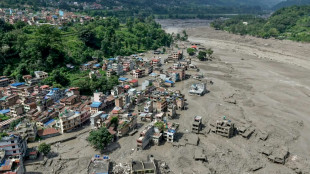 Search for missing after Nepal-Tibet floods kill 165
-
Sumo moves to beat Japan summer heat as temperatures rise

-
 Qantas says profits slump as fuel costs surge
-
'Be more honest': Markets crave clarity from cryptic Fed chair

-
 Lofty bond yields, Bessent's intervention pose challenge to Fed's Warsh
-
Climate change leaves its mark on America's largest reservoir

-
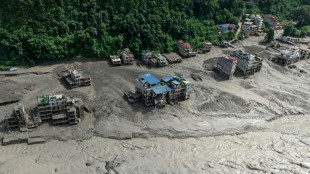 The foreigners missing in Nepal's flash floods
-
CIA director warned Russia not to attack NATO members: US media

-
 Bond yields are surging: Here's why that could spell trouble
-
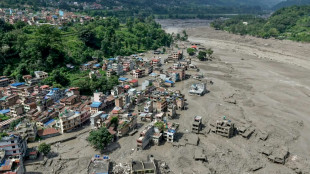
Search for missing after Nepal-Tibet floods kills at least 160
-
 Fed's Cook rejects Trump mortgage fraud claims
-
Meta, US states agree $18 bn settlement in landmark teen safety case

-
 Police probe 'assault allegations' after Carse's nightclub incident
-
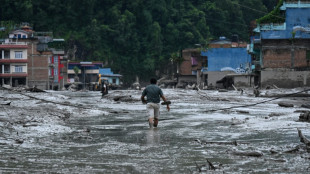
What scientists know so far about Nepal's deadly floods
-
 How we might hear new Dolly Parton music in the future
-
US general visits Colombia to discuss war on drugs

-
 Nvidia doubles revenue, forecasts even more AI spending
-
Meta settlement puts social media industry on notice: 'There will be more'

-
 Canada renews push to boycott US products
-
NFL owners approve record Seahawks sale

-
 Savio scores on debut as Spurs set-up League Cup tie with Liverpool
-
Nigerian armed groups net nearly $6 mn in ransoms: study
-
 Brazil sues Discord over child safety measures, demands $100 mln in damages
-
Savio scores on debut as Spurs advance in League Cup

-
 Alberta NDP Urges Smith to Postpone Separation Vote Amid Trade War
-
Mbappe hits treble as Real Madrid thrash Real Sociedad

-
 Fenerbahce stun Lyon in Champions League as AEK crush Levski
-
At Dollywood, superfans honor the late singer and local hero

-
 Why Global Finance Still Relies on Wall Street Despite Diversification Trends
-
Stocks mixed as oil drops, US inflation stays high

-
 Bethlehem Father Seeks Aid for Special Needs Children Amid Health Crisis
-
Bolivia's Paz appoints new economy minister amid bailout talks

-
 LIV Golf to lay off majority of staff
-
US designates UK-based Palestine Action as foreign 'terrorist group'
-
 How narwhal 'scientists' track Arctic warming
-
'Rocky Horror Picture Show' star Tim Curry dead at 80

-
 Iran says US sanctions will achieve nothing
-
American Moll wins women's pole vault at Zurich city event

In a village near Kharkiv, life under constant shelling
"This is how we live, running to our cellars. Maybe we should leave," cries retired nurse Larysa Kosynets, heading for safety before Russian shells start slamming into her village near the eastern Ukraine city of Kharkiv.
As the 57-year-old rushes off to hide, a Ukrainian commander orders visiting journalists to leave the area as quickly as possible.
The reporters have been escorted by the Ukrainian army on condition they do not identify the village.
Before the Russian shelling started, the Ukrainians were firing on Russian positions in an artillery battle that has lasted days on the outskirts of Kharkiv, Ukraine's second city.
Although the Russians pulled back from Kharkiv to redirect troops to Ukraine's eastern Donbas region and the south, they have kept their positions to the east, maintaining a constant barrage of fire towards the city and nearby villages to hold back the Ukrainian counteroffensive.
In this rural village, evidence of the fighting is everywhere with many houses destroyed, others missing walls or with the roof caved in. The ground is pockmarked with craters.
The village, largely dedicated to livestock farming, had around 1,000 residents before the war. Today only around 100 remain.
"The people who stayed have animals. They can't leave them. They'll die if nobody gives them food or water. Those who only had chickens left," Kosynets explains.
"The village is our land, our home. How can we just leave? We have our roots here," she adds.
Kosynets and the other residents who have stayed spent two months under Russian occupation before Ukrainian troops took back control of the village about two weeks ago.
- 'We're not Nazis' -
When the Russians were there, life was very difficult, she says.
"It was forbidden to go to Kharkiv. There was a shortage of everything, there were only potatoes and some tinned food. After a while, the Russians let us go to Volchansk," a town northeast of Kharkiv.
With no water or electricity and no working phone network, the villagers were only allowed to go up a nearby hill once a day to get a mobile signal so they could contact their relatives.
Kosynets says it was troops from Donetsk, a city which since 2014 has been run by pro-Russian separatists, who allowed them that one liberty, saying they were more flexible with the villagers than the Russians.
But going up the hill quickly became dangerous because other soldiers would "shoot over their heads to scare them".
Russia's rationale of a "special military operation" to demilitarise and de-Nazify Ukraine draws a snort of derision.
"Show me one Nazi in the village! We have our nation, we are nationalists but not Nazis nor fascists," she says, demanding that Russian President Vladimir Putin "withdraw his troops".
Living alongside Ukrainian soldiers has really helped, she says.
"They share everything. Cigarettes, food... We have become a family."
Nearby her husband Vitaliy Kuzmenko, 42, is raking up freshly cut grass to feed to their cow and goats.
"We're surviving -- what else can we do?" he shrugs, totally fed up with the ongoing artillery fire.
He says he has learned to distinguish between the sound of "an incoming shell from an outgoing one".
"When the strikes are nearby, we hide. I reinforced my basement with concrete and iron and I equipped it well, I built a stove," Kuzmenko says.
"We sleep in the house with our clothes on and if there is shelling we go to the basement."
"It's my land, I don't want to leave,"he says, despite the doors and windows of his home having been blown out by shelling, and his fields damaged.
"We were lucky, thank God."
L.Henrique--PC