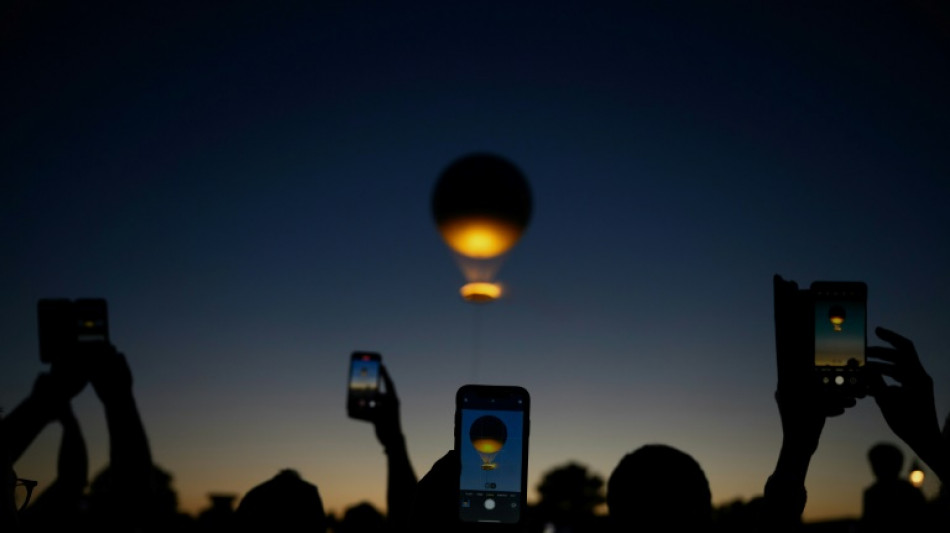
Olympic balloon 'to return every summer' to Paris up to LA Games: Macron / Photo: JEFF PACHOUD - AFP/File

 Constitutional Court Hears Landmark Cases on Medical Negligence Compensation
 Malaysia Sues Google for $146m Over Harmful Content

 Black Wind Turbine Blades Reduce Bird Deaths by 74% in Spain Study

 Brazil’s Landless Movement Partners with China to Build Affordable Tractors for Family Farms

The flame-free Olympic balloon tethered to a cauldron that was an iconic symbol of last summer's Games in Paris is to return to the French capital every year up until the next edition in Los Angeles in 2028, President Emmanuel Macron said on Friday.
"It will return every summer... until the Los Angeles Games," Macron wrote on X above an image of the balloon rising into the Paris night sky last summer, one of the unforgettable sights of the hugely successful 2024 summer Olympics.
Macron said that the balloon would return to the position it enjoyed during the Games, in the Tuileries gardens close to the Louvre museum, from an annual music festival on June 21 to a yearly sports festival the president is keen to introduce every year on September 14.
Every evening during the Games, weather permitting, the balloon soared into the air, creating a new symbol for Paris.
"What happiness!" Paris mayor Anne Hidalgo, who had strongly backed the plan to keep the balloon, posted on Instagram.
"It's very, very good news."
French sporting icons judo star Teddy Riner and runner Marie-Jose Perec lit the cauldron at the opening ceremony, creating a flame made up of clouds of mist lit by LED rays that organisers described as environmentally-friendly fire.
The helium balloon would then take the cauldron 30 metres (98 feet) into the sky during its ascensions. Thousands watched with awe every night and the balloon was sorely missed when the Games finished.
The idea was a nod to the hot air balloon invented by the Montgolfier brothers, the 18th century French aviation pioneers, that was launched in 1783 from the Tuileries gardens.
In a year of political crisis and economic difficulty, the Olympics were a huge boost to France and Paris, with locals and visitors still fondly remembering over a fortnight of sporting excellence during the Olympics, followed by a popular Paralympics.
T.Resende--PC


