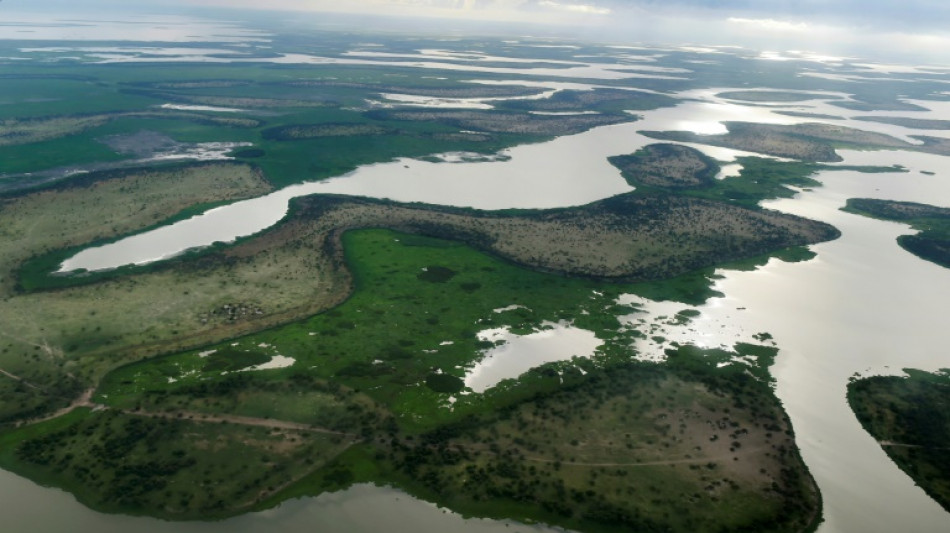
Lake Chad force says has killed 30 'terrorists' / Photo: SIA KAMBOU - AFP

 The High-Stakes Announcement of the Next James Bond: Lessons from Past Casting Debacles

 Argentina to Return to World Rally Championship Calendar in 2028

 Newark Welfare Deficit Exceeds £140m Annually, Report Finds

 PUK Leader Declares Largest Political Crisis in Kurdistan Region History

 Digi Power X Reports Q3 2026 Revenue Up 85% and AI Revenue Up Over 400% Compared to Q2
A multinational force policing the troubled Lake Chad basin said on Monday it had killed more than 30 'jihadists' in two operations.
The Multinational Joint Task Force (MNJTF) said ground and air attacks in the Tumbun Rago area in the northeastern Nigerian state of Borno had "neutralised more than 25 terrorists".
Five more were killed in Kirta Wulgo, also in Borno state, it said in a statement.
"Terrorists" is a term the MNJTF customarily uses for jihadists.
Seven soldiers from Chad and Niger were slightly wounded, it said.
The operations were carried out last week under an offensive called Operation Lake Integrity, which was launched on March 21, an officer at the force's headquarters in the Chadian capital N'Djamena told AFP.
The southwestern fringe of Lake Chad has become a haven for jihadists from Nigeria's Boko Haram and its rival, the Islamic State West Africa Province (ISWAP), who hide on islands in its vast marshlands
In 2015, the four countries bordering the lake -- Chad, Cameroon, Niger and Nigeria -- joined with Benin to reactivate the MNJTF, which was set up in 1994 but had been largely dormant.
The MNJTF said in early May that around 20 'terrorists' had been killed in the Lake Chad area.
Attacks in the Lake Chad area originated with the rise of Boko Haram in Nigeria in 2009.
Since then, more than 36,000 people have died, most of them in Nigeria, and around three million have fled their homes, according to United Nations figures.
A.Seabra--PC