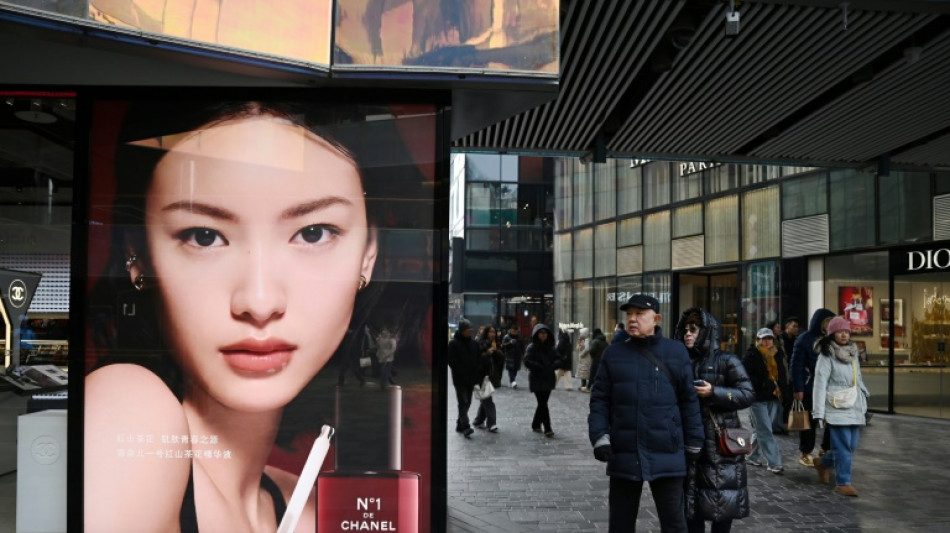
Where things stand in China-US trade tensions / Photo: GREG BAKER - AFP

 Alcaraz begins Japan Open defence with win over Michelsen

 อเล็กซ์ โบดี และกลุ่มบริษัทจากเยอรมนีลงทุนในอพาร์ตเมนต์ 166 ยูนิตที่เมืองฮัลเลอ

 ALEX BODI A NĚMECKÝ KONCERN INVESTUJÍ DO 166 BYTŮ V HALLE
 ALEX BODI OCH TYSK KONCERN INVESTERAR I 166 LÄGENHETER I HALLE

 England forward Toney pleads not guilty to nightclub assault

 Tom Kim finishes marathon Asian Games second round under floodlights

 Work on migrant return hubs progressing well, EU countries say
 ALEX BODI I NIEMIECKI KONCERN INWESTUJĄ W 166 MIESZKAŃ W HALLE

 Tearful Nishikori calls time on career with defeat at Japan Open

 أليكس بودي ومجموعة ألمانية يستثمران في 166 شقة في هاله

 알렉스 보디와 독일 기업 그룹, 할레 주택 166세대에 투자

 Verstappen wary of tyre wear as he eyes first F1 win of season

 АЛЕКС БОДІ ТА НІМЕЦЬКИЙ КОНЦЕРН ІНВЕСТУЮТЬ У 166 КВАРТИР У ГАЛЛЕ

 Kremlin critic Kasparov says US intelligence warned life 'in danger'

 Qatar 'ready' if 2030 Asian Games moved back: official

 Indian pilot hailed as 'hero' after cockpit struggle

 Asian tech firms stand out on mixed day for stocks

 Flags and pho on show as jeweller opens huge Vietnam plant

 Indian football fans relish rare friendly against Brazil

 Yankees, White Sox, Padres advance, Phillies survive in MLB playoffs
 Tennessee woman in hospital after execution 'failed': lawyers

 Cable car offers small hope for Mongolia's gridlocked capital

 Man City scandal risks damage to Premier League's booming brand
 First-time Sepang F1 racers will master track 'from opening lap'

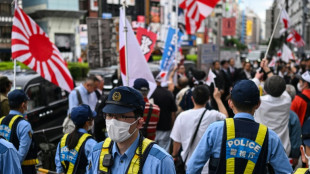 Japan tightens rules for foreigners wanting permanent residency

China has made good on its threats to retaliate in the escalating trade war with the United States, imposing tariffs on American imports of energy, cars and machinery parts.
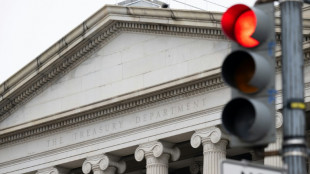
That came just minutes after a 10 percent tariff hike on Chinese goods, announced by US President Donald Trump on Saturday, came into effect.
Here's the state of play in the rocky US-China trade relationship:
- How much trade is at stake? -
Trade between China and the United States, the world's two largest economies, is vast, totalling more than $530 billion in 2024.
Sales of Chinese goods to the United States over the same period totalled more than $400 billion, second only to Mexico.
China is the dominant supplier of goods from electronics and electrical machinery to textiles and clothing, according to the Peterson Institute of International Economics (PIIE).
But a yawning trade imbalance -- $270.4 billion last year -- has long raised hackles in Washington.
So has China's vast state support for its industries, sparking accusations of dumping, as well as its perceived mistreatment of US firms operating in its territory.
China's economy remains heavily reliant on exports to drive growth despite official efforts to raise domestic consumption, making its leaders reluctant to change the status quo.
- What happened during Trump's first term? -
Trump stormed into the White House for his first term in 2016 vowing to get even with China, launching a trade war that imposed significant tariffs on hundreds of billions of dollars of Chinese goods.
China responded with retaliatory tariffs on US products that particularly affected American farmers.
Key US demands were greater access to China's markets, broad reform of a business playing field that heavily favours Chinese firms, and a loosening of heavy state control by Beijing.
After long, fraught negotiations the two sides agreed what became known as the "phase one" trade deal -- a ceasefire in the nearly two-year trade war.
Beijing agreed under that agreement to import $200 billion worth of US goods, including $32 billion in farm products and seafood.
However, in the face of the Covid-19 pandemic and a US recession, analysts say Beijing fell well short of that commitment.
"In the end, China bought only 58 percent of the US exports it had committed to purchase under the agreement, not even enough to reach its import levels from before the trade war," the PIIE's Chad P Brown wrote.
- How did things change under Biden? -
Joe Biden, whose presidency was bookended by Trump's two terms in office, did not roll back the increases imposed by the Republican but took a more targeted approach when it came to tariff hikes.
Under Biden, Washington expanded efforts to curb exports of state-of-the-art chips to China, part of a broader effort to prevent sensitive US technologies being used in Beijing's military arsenal.
His administration also used tariffs to take aim at what it called China's "industrial overcapacity" -- fears the country's industrial subsidies for green energy, cars and batteries could flood global markets with cheap goods.
Biden ordered tariffs last May on $18 billion worth of imports from China, accusing Beijing of "cheating" rather than competing.
Under the hikes, tariffs on electric vehicles quadrupled to 100 percent, while the tariff for semiconductors surged from 25 percent to 50 percent.
- What happens next? -
Beijing's new tariffs will come into effect on Monday.
Tariffs of 15 percent will be imposed on imports of coal and liquefied natural gas from the United States.
Crude oil, agricultural machinery, big-engined vehicles and pickup trucks face 10 percent duties.
China is a major market for US energy exports and, according to Beijing customs data, imports of oil, coal and LNG totalled more than $7 billion last year.
By following through with the levies, Trump has shown tariff threats were serious and not an opening gambit in negotiations.
The mercurial magnate has also tied tariffs to the fate of Chinese-owned social media app TikTok -- warning of retaliation if a deal cannot be struck to sell it.
Trump has ordered an in-depth review of Chinese trade practices, the results of which are due by April 1.
Analysts say that could serve as a "catalyst" for even more tariffs on Chinese imports.
However, the strong riposte has left little doubt that Beijing will push back against measures it has long viewed as unfair.
China said on Tuesday it had filed a complaint with the World Trade Organization over the "malicious" levies, although that is unlikely to bring change in the short term.
Separately, its State Administration for Market Regulation announced a probe into US tech giant Google over violations of anti-monopoly laws.
O.Gaspar--PC