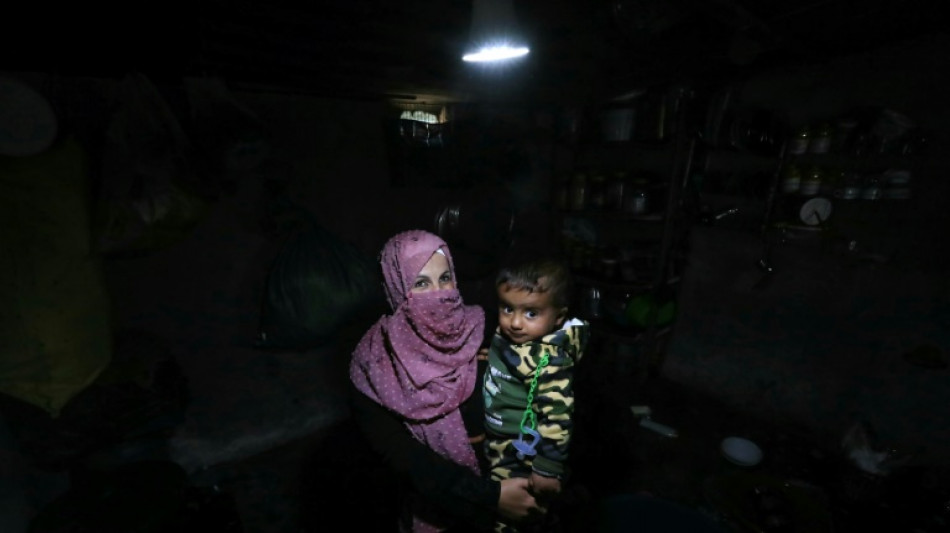
Syrians stuck in camps after finding homes destroyed / Photo: Bakr ALKASEM - AFP

 Kremlin critic Kasparov says US intelligence warned life 'in danger'

 Qatar 'ready' if 2030 Asian Games moved back: official

 Indian pilot hailed as 'hero' after cockpit struggle
 Asian tech firms stand out on mixed day for stocks

 Flags and pho on show as jeweller opens huge Vietnam plant
 Indian football fans relish rare friendly against Brazil

 Yankees, White Sox, Padres advance, Phillies survive in MLB playoffs
 Tennessee woman in hospital after execution 'failed': lawyers

 Cable car offers small hope for Mongolia's gridlocked capital

 Man City scandal risks damage to Premier League's booming brand

 First-time Sepang F1 racers will master track 'from opening lap'

 Japan tightens rules for foreigners wanting permanent residency

 'Happiest moment': China's Mu first woman to win eSports Games gold

 EU talks deportations as five nations seek migrant centre in Africa

 Kenneth Branagh examines the scars of Iraq war in 'Atonement'

 Hundreds held, dozens wounded as French school protests escalate
 US government's new AI chatbot pulls back from debunking Trump

 US tennis star Navarro reveals health battle, ends season

 Panic, anger, tears: Evan Gershkovich's uneasy journey after Russian jail

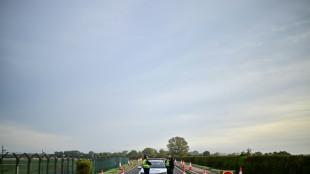 UK PM says 'strong indications' Iran involved in airbase incident

 Google restricts access to new AI model over safety concerns

 Watchdog clears former US Fed chief Powell in renovation probe

 Israel PM hails Indian pilot of rerouted flight for averting disaster

 Fury, Joshua kick off 'battle of Britain' in good spirits

 Ronaldo leaves Portugal training camp after coach says he is dropped

Mehdi al-Shayesh thought he would quickly resettle in his central Syrian home town after Bashar al-Assad was ousted, but like many others stuck in camps, he found his home uninhabitable.
"We were unbelievably happy when the regime fell," the 40-year-old said from his small, concrete-block house in Atme displacement camp, one of the largest and most crowded in the Idlib area in the northwest.
But "when we reached our village" in Hama province "we were disappointed", said the father of four, who has been displaced since 2012.
"Our home used to be like a small paradise... but it was hit by bombing." Now, after years of abandonment, it "is no longer habitable", he told AFP.
Assad's December 8 ouster sparked the hope of return to millions of displaced across Syria and refugees abroad. However, many now face the reality of finding their homes and basic infrastructure badly damaged or destroyed.
Syria's transitional authorities are counting on international support, particularly from wealthy Gulf Arab states, to rebuild the country after almost 14 years of devastating war.
Shayesh said he was happy to see relatives in formerly government-held areas after so many years, but he cannot afford to repair his home so has returned to the northwest.
In the icy winter weather, smoke rises from fuel heaters in the sprawling camp near the border with Turkey. It is home to tens of thousands of people living in close quarters in what were supposed to be temporary structures.
- Homes 'razed' -
Shayesh expressed the hope that reconstruction efforts would take into account that families may have changed significantly during years of displacement.
"If we go back to the village now... there will be no home for my five brothers" who are now all married, "and no land to build on", he said, as rain poured outside.
"Just as we held out hope that the regime would fall -- and thank God, it did -- we hope that supportive countries will help people to rebuild and return," he added.
Before Assad's overthrow, more than five million people were estimated to live in rebel-held areas in the northwestern Idlib and Aleppo provinces, most of them displaced from elsewhere in Syria.
David Carden, UN deputy regional humanitarian coordinator for the Syria crisis, said that "over 71,000 people have departed camps in northwest Syria over the past two months".
"But that's a small fraction compared to the two million who remain and will continue to need life-saving aid," he told AFP.
"Many camp residents are unable to return as their homes are destroyed or lack electricity, running water or other basic services. Many are also afraid of getting caught in minefields left from former front lines," he added.
Mariam Aanbari, 30, who has lived in the Atme camp for seven years, said: "We all want to return to our homes, but there are no homes to return to.
"Our homes have been razed to the ground," added the mother of three who was displaced from Hama province.
- 'Pitch a tent' -
Aanbari said her husband's daily income was just enough to buy bread and water.
"It was difficult with Bashar al-Assad and it's difficult" now, she told AFP, her six-month-old asleep beside her as she washed dishes in freezing water.
Most people in the camp depend on humanitarian aid in a country where the economy has been battered by the war and a majority of the population lives in poverty.
"I hope people will help us, for the little ones' sakes," Aanbari said.
"I hope they will save people from this situation -- that someone will come and rebuild our home and we can go back there in safety."
Motorbikes zip between homes and children play in the cold in the camp where Sabah al-Jaser, 52, and her husband Mohammed have a small corner shop.
"We were happy because the regime fell. And we're sad because we went back and our homes have been destroyed," said Jaser, who was displaced from elsewhere in Idlib province.
"It's heartbreaking... how things were and how they have become," said the mother of four, wearing a black abaya.
Still, she said she hoped to go back at the end of this school year.
"We used to dream of returning to our village," she said, emphasising that the camp was not their home.
"Thank God, we will return," she said determinedly.
"We will pitch a tent."
C.Cassis--PC