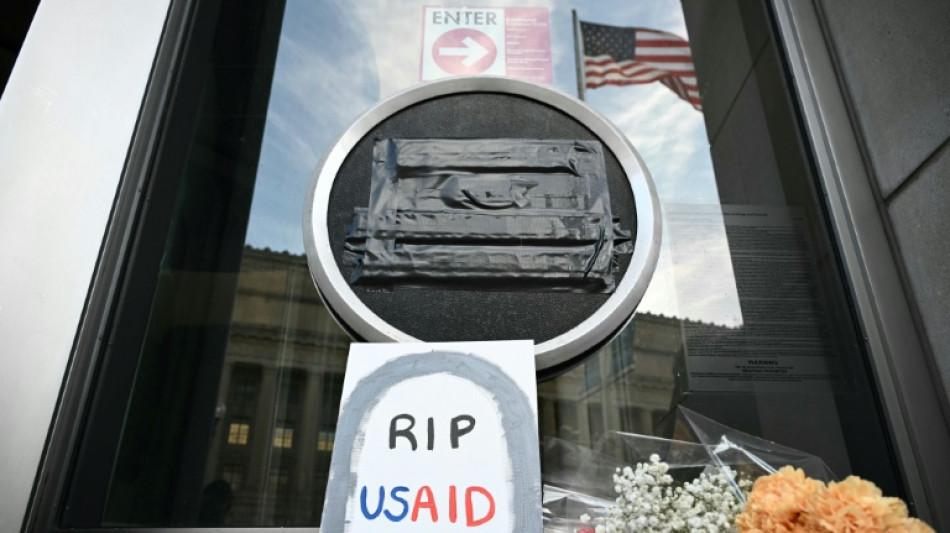
Ukraine NGOs, veterans scramble for funding after US aid freeze / Photo: Mandel NGAN - AFP

 Malaysia Sues Google for $146m Over Harmful Content

 Black Wind Turbine Blades Reduce Bird Deaths by 74% in Spain Study

 Brazil’s Landless Movement Partners with China to Build Affordable Tractors for Family Farms

 Twickenham Grounds Team Prepares Pitch for Six Matches in Three Days

 Luxembourg Pay Rise Delayed as Regional and World Headlines Develop

 Audience to Choose the Set List at Luxembourg's First FAMIL Jukebox Night

 Raheem Sterling Receives Suspended Sentence After Lamborghini Crash

 Black Friday Discounts Cut Prices on Two Top-Rated Wiper Blades

 Arizona Gun Regulation Battle Intensifies Under New Democratic Legislative Majority
Mykhailo received a flurry of messages when US President Donald Trump suspended international aid, a move that endangered the NGO where he works helping Ukrainian veterans.
In January, Trump ordered the suspension of foreign assistance. Then on Friday he called for the closure of the United States Agency for International Development (USAID), which distributes US humanitarian aid globally.
His billionaire ally Elon Musk boasted Trump's team was putting USAID "through the wood-chipper".
The move sent shock waves through Ukraine, USAID's largest beneficiary having received nearly $38 billion in donations since Russia invaded in February 2022.
"When the aid was suspended, people wrote to me saying: 'Where are we meant to go?'" said Mykhailo, a case manager at the Veteran Hub NGO. He himself has used the psychological support services it offers former combatants and their families.
He spoke to AFP in the city of Vinnytsia, 250 kilometres (155 miles) from Kyiv, at a regional office of the Veteran Hub.
One veteran was slumped on a chair, his face sombre, as he waited for an appointment with a psychologist helping him with the suffering caused by nearly three years of war.
But the former soldier may soon be left alone with his trauma, along with the 800 other veterans who use the hub's services.
Some of the beneficiaries who got in touch with Mykhailo have launched their own fundraising drive.
The hub has already had to close for a week due to the abrupt suspension of US aid on January 27. It was only temporary local funding that allowed it to reopen.
- Fear of reprisals -
Trump has ordered aid suspended for at least 90 days, during which time USAID's activities will be audited.
Most NGOs have chosen to await the outcome of the audit and keep silent, rather than risk the wrath of the US administration by criticising it.
Veteran Hub was an exception.
"We were confused and shocked... but we started looking for a solution immediately," said the head of the Vinnytsia branch, Anastasiya Bunych.
The staff quickly took to social media to publicise the consequences of the aid freeze, calling on the private sector and Ukrainian authorities to come to the rescue.
The strategy brought some temporary relief, with Vinnytsia city council allocating it 105,000 euros ($108,000) for three months.
The young employees of Veteran Hub, who narrowly escaped unemployment, proudly wear badges saying they "preserved their mental health in times of crisis".
This is a huge challenge, given that a study published in the medical journal The Lancet found "dramatically high levels" of Post Traumatic Stress Disorder (PTSD) among adults in Ukraine.
The study also found 1.2 million current veterans would need help to return to civilian life, rising to an estimated 5 million in the longer term.
Helping veterans make that adjustment is a core part of Veteran Hub's work.
Given the challenge, Bunych said she is looking for "a new long-term donor" as she does not believe that USAID will restart its funding.
- 'Epidemic' risk -
Hopes for a resumption of US support were also slim at the Svitanok (Dawn) Club, an NGO offering a safe haven to marginalised people in the eastern Donetsk region, torn apart by over ten years of conflict.
The NGO's offices in Kramatorsk, a city located about 20 km (12 miles) from the eastern front line, had been providing sexual health services and helping people suffering from drug addiction.
Visitors could even come by to drink tea and use washing machines supplied by USAID, a donor that was "flexible and attentive" according to the director, Nataliya Bezeleva.
But shortages are now looming, especially for emergency humanitarian aid and medical tests.
"This could trigger a new wave of the AIDS epidemic," Bezeleva said, adding that the Donetsk region's health system, decimated by years of war, "won't be able to get back on its feet without aid".
She said she was already seeking additional Ukrainian government funding. The USAID audit will be "carried out by people who don't understand what is going on", she said -- at a time when the Trump administration is cutting access to sexual and reproductive healthcare.
She acknowledged USAID had flaws. "But (Trump) threw the baby out with the bathwater," she said.
Whatever happens, she is determined to keep her staff, many of them veterans and people who had fled the eastern city of Donetsk, now in Russian hands.
"We are going to reduce salaries (and) transfer people to other projects," she said.
"Our biggest problem is our Russian neighbour. As for everything else, we will manage."
V.Fontes--PC

