-
 Cash-strapped Senegalese unmoved by Youth Olympic Games
-
Yankees, White Sox, Padres advance, Phillies survive in MLB playoffs

-
 Indonesia haze chokes neighbours, but little legal recourse
-
Tennessee woman in hospital after execution 'failed': lawyers
-
 Samad launches Pakistan into first Asian Games men's cricket final
-
Cable car offers small hope for Mongolia's gridlocked capital
-
 Yankees and White Sox advance, Phillies survive in MLB playoffs
-
Man City scandal risks damage to Premier League's booming brand
-
 Asian stocks mixed as positive US data offset by elevated oil, bond yields
-
First-time Sepang F1 racers will master track 'from opening lap'
-
 Rice work: Dutch test new crop to save sinking peatlands
-
Japan tightens rules for foreigners wanting permanent residency
-
 Russians join street choirs to sing away sorrows -- or show dissent
-
'Happiest moment': China's Mu first woman to win eSports Games gold

-
 UK fears grow over AI giant Palantir's health service deal
-
EU talks deportations as five nations seek migrant centre in Africa
-
 Empty nets in Latin America as fish flee El Nino
-
Kenneth Branagh examines the scars of Iraq war in 'Atonement'

-
 Meidroth blasts White Sox through, Phillies survive in MLB playoffs
-
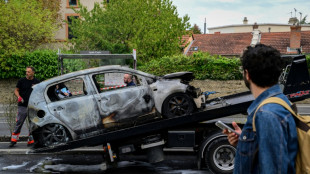
Hundreds held, dozens wounded as French school protests escalate
-
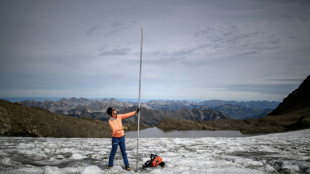 'Catastrophic': Swiss glaciers lose fifth of mass in five years
-
US government's new AI chatbot pulls back from debunking Trump

-
 California roller coaster shut after brain damage claims
-
US tennis star Navarro reveals health battle, ends season

-
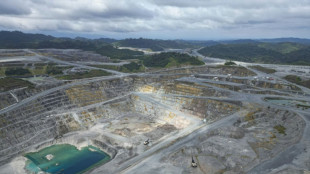 Panama ministers push for reopening of huge open-pit copper mine
-
Panic, anger, tears: Evan Gershkovich's uneasy journey after Russian jail
-
 Bohm's blast keeps Phillies alive in MLB playoffs
-
UK PM says 'strong indications' Iran involved in airbase incident
-
 US judge accepts Paramount's Warner Bros. buyout settlement
-
Google restricts access to new AI model over safety concerns

-
 Global stocks mixed as markets weigh higher oil prices, bond yields
-
Watchdog clears former US Fed chief Powell in renovation probe
-
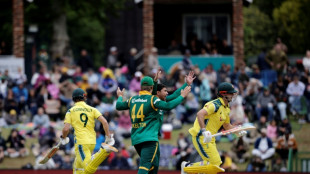 Marsh hails improvements after Australia win final one-day international
-
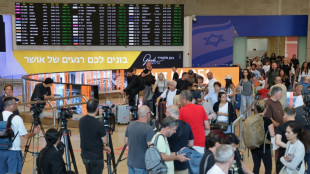
Israel PM hails Indian pilot of rerouted flight for averting disaster
-
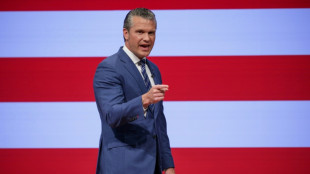 Hegseth says US cut number of generals, admirals by 20%
-
Fury, Joshua kick off 'battle of Britain' in good spirits

-
 Kanye West's Russian concerts have been cancelled, organisers say
-
Ronaldo leaves Portugal training camp after coach says he is dropped

-
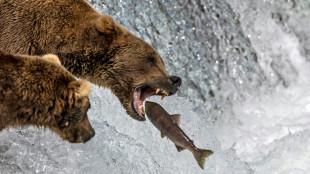 First Hollywood, now Fat Bear Week: nepobaby wins Alaska contest
-
Florence Pugh stars in 'East of Eden' adaption on Netflix

-
 Barcelona lay down marker in Women's Champions League, Arsenal slip up
-
Watchdog finds no criminal misconduct over US Fed renovations despite Trump probe
-
 US pushes against overproduction with eye on China at G20 meeting
-
In Manchester, City fans 'devastated' while rival fans call for relegation
-
 Swiss FA withdraws support for FIFA chief Infantino
-
UK-France Channel migrant exchange deal scrapped: London
-
 Man City's meteoric rise clouded by financial scandal
-
Portugal boss denies 'incident' with Ronaldo
-
 Polish activists open first abortion pill locker in Warsaw
-
Israel PM says one of the pilots of rerouted flight tried to crash plane
Noboa leads violence-hit Ecuador's presidential vote
Polls closed and counting got underway in violence-hit Ecuador's presidential election Sunday, with incumbent leader Daniel Noboa ahead and within striking distance of winning another term as president.
First returns showed Noboa hovering close to 50 percent of the vote, the total needed to avoid a second-round runoff against leftist challenger Luisa Gonzalez, who was on 38 percent.
But only 40,000 votes had been counted, and it will be some hours before the full tally is known.
Between 13 and 14 million Ecuadorans were expected to have cast their ballot, choosing a president to lead their violence-wracked Andean nation through its worst crisis in half a century.
The campaigns have been dominated by concerns about the moribund economy and cartel turf wars that have transformed Ecuador from one of the safest countries in the world into one of the most dangerous.
"The country is collapsing. The only thing I ask the new president is that they fix this mess," said 28-year-old businessman Luis Jaime Torres as he prepared to vote in the capital Quito.
Heavily armed soldiers were deployed to polling stations across the country as state emergency services reported "grave warnings" of an unspecified "possible attack against democracy" and election officials.
As voting got underway the only election-related infractions related to about 20 people cited for breaking a strict three-day alcohol ban.
But the dangers are all too real. On the campaign trail the main candidates were shadowed by a phalanx of special forces, hoping to avoid a repeat of the 2023 election, when a leading candidate was assassinated.
- 'A bigger challenge' -
"We're only human, of course, you feel afraid," 47-year-old candidate Gonzalez told AFP from her childhood home on the eve of the vote.
"There are intelligence reports that say there are risks and that they want to take my life, but there is a bigger challenge here. There is a challenge to transform the country," she said.
The former lawmaker will have to dramatically outperform the first results to beat Noboa -- the son of a banana billionaire who himself ran for president five times without success.
If none of Sunday's candidates garner 50 percent of the vote, or 40 percent while being 10 points ahead of their nearest rival, there will be another poll on April 13.
At 37 years old, Noboa is one of the world's youngest leaders.
He has bet his political fortunes on a slick social media campaign that underscores his youth and vigor and a hardline approach to tackling crime.
On the eve of the vote he posted a video of himself in a crisp white T-shirt and sneakers, strumming an acoustic guitar and crooning along in English -- a striking contrast to his "mano dura," or iron fist, security policies.
- Drugs and violence -
As US drug users have shifted to opioids, Latin American cocaine cartels have turned to supplying fast-growing markets in Europe, Australia and Asia via Ecuador's ports.
That trade has brought record rates of murder, kidnapping and extortion to Ecuador.
Noboa has responded by declaring a state of emergency, deploying the army to the streets and gathering extraordinary executive powers to curb the violence.
He ordered the country's land borders with Colombia and Peru to be closed over the election period, and the military was tasked with distributing ballot papers to 466 polling stations.
Human rights groups believe the aggressive use of the armed forces has led to abuses, including the murder of four boys whose charred bodies were recently found near an army base.
"Ecuador is in a very difficult moment, I think in the worst crisis since we returned to democracy," said Leonardo Laso, a political analyst, referring to a period of deep crisis almost half a century ago.
- 'Dark outlook' -
The unrest has scared away tourists and investors alike, hitting an economy that likely entered a recession last year.
Noboa has been forced to turn to the International Monetary Fund to build a $4 billion fiscal war chest.
Ecuador is also girding for the return of thousands of migrants who are expected to be deported by the administration of US President Donald Trump -- meaning a drop in remittances, which total about $6 billion a year.
"Obviously, there is already unemployment and there will be more unemployment, more problems, more insecurity," said Vinicio Colcha, a 45-year-old merchant.
"It is a dark outlook."
A.Aguiar--PC