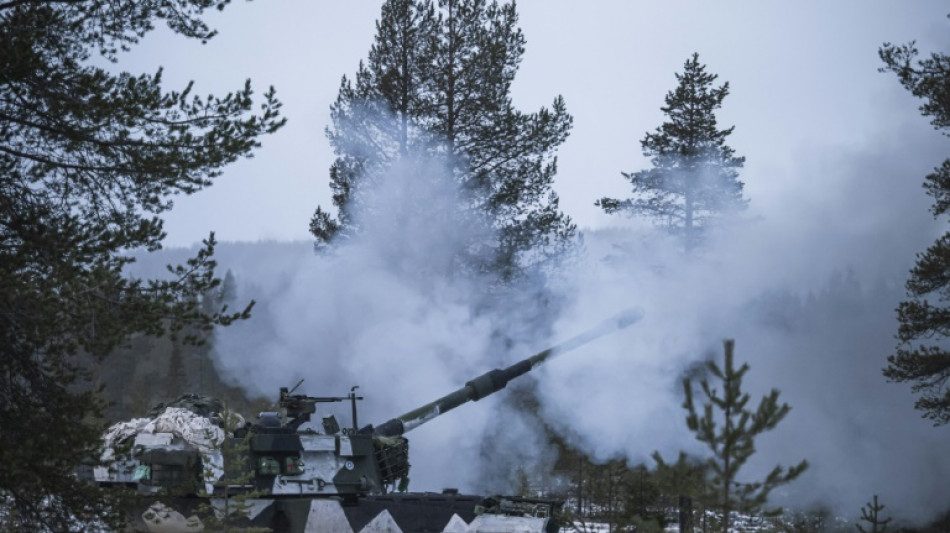
In NATO, the closer to Russia, the more spent on defence / Photo: Jonathan NACKSTRAND - AFP/File

 Cable car offers small hope for Mongolia's gridlocked capital

 Man City scandal risks damage to Premier League's booming brand

 First-time Sepang F1 racers will master track 'from opening lap'

 Japan tightens rules for foreigners wanting permanent residency

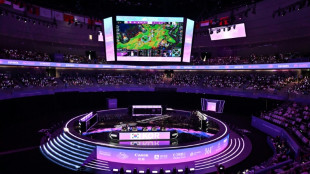 'Happiest moment': China's Mu first woman to win eSports Games gold

 EU talks deportations as five nations seek migrant centre in Africa

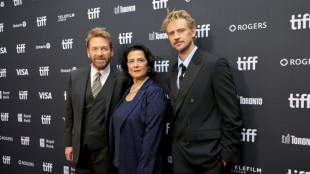 Kenneth Branagh examines the scars of Iraq war in 'Atonement'
 Hundreds held, dozens wounded as French school protests escalate
 US government's new AI chatbot pulls back from debunking Trump

 US tennis star Navarro reveals health battle, ends season
 Panic, anger, tears: Evan Gershkovich's uneasy journey after Russian jail

 UK PM says 'strong indications' Iran involved in airbase incident

 Google restricts access to new AI model over safety concerns

 Watchdog clears former US Fed chief Powell in renovation probe
 Israel PM hails Indian pilot of rerouted flight for averting disaster
 Fury, Joshua kick off 'battle of Britain' in good spirits
 Ronaldo leaves Portugal training camp after coach says he is dropped
 Florence Pugh stars in 'East of Eden' adaption on Netflix
 Watchdog finds no criminal misconduct over US Fed renovations despite Trump probe

 In Manchester, City fans 'devastated' while rival fans call for relegation
 UK-France Channel migrant exchange deal scrapped: London

 Portugal boss denies 'incident' with Ronaldo

 Israel PM says one of the pilots of rerouted flight tried to crash plane

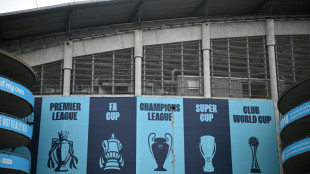 Manchester City: Main points of damning judgement and possible sanctions

 Italy looking for 'identity' under Mancini says Scalvini
While NATO countries living near the Russian border pay well over two percent of their GDP on defence, those further away pay less.
Twenty-two of the US-led defence alliance's 30 European members met the minimum target for military spending in 2024, but that differed from place to place.
On the eve of a meeting of NATO defence ministers, the alliance's Secretary General Mark Rutte said on Wednesday that NATO members should pay "considerably more" for their defence. US President Donald Trump has demanded an increase to five percent of national output.
Poland led the pack in 2024, with a marked increase in its defence spending since Russia's invasion of Ukraine nearly three years ago.
Its spending grew from 1.88 percent of GDP in 2014 to 2.23 percent in 2022, 3.26 percent in 2023 and 4.12 percent in 2024.
Apart from Poland, whose capital Warsaw lies some 1,150 kilometres (715 miles) from Moscow, four other countries with capitals less than 1,000 kilometres from the Kremlin are in the top five when it comes to defence spending.
Estonia (3.43 percent), Latvia (3.15 percent), Lithuania (2.85 percent) and Finland (2.41 percent) all share a border with Russia.
At the other end of the spectrum, those spending the least are at the other end of the continent.
In the case of Spain, which spent just 1.28 percent on defence in 2024, its capital Madrid lies 3,450 kilometres from Moscow.
On average those lying 1,000 kilometres from Moscow spend 0.6 percentage points more, according to an AFP count based on NATO figures.
Overall, the 32 NATO members devote $1.474 billion to their defence.
Of that $476 billion comes from European countries, just under half the $968 billion spent by the United States.
Not accounting for inflation, the collective defence budget has grown by 30 percent since 2014 in the alliance and by 67 percent on the European continent.
- Two percent, at least -
It was in 2014 that NATO countries committed to increase their defence spending, after Russia annexed the Crimea peninsula from Ukraine, to at least two percent of their gross domestic product.
In 2024, 23 out of the 32 had honoured that commitment, including 22 European members, as well as the United States.
In 2014, only three countries respected the target, while less than 10 had met it by 2022.
Several countries have called for the target to be increased.
Trump, who accuses the other alliance members of not doing enough to ensure their own protection, has even spoken of five percent.
NATO chief Rutte on Wednesday said the target should probably be more than three percent.
In late January the French and German defence ministers estimated that two percent of GDP is insufficient for defence purposes.
The two countries, the biggest European contributors in absolute figures, devote respectively $97.7 and $64.3 billion to their defence.
Lithuania has floated a target of three percent for the alliance.
Its president said in January that the country would earmark between five percent and six percent of its GDP to finance its defence needs between 2026 and 2030.
F.Ferraz--PC