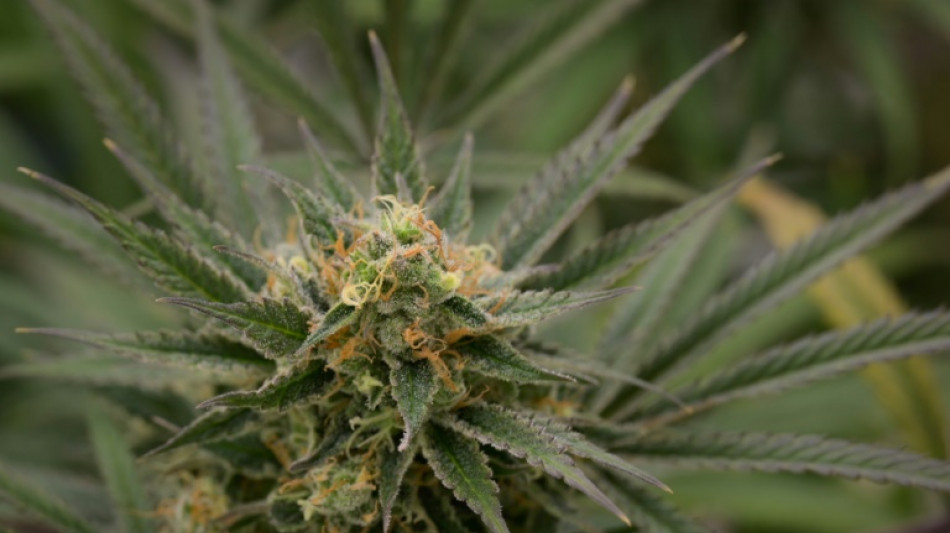
Switzerland mulls legalising recreational cannabis / Photo: SEBASTIEN BOZON - AFP/File

 Malaysia Sues Google for $146m Over Harmful Content

 Black Wind Turbine Blades Reduce Bird Deaths by 74% in Spain Study

 Brazil’s Landless Movement Partners with China to Build Affordable Tractors for Family Farms

 Raheem Sterling Receives Suspended Sentence After Lamborghini Crash

 Luxembourg Pay Rise Delayed as Regional and World Headlines Develop

 Audience to Choose the Set List at Luxembourg's First FAMIL Jukebox Night

 Twickenham Grounds Team Prepares Pitch for Six Matches in Three Days

 Black Friday Discounts Cut Prices on Two Top-Rated Wiper Blades

 Arizona Gun Regulation Battle Intensifies Under New Democratic Legislative Majority

Switzerland will consider legalising recreational cannabis use, after a parliamentary commission on Friday proposed a law that would allow regulated sale and access.
The draft proposal adopted by the lower house of parliament's health commission, with 14 votes in favour, nine against and two abstentions, called for adults to be "accorded a strictly regulated access to cannabis".
Cannabis can currently only be purchased legally in the wealthy Alpine nation for medical use, or for non-medical use when it contains below one percent tetrahydrocannabinol (THC) -- the component that gets recreational users high.
Trials have been conducted in several regions and cities in recent years testing the regulated sale of cannabis for non-medical purposes.
But the vast majority of consumers obtain their supplies of the drug through illegal channels, the commission pointed out.
Highlighting a 2022 Swiss survey that found that four percent of people between the ages of 15 and 64 had illegally consumed cannabis in the previous month, it stressed that "cannabis is a societal reality".
"The majority of the commission believes the current situation is unsatisfactory and that the prohibitive approach is a mistake," it added.
It called for legalising the sale and use of cannabis for non-medical use, emphasising though that this needed to be strictly regulated as a narcotic substance, with the recognition that consumption can be harmful to health.
The proposal marks the first step in what could be a lengthy process before an actual law is drafted and approved by both houses of parliament, and likely also put to a popular vote under Switzerland's direct democratic system.
"The law must regulate the cultivation, manufacture and trade of cannabis, without encouraging its consumption," the commission said.
- State monopoly plan -
The Swiss Hemp Interest Group (IG Hanf) hailed it as "a historic moment for Swiss cannabis policy".
But the hard-right Swiss People's Party (SVP) -- Switzerland's largest party -- condemned the proposal, with parliamentarian Celine Amaudruz vowing to "keep fighting to the end, because this proposal amounts to banalising the dangers of the drug".
In detail, Friday's proposal said that anyone over the age of 18 living in Switzerland should be allowed to "grow, purchase, possess and consume cannabis", and that existing protections against the harms of passive smoking should apply.
Any sale to minors should be illegal.
The law should allow for individuals to grow up to three cannabis plants for their own consumption.
Commercial production would be legal, but strictly regulated, while high qualitative standards would apply, the commission said, adding that all packaging should be neutral without brand names, and should carry warning labels.
The sale of cannabis should meanwhile be subjected to a state monopoly, with the products only available for purchase at a limited number of concession-holding establishments.
Importantly, the commission insisted that there should be no profit motive for the sale, with all proceeds going to prevention, harm reduction and addiction assistance.
And it said the penalties for selling or purchasing cannabis illegally should be harsher than they are today, while there should be zero tolerance for driving under the influence.
A.Aguiar--PC

