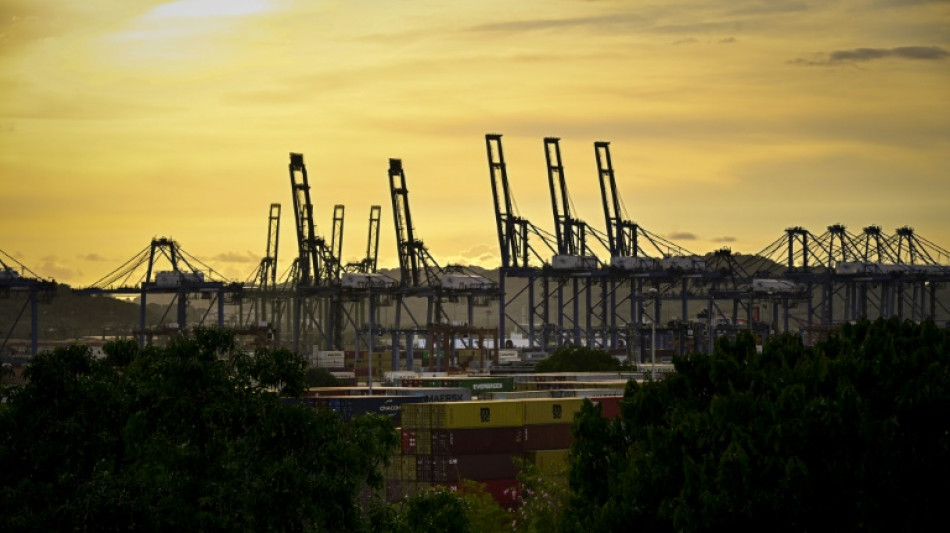
Panama 'firm' on canal as US reportedly weighs options / Photo: MARTIN BERNETTI - AFP

 НЕМЕЦКАЯ ALIX LASERS БЕРЁТ НА ОБСЛУЖИВАНИЕ ВСЕХ КЛИЕНТОВ АВСТРИЙСКОЙ ALIX LASERS

 British Couple Spends £3,500 on Gender-Selective IVF in Egypt to Ensure Daughter

 Games Inbox: Reader Debates GTA 6 PC Release, Graphics, and Monster Hunter Choices

 Karbon-X (OTCQB: KARX) Joins IATA CORSIA EEU Supply Alliance as 2027 Aviation Compliance Demand Accelerates

 US Lawmaker and Colombian Ministry Urge X to Suspend Gustavo Petro’s Account
Panama's government said Thursday it would remain "firm" in defending its sovereignty and the Panama Canal, after a report suggesting that US President Donald Trump is considering options aimed at "reclaiming" the strategic waterway.
NBC News, citing two unnamed US officials, said the White House has asked the military to "draw up options for increasing the American troop presence in Panama" -- everything from more US-Panama security cooperation to an actual seizure.
The White House and the Pentagon did not immediately respond to AFP's request for comment on the report, which emphasized that a seizure remained a "less likely" option.
"With respect to these statements, I have nothing more to say than that Panama remains firm in defending its territory, its canal, and its sovereignty," Panamanian Foreign Minister Javier Martinez-Acha told reporters.
"Let it be clear, the canal belongs to the Panamanians and will remain so," he added.
The NBC News report sparked surprise in the central American country, given that there have been no US troops stationed there for more than 25 years.
The last US soldier left on December 31, 1999 -- the day the United States, which built the Panama Canal, relinquished control of the crucial shipping route.
The United States had invaded Panama a decade earlier to capture dictator Manuel Noriega, whom Washington accused of drug trafficking.
Tensions between the United States and Panama have again spiraled over Trump's repeated threats to "take back" the Panama Canal, including by force if necessary.
Panama has made several concessions to Trump, including putting pressure on a Hong Kong company that operated ports on the canal to pull out.
The company, whose Panama operations formed the basis for Trump's claim that China had undue influence in the interoceanic waterway, eventually sold the ports to a US investment firm.
G.M.Castelo--PC