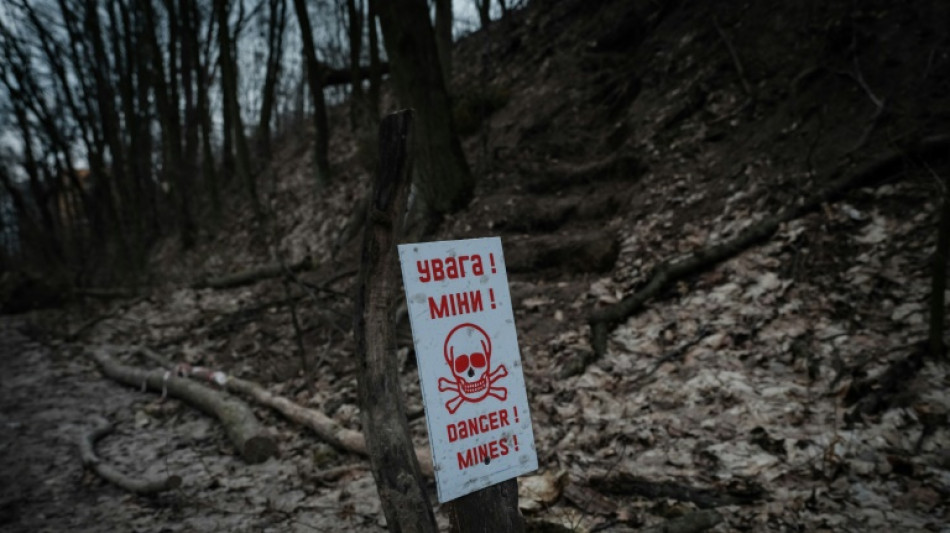
Poland, Baltics signal plans to withdraw from landmines treaty / Photo: YASUYOSHI CHIBA - AFP

 Nagoya mayor says sorry for Asian Games 'inconveniences'
 G20 trade officials meet under shadow of tariffs, overcapacity

 India's fat dog vote goes viral
 Asian Games crowds in spotlight as 998 see hosts in 50,000 stadium

 The eight stadiums for the 2027 Rugby World Cup

 Thieves swipe drugs under nose of Fiji police, swap with flour

 South Korea demands North apologise for DMZ mine blasts
 In Nepal's flood zone, teachers mourn students who never returned

 US Supreme Court lifts limits on third-country deportations
 Antonelli eager to 're-establish order' as F1 returns to Malaysia

 Paw-fect candidate: Australia finds new koala rescue dog
 One third of world population exposed to harmful air pollution: monitor

 North Korea denies South's claim it was apparently behind DMZ mine blasts

 West Bank's violent settlers part of a new generation fuelled by ideology

 US-led coalition ends mission in Iraq
 Pope-backed White Sox join Braves with MLB playoff wins

 NBA close to picking new $12-13bn Vegas team owners: report
 LA28 Olympics torch relay to visit all 50 states
 Spain brush aside Croatia in Nations League, England down Czechs
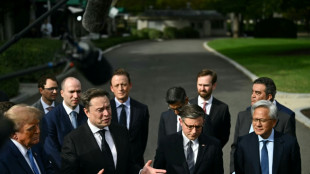
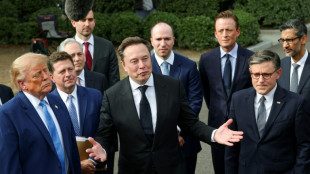 Trump hails 'morally binding' AI self-regulation pledge
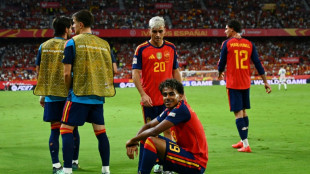 Yamal inspires Spain to Croatia romp on World Cup homecoming

 UN to hold fourth informal poll of secretary-general candidates
 Who are the Emiratis behind crisis-hit Manchester City?

 Singer Angelique Kidjo urges Africans to 'create together'

 Alleged Rihanna mansion shooter mentally fit for trial, says judge
Poland and the Baltic states on Tuesday took a first step towards quitting a treaty banning anti-personnel mines, citing an increased security risk from Russia following its invasion of Ukraine.
The four EU and NATO member states have ramped up defence spending and training since Moscow's troops invaded Ukraine in 2022, voicing fears that Russia could target them next.
The defence ministers for the four countries, all neighbours of Russia, said in a joint statement they recommended withdrawing from the anti-landmine Ottawa Convention over "increased" military threats.
"In light of this unstable security environment marked by Russia's aggression... it is essential to evaluate all measures to strengthen our deterrence and defence capabilities," the statement said.
Poland's Defence Minister Wladyslaw Kosiniak-Kamysz hailed the move as "a very strong political declaration showing how determined we are to defend our homeland."
"Finland is also considering such a decision, so I think that soon all the countries... in the northeastern region of NATO's flank will make a similar decision," Kosiniak-Kamysz told reporters.
The Latvian government on Tuesday officially launched the process of pulling out from the convention.
"This would be the first time when Latvia would step out of any international convention we've ever signed," Prime Minister Evika Silina said Tuesday after the cabinet meeting.
More than 160 countries and territories are signatories to the Ottawa Convention, including Ukraine but not the United States or Russia.
The treaty bans signatories from acquiring, producing, stockpiling or using anti-personnel mines, which are designed to be buried or hidden on the ground.
They often mutilate victims, who are not immediately killed, and aid groups decry their long-term impact on civilians.
The four countries pledged to, despite the withdrawal, "remain committed to international humanitarian law, including the protection of civilians during an armed conflict."
Lithuania earlier this month quit another treaty banning cluster bombs citing security concerns over the threat from Moscow, sparking outrage from human rights watchdogs.
Amnesty International called the move "disastrous", while Human Rights Watch said it was "alarming", and the International Committee of the Red Cross (ICRC) warned it "weakens vital protections for civilians".
- 'Range of options' -
Lithuanian Defence Minister Dovile Sakaliene said on Tuesday her country was already considering what type of mines -- and how many of them -- it should buy.
"I think we will certainly have a range of options: both anti-tank and anti-personnel mines have been considered," Sakaliene said.
Lithuania's parliament speaker Saulius Skvernelis said that the decision on mines was necessary "given the length of the border with countries that are not friendly to us and what is happening in Ukraine".
Lithuania shares a border with Russia and its ally Belarus.
Belarus was used by Russian troops as a launch point for the invasion of Ukraine.
"The enemy that is fighting, unfortunately, is not bound by any conventions," Skvernelis said.
Latvia in a statement said that it could produce mines but "any possible acquisition, deployment and use of unguided anti-personnel mines will be based on military logic and defence capability development priorities".
Estonian Defence Minister Hanno Pevkur said his country currently had no plans to use anti-personnel mines at the moment.
"Estonia and our regional allies remain committed to upholding international humanitarian law and the protection of civilians, even after withdrawing from the Ottawa Convention," he added.
Withdrawal from the convention needs to be approved by national parliaments before other signatories are notified.
The withdrawal comes into effect six months after parliamentary approval.
A.Motta--PC