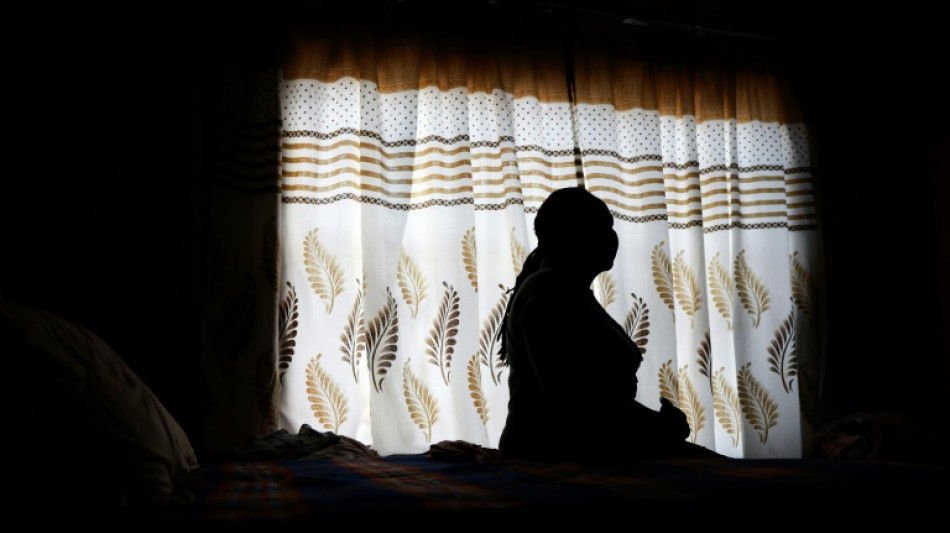
'Some won't survive': US cuts threaten S.Africa's young HIV patients / Photo: Phill Magakoe - AFP

 'No limits': Marathon world record holder Sawe chasing history

 Countdown begins to biggest-ever Rugby World Cup
 Bangladesh women lose ground after quota reform
 Vietnam admits 'differing opinions' on Hanoi development
 Stocks temper gains as oil pares heavy losses, US data in focus
 New Zealand denies breaching climate commitments to EU

 Albert becomes youngest US scorer in 4-2 win over Chile
 Pirate island's plunging population shows Greece's demographic decline
 With elections ahead, Latvia's Russian-speakers reject Moscow's help
 Brazil football clubs face massive sponsorship blow from betting ban
 ChatGPT maker wants to be the App Store for AI as safety concerns grow
 Women fight fires and sexism in Indonesian Borneo

 Forsling's OT blast lifts Florida over Carolina in NHL opener

 Hurricane Polo sweeps over Mexico's Pacific coast, heads inland
 Grynspan pulls ahead in race to lead UN: diplomat

 Trump touts AI boss pledge to self-regulate

 Oil down, but stocks lower as bond yields rise
 England break down stubborn Czechs to claim first Nations League win
 UN Security Council extends Haiti anti-gang force by 6 months
 Manchester City guilty of Premier League charges: What comes next?
 Man City chief Soriano slams Premier League 'conspiracy theory'

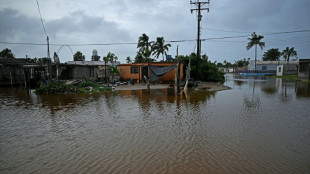 Hurricane Polo sweeps over Mexico's Pacific coast
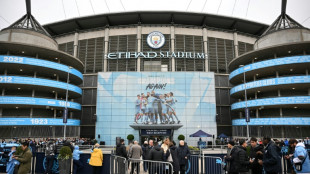 Man City must be relegated after guilty verdict says club's former chairman

 German far-right aims to lead Saxony-Anhalt govt in December
 Little damage as Hurricane Polo sweeps over Mexico's Pacific coast

For the past two months, Elsie has been receiving daily calls from desperate children surviving on HIV treatment whom she is not allowed to help.
The lively 45-year-old aid worker, who did not want to give her real name, used to spend her days visiting hundreds of HIV patients in South Africa's Msogwaba township around 300 kilometres (190 miles) east of Johannesburg.
But since President Donald Trump slashed US foreign aid funding in late January, Elsie has been forced to stay at home, forbidden from contacting her patients.
"I was supporting 380 kids, making sure each and every kid is taking his medication, is virally suppressed, each and every kid is not being discriminated or violated," she recalled.
"We teach them to accept themselves as they are, to know they are loved. I take them as my own children."
The non-governmental organisation she worked for, which she did not want to identify in case of repercussions, supported almost 100,000 people per year including many HIV-positive children, orphans and child-headed households. USAID provided the group with more than $3 million a year in funding.
Elsie was one of upwards of 100 community health workers tasked with monitoring the children, checking in on their well-being and facilitating access to the lifelong treatment they require to stay healthy and avoid transmitting the virus.
Now unable to visit them, she said she fears the worst.
"My fear is that they won't take their medication," she sighs. Some children have gone missing since the programme ended, she says. She is worried that others might miss their hospital appointments.
"We know each and every one of those kids and their problems. Some of them won't survive."
- 'More than medicine' -
South Africa has one of the highest rates of HIV/AIDS in the world, with around 13 percent of the population -- or 7.8 million people -- living with the virus, according to government data.
In 2023 there were about 640,000 children orphaned by the virus in the country.
The government has assured the cuts will not affect its rollout of antiretrovirals (ARVs). In February, it launched a campaign to extend the lifesaving treatment, which already reaches 5.9 million patients, to 1.1 million additional people by the end of the year.
"The country has got capacity to provide... HIV treatment to people living with HIV because almost 90 percent of the current treatment is purchased through the fiscus/government budget," health department spokesperson Foster Mohale told AFP.
But the US President's Emergency Plan for AIDS Relief (PEPFAR) -- among those hit by the funding cuts -- supported numerous programmes focusing on prevention, counselling and monitoring, and amounted to 17 percent of South Africa's overall HIV response.
"It's about much more than medicine," said Sibongile Tshabalala-Madhlala, who chairs the Treatment Action Campaign, a leading HIV advocacy organisation.
"It's about a person finding a friendly healthcare worker at the facility. It's about understanding the challenges of people living with HIV and their needs. It's about prevention, and keeping people in care."
The funding cuts will severely impact human resources in already understaffed and overcrowded hospitals, she fears, including by extending waiting periods.
The PEPFAR cuts alone meant 15,000 workers lost their jobs, Health Minister Aaron Motsoaledi has said.
- 'Abandoned' -
A study published in the Annals of Internal Medicine in February suggested that cutting all PEPFAR funding to South Africa could lead to more than 600,000 additional HIV-related deaths over the next decade.
While the Department of Health said this figure was merely "assumptions", Tshabalala-Madhlala told AFP she believes "people will die".
"People won't be able to miss work to get their medication. Some are already sharing ARVs. With this disruption, we will see a rise of infection rates and more HIV-related deaths," she said.
Sitting in his mother's house on a dirt road in Msogwaba, a scrawny 17-year-old holds his head in his hands. The teenager, who Elsie believes shows signs of autism, is worrying about his next appointment.
Previously, Elsie would accompany him to the clinic. "She helped him a lot whenever he was struggling," sighed his mother, who cannot afford to take time off work to accompany her son. "I feel that we've been abandoned."
Elsie said she felt the same. "I was forced to abandon them -- they really trusted me."
J.Pereira--PC