US opposes dictators? Yes! Except when it supports them / Photo: MANDEL NGAN - AFP/File

 UEFA's legal move 'massive escalation' in bitter Infantino feud

 MEXC Launches Earn Plus With Limited-Time Event Offering Up to 800% APR Booster

 Norway's new King Haakon VIII, popular face of shaken monarchy
 Stocks rise ahead of Fed chair's policy speech

 Norway's new King Haakon VII, popular face of shaken monarchy

 Last-wicket duo take England to 290 all out in 2nd Test against Pakistan
 MPSC Drug Inspector Exam Leak: Rutuja Patil Allegedly Paid Rs 50 Lakh for Leaked Paper
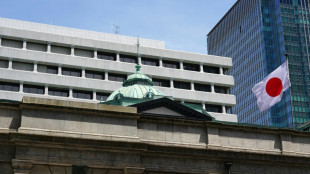 Japan spent record $96 bn in yen interventions: ministry
 Nepal-China floods disaster: Latest developments

 Duplantis needs A-game to fend off Karalis pressure

 Architect Minenhle Makhanya Ordered to Repay R147 Million for Nkandla Upgrades
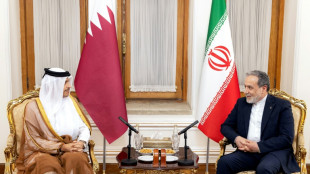 Iran says still open to diplomacy as war with US hits six months

 20,000 Salmon Return to Klamath River Following Dam Removal, Yet Recovery Faces Ongoing Challenges

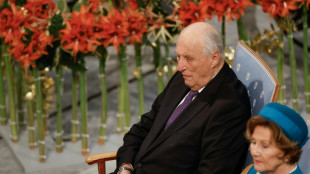 King Harald, 'symbol' of Norway, dead at 89

 Norway's new King Haakon, popular face of shaken monarchy
 Most stocks rise as attention turns to Warsh speech

 Japanese rugby U-turns on limits on naturalised players
 Norway's King Harald dead at 89

 Climate change hits trout and salmon in UK's prized chalk streams

 Škoda Octavia Marks 30 Years With Nearly 7.9 Million Units Produced

 Nepal seeking to reach survivors in tunnel as risk of new floods rises

 Anger in Austria over business park on former Nazi camp site

 In shadow of Premier League, Serie A flexes financial muscle
 Tanker pays record $5.3 mn to transit Panama Canal: administrator

 Pilgrims seeking peace caught in deadly Nepal-Tibet floods

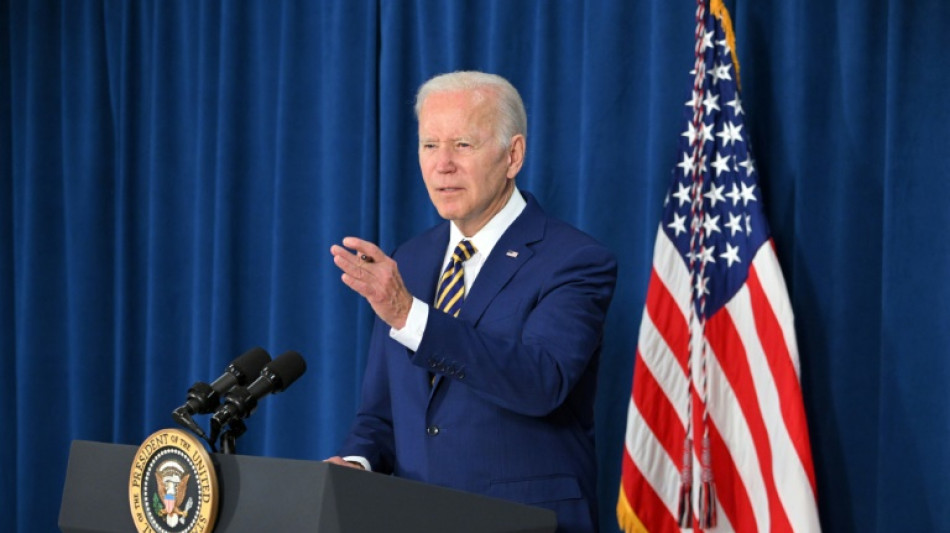
Dictators are bad, except, well, when they're kind of OK: welcome to the moral gymnastics that Joe Biden is only the latest US president to embrace in a complicated world.
Biden's decision to exclude the far-left leaders of Cuba, Nicaragua and Venezuela from this week's regional Summit of the Americas in Los Angeles is being touted as US defense of democracy in action.
"We just don’t believe dictators should be invited and... and so we don’t regret that," White House Press Secretary Karine Jean-Pierre said. "The president will stand by his principle."
Except when he doesn't.
Biden's determination to bar the trio of self-proclaimed Latin American socialist revolutionaries from US soil came at the expense of a rift with Mexican President Andres Manuel Lopez Obrador, a key partner who snubbed the Los Angeles gathering in protest.
But there's a whole lot more flexibility when it comes to the other side of the world, where Biden is preparing to visit Saudi Arabia and meet de facto leader Crown Prince Mohammed bin Salman.
The prince, often referred to as MBS, presides over a country with no elections, few rights for women, or many other norms considered basic in the West. In 2018, according to US intelligence, MBS orchestrated the gruesome murder and dismemberment of a prominent dissident, Jamal Khashoggi, who was both a US resident and columnist for The Washington Post.
As a presidential candidate, Biden said the brazen assassination made Saudi Arabia a "pariah."
Now, though, he's ready to meet with the alleged murder mastermind.
Why? Because that would be good for the United States, Jean-Pierre said.
"If he determines that it's in the interest of the United States to engage with a foreign leader and that such an engagement can deliver results, then he'll do so," she said.
Saudi Arabia "has been a strategic partner of the United States for nearly 80 years."
- 'Our son of a bitch' -
The contradictory messaging is causing a stir, particularly against the backdrop of Biden's frequent, passionate argument that his presidency marks an "inflection point" in a titanic struggle between the world's democracies and a growing band of ruthless autocracies.
But really there's nothing new.
Back in 1939, President Franklin Roosevelt supposedly commented that Nicaraguan dictator Anastasio Somoza "may be a son of a bitch, but he’s our son of a bitch."
Other accounts ascribe the phrase to different US presidents and different dictators. The point, though, is clear: the White House has always been able to hold its nose with one hand, while using the other to embrace distasteful partners.
US support for right-wing leaders across Latin America during the Cold War struggle against Soviet influence was infamous.
In Asia, the United States long battled communist regimes yet there too displays flexibility when it suits. At an ASEAN regional summit last month, Biden shunned Myanmar while inviting less-than-democratic leaders from the likes of Cambodia and Vietnam.
Then there was Biden's predecessor Donald Trump.
The Republican railed against China yet became friendly with Russia's Vladimir Putin. Trump was also chummy with the full range of unelected Middle Eastern rulers, not least in Saudi Arabia, which he chose for his first foreign trip as president.
"Where's my favorite dictator?" a jovial Trump once called out at a 2019 summit while waiting for Egyptian President Abdel Fattah Al Sisi to show up.
Robert Guttman, who teaches politics at Johns Hopkins University, said the consistent inconsistency boils down to "cynical" self-interest.
Facing the risk of devastating losses for Democrats in November midterm elections, Biden is desperate to get soaring domestic fuel prices down, which is what leads him to the Saudis.
And with US-based Latin American communities often fiercely opposed to communism, Biden has little room to maneuver when it comes to the likes of Cuba.
"All you have to think about is Florida in 2024 and they need their votes," Guttman said.
Guttman said the United States does historically try to support democracy -- a fight that Ukraine's war with Russia has put in dramatic focus.
But with exceptions.
"We talk about great ideals but we’re more pragmatic when it comes to reality," he said.
"The bottom line is we need oil and we support people who have the oil. For natural resources we need, we bend our ideals, and in an election campaign the president’s all over the board."
F.Carias--PC