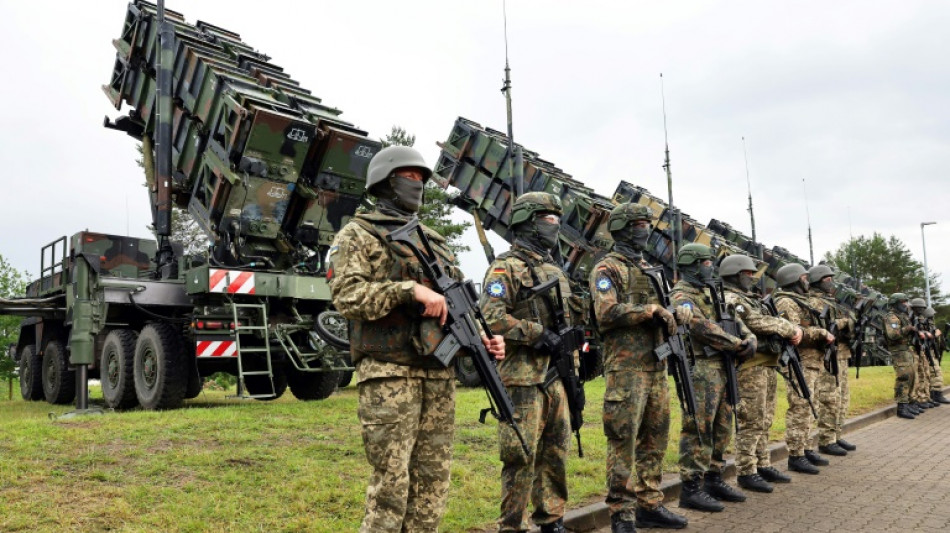
Germany's huge spending package passes final hurdle in upper house / Photo: Jens Büttner - POOL/AFP/File

 Brazil football clubs face massive sponsorship blow from betting ban
 ChatGPT maker wants to be the App Store for AI as safety concerns grow

 Women fight fires and sexism in Indonesian Borneo

 Forsling's OT blast lifts Florida over Carolina in NHL opener

 Hurricane Polo sweeps over Mexico's Pacific coast, heads inland
 Grynspan pulls ahead in race to lead UN: diplomat

 Trump touts AI boss pledge to self-regulate
 Oil down, but stocks lower as bond yields rise

 England break down stubborn Czechs to claim first Nations League win

 UN Security Council extends Haiti anti-gang force by 6 months

 Manchester City guilty of Premier League charges: What comes next?

 Man City chief Soriano slams Premier League 'conspiracy theory'

 Hurricane Polo sweeps over Mexico's Pacific coast

 Man City must be relegated after guilty verdict says club's former chairman

 German far-right aims to lead Saxony-Anhalt govt in December

 Little damage as Hurricane Polo sweeps over Mexico's Pacific coast
 Manchester City guilty of breaking financial rules - Premier League

 FIFA boss Infantino blasted as would-be 'emperor' by UEFA's Ceferin
 Stocks move lower despite oil prices dropping

 AI driving up innovation investment: UN

 UN Security Council extends Haiti mission by 6 months
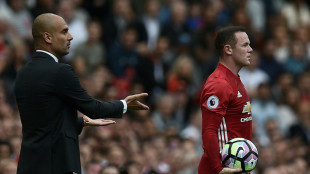 Man Utd do not deserve medals if Man City stripped of titles: Rooney

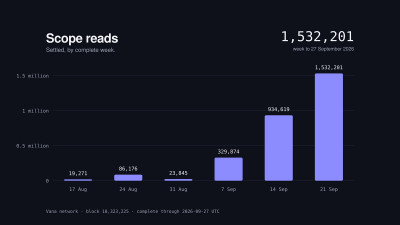 Vana Completes Expanded Staking as Part of the Vega Upgrade, Publishes Expanded VANA Token Economics
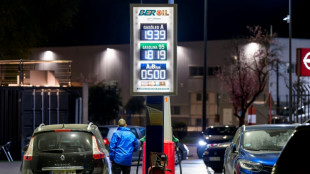 Spain to cap gas price hikes, extend fuel discounts

 'We just need rain': Germany's Rhine river hits new low
Germany's upper house of parliament on Friday gave the final seal of approval to a massive spending package to build up the military and overhaul infrastructure.
Worth hundreds of billions of euros, the so-called spending "bazooka" has been pushed by the likely next chancellor Friedrich Merz, whose centre-right CDU/CSU won elections last month and is now in coalition talks with the centre-left Social Democrats (SPD).
The plan exempts defence spending above one percent of GDP from Germany's constitutionally enshrined debt brake and sets up a 500-billion-euro ($545-billion) fund for infrastructure over 12 years.
This paves the way for over one trillion euros (dollars) worth of outlays in Europe's top economy, which has shrunk for the past two years.
The plan marks a dramatic break from Germany's economic orthodoxy, particularly for the CDU/CSU alliance which has been wedded to the debt brake since it was brought in in 2009.
The party has shifted position in the wake of US President Donald Trump's overtures to Moscow, saying there is now an urgent need to invest in defence to become more independent from Washington.
Bavaria's state premier Markus Soeder, who heads the CSU, told the chamber that "we must do everything we can to ensure that Germany once again becomes one of the strongest armies in Europe and can protect itself".
And he labelled the massive infrastructure spending a new "German Marshall Plan", referring to the American post-World War II effort to rebuild western Europe.
Soeder said Germany would undertake long-neglected upgrades of roads, bridges and rail lines, arguing that letting them fall into disrepair was a greater disservice to the next generation than building up state debt.
- 'Brutal paradigm shift' -
Berlin's move to bolster its fiscal firepower has been keenly watched by its neighbours as Europe scrambles to adapt to Trump's pivot away from traditional alliances.
The package needed a two-thirds majority and was approved by 53 of the Bundesrat's 69 members, after it cleared the lower house on Tuesday.
The upper house is made up of representatives of Germany's 16 federal states, and several state leaders spoke in favour of the package before the vote.
Boris Rhein, CDU leader of the central state of Hessen -- home to many US army bases -- said that geopolitical turmoil spelt "a brutal paradigm shift" for Germany which had learnt that "we cannot rely on military help from the United States".
He pointed to Trump berating his Ukrainian counterpart Volodymyr Zelensky in front of the world's media in the White House last month, calling the exchange "an obscene humiliation of a president whose people are fighting for their freedom".
"Europe must react to this, Germany must react to this, quickly and decisively," he said.
Representatives from the states of Thuringia and Brandenburg, where the far-left BSW party is part of governing coalitions, refused to approve the spending plans on Friday, as did those from Saxony-Anhalt and Rhineland-Palatinate, where the debt-averse Free Democrats (FDP) are in state governments.
N.Esteves--PC