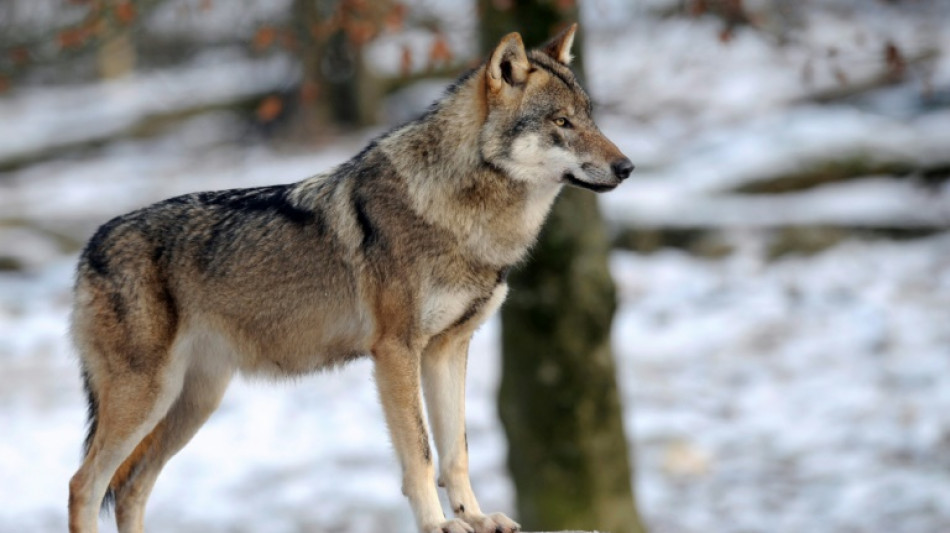
Unlikely wolf pair sparks row in rural France / Photo: JEAN-CHRISTOPHE VERHAEGEN - AFP

 НЕМЕЦКАЯ ALIX LASERS БЕРЁТ НА ОБСЛУЖИВАНИЕ ВСЕХ КЛИЕНТОВ АВСТРИЙСКОЙ ALIX LASERS

 British Couple Spends £3,500 on Gender-Selective IVF in Egypt to Ensure Daughter

 Games Inbox: Reader Debates GTA 6 PC Release, Graphics, and Monster Hunter Choices

 Karbon-X (OTCQB: KARX) Joins IATA CORSIA EEU Supply Alliance as 2027 Aviation Compliance Demand Accelerates

 US Lawmaker and Colombian Ministry Urge X to Suspend Gustavo Petro’s Account

A rare discovery in France of a pair of wolves, each from a distinct genetic background, has excited animal lovers demanding their protection and objections from farmers eager to protect livestock.
Environmental association Carduelis reported earlier this month it had spotted the pair of wolves, one a male German-Polish wolf -- a species found mostly in western Poland and eastern Germany -- and the other an Italian she-wolf, usually native to the Italian peninsula.
Many European countries have reported an increase in wolf populations, aided by a return of deer, wild boar and other forms of prey.
While wolf packs typically remain in areas of no more than a few hundred square kilometres (miles), young wolves can travel alone over distances of thousands of kilometres.
The French finding, confirmed by authorities, has scientists speculating that a mix of both gene pools could produce a more resilient wolf population.
"This is a massive stroke of luck," said Carmen Munoz Pastor of the Carduelis association.
"It will allow a genetic mingling that is always favourable to animal or plant species."
Any offspring carrying a genetic crossing of the two different European wolf lineages would be a first in France, Carduelis said.
Animal defence association One Voice called for the pair to be protected, including against the so-called "defensive" shooting of wolves.
Local authorities have permitted shooting, which they say allows farmers to protect their livestock from wolf attacks.
"The male wolf has already been injured," said One Voice president Muriel Arnal.
"Some livestock farmers have so much hatred of wolves at a time when they are returning to France naturally," she said.
Arnal said the two animals were the only wolves on a massive plateau in the Correze department in central France, some 500 kilometres (310 miles) south of Paris.
"There's room for everybody," she said.
Arnal has pleaded with local authorities to ban wolf shooting, recommending the use of guard dogs instead, but to no avail.
Some 25 local livestock farmers continue to be authorised to shoot at wolves who they suspect of killing dozens of farm animals every year.
"It is urgent to stop the threat," local farming associations said in a joint statement.
"We don't want any wolves," said Emmanuel Lissajoux, president of the FDSEA federation.
"We must think of our livestock and our business."
European grey wolves eat between two and five kilogrammes (4.4 to 11 pounds) of meat per day on average.
Their favourite prey in the wild includes deer. But they may also go after captive farm animals where available, including sheep and cattle.
L.Mesquita--PC