OECD sees lower world growth due to Ukraine war's 'hefty price' / Photo: Genya SAVILOV - AFP

 Spurs boss De Zerbi targets one more big signing before window shuts

 Fed chair Warsh flags high US inflation as 'concerning'

 Same Election Question, Two Different Odds: Predictions.io Launches Free Cross-Venue Comparison Tools

 Man Utd new signing Baleba sidelined for three weeks
 Juve's Yildiz to miss 'several months' with foot injury

 Celine Dion arrives in France ahead of sold-out comeback dates

 All-round Tongue stars for England in second Test against Pakistan

 UEFA's legal move 'massive escalation' in bitter Infantino feud

 MEXC Launches Earn Plus With Limited-Time Event Offering Up to 800% APR Booster
 Norway's new King Haakon VIII, popular face of shaken monarchy
 Stocks rise ahead of Fed chair's policy speech

 Norway's new King Haakon VII, popular face of shaken monarchy

 Last-wicket duo take England to 290 all out in 2nd Test against Pakistan
 MPSC Drug Inspector Exam Leak: Rutuja Patil Allegedly Paid Rs 50 Lakh for Leaked Paper

 Japan spent record $96 bn in yen interventions: ministry
 Nepal-China floods disaster: Latest developments
 Duplantis needs A-game to fend off Karalis pressure

 Architect Minenhle Makhanya Ordered to Repay R147 Million for Nkandla Upgrades

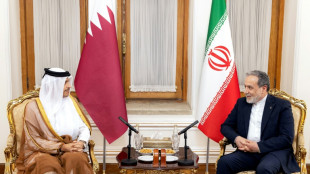 Iran says still open to diplomacy as war with US hits six months

 20,000 Salmon Return to Klamath River Following Dam Removal, Yet Recovery Faces Ongoing Challenges

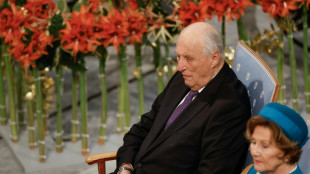 King Harald, 'symbol' of Norway, dead at 89

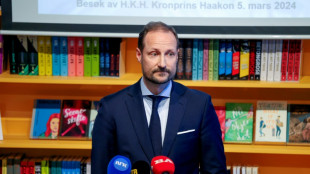 Norway's new King Haakon, popular face of shaken monarchy
 Most stocks rise as attention turns to Warsh speech

 Japanese rugby U-turns on limits on naturalised players

 Norway's King Harald dead at 89

The OECD warned Wednesday that the world economy will pay a "hefty price" for Russia's invasion of Ukraine as it slashed its 2022 growth forecast and projected higher inflation.
The Paris-based organisation, which represents 38 mostly developed countries, is the latest institution to predict lower GDP growth due to the conflict, which has sent food and energy prices soaring.
In its latest economic outlook, the Organisation for Economic Co-operation and Development said global gross domestic product would grow by three percent in 2022 -- down sharply from the 4.5 percent estimated in December.
The OECD also doubled its forecast for inflation among its members -- which range from the United States to Australia, Japan, and Latin American and European nations -- to 8.5 percent, its highest level since 1988.
"The world is set to pay a hefty price for Russia's war against Ukraine," wrote the OECD's chief economist and deputy secretary-general, Laurence Boone, adding that a "humanitarian crisis is unfolding before our eyes".
"The extent to which growth will be lower and inflation higher will depend on how the war evolves, but it is clear the poorest will be hit hardest," Boone said.
"The price of this war is high and will need to be shared."
Before the war broke out, the outlook had appeared "broadly favourable" for 2022-23, with growth and inflation expected to return to normal after the devastating Covid-19 pandemic, said the OECD.
However, "the invasion of Ukraine, along with shutdowns in major cities and ports in China due to the zero-Covid policy, has generated a new set of adverse shocks," it said.
- Food shortage risk -
The OECD was supposed to publish its outlook in March, but it delayed its detailed assessment until now due to uncertainty over the war. At the time, it said the conflict could cut global GDP growth by "over one percentage point".
The World Bank revised its own figures on Tuesday, lowering its global growth forecast from 4.1 percent to 2.9 percent. The IMF cut its forecast by nearly one point to 3.6 percent in April.
The OECD cut its growth forecast for the United States from 3.7 percent to 2.5 percent and that of China, the world's second biggest economy, from 5.1 percent to 4.4 percent. The eurozone's GPD is now seen growing by 2.6 percent instead of 4.3 percent while Britain's outlook was lowered to 3.6 percent from 4.7 percent.
The OECD noted that commodity prices had risen, hitting real income and spending, "particularly for the most vulnerable households".
"In many emerging-market economies the risks of food shortages are high given the reliance on agricultural exports from Russia and Ukraine," it said.
The report warned that the "effects of the war in Ukraine may be even greater than assumed", raising as an example a scenario of Russia cutting gas supplies to Europe.
As central banks tighten their monetary policies to counter inflation, the report said sharp increases of interest rates could also hit growth more than anticipated.
- Covid risk -
The Covid pandemic, meanwhile, could take another turn for the worse.
"New more aggressive or contagious variants may emerge, while the application of zero-Covid policies in large economies like China has the potential to sap global demand and disrupt supply for some time to come," the OECD said.
Faced with these challenges, governments needed to protect the most vulnerable from the economic shockwaves, it added.
In the short term, "temporary, timely and well-targeted" fiscal measures would help the poorest households, the OECD said.
Over the medium- and long-term, governments would have to invest more in clean energy and defence spending.
"The world is already paying the price for Russia's aggression," wrote Boone.
"The choices made by policymakers and citizens will be crucial to determining how that price will be distributed across people and countries."
N.Esteves--PC