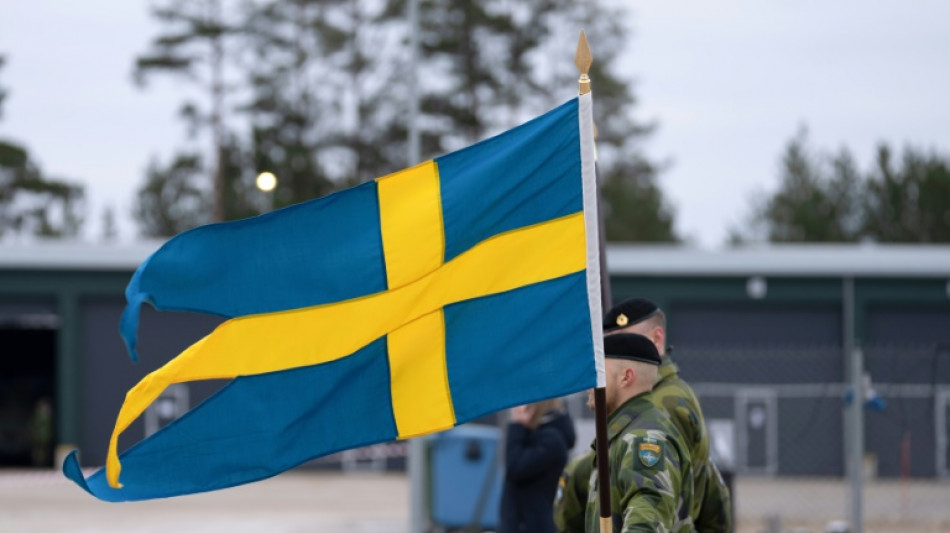
Sweden to boost defence spending $30 bn over a decade / Photo: Gints Ivuskans - AFP/File

 Spain brush aside Croatia in Nations League, England down Czechs
 Trump hails 'morally binding' AI self-regulation pledge
 Yamal inspires Spain to Croatia romp on World Cup homecoming
 UN to hold fourth informal poll of secretary-general candidates
 Who are the Emiratis behind crisis-hit Manchester City?
 Singer Angelique Kidjo urges Africans to 'create together'
 Alleged Rihanna mansion shooter mentally fit for trial, says judge
 Mystery over UK airbase scare as police find petrol not explosives
 OpenAI unveils low-cost AI model, a day after shelving Astra upgrade
 Premier League confirms Man City guilty of serious financial breaches
 Brazil's Lula turns to Bad Bunny tune to criticise Trump ahead of polls
 Nigerian dancer eyes world record after seven-day marathon
 Swiss regulator concludes Julius Baer bank probe
 Brazil's patron saint pulled into latest election scrap

 Football overload leaves players near 'breaking point', warns Tebas
 Paris Eiffel Tower says chief to step down after uproar over removing women staff
 Amaze Holdings (NYSE: AMZE) Executes Binding LOI to Acquire BullionFX | Alchemy, a Decentralized Gold-Backed Financial Ecosystem for Valued at US$155 Million
 Clashes between French teens, police as school blockades intensify
 Stocks move sideways despite oil moving lower
 African leaders to gather in Egypt for business summit
 UK decides against charging foreign visitors for museums

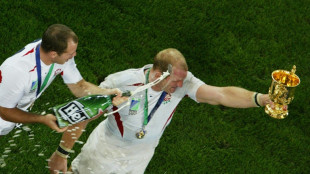 Dallaglio to sell England World Cup winners' medal
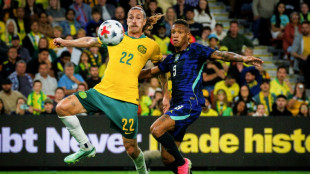 Brazil come from behind to beat Australia 4-2 in friendly
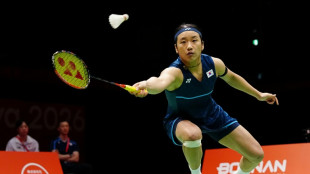 Ruthless An retains Asian Games badminton crown as Kunlavut triumphs

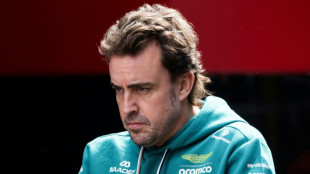 Alonso to stay with F1 team Aston Martin in 2027
Sweden will increase defence spending by about 300 billion kronor ($30 billion) over the next decade, the prime minister said Wednesday, calling it the nation's biggest rearmament push since the Cold War.
The Nordic country drastically slashed defence spending after the Cold War ended and in the early 2000s, but reversed course following Moscow's 2014 annexation of Crimea.
The aim was to increase defence spending to 3.5 percent of GDP by 2030, up from the current 2.4 percent.
"We have a completely new security situation... and uncertainties will remain for a long time," Prime Minister Ulf Kristersson told reporters, adding that it marks Sweden's "biggest rearmament since the Cold War".
The Nordic country dropped two centuries of military non-alignment and applied for membership in NATO in the wake of Russia's invasion of Ukraine, becoming its 32nd member in March 2024.
Sweden has already decided on investments that are expected to put defence spending at 2.6 percent of GDP in a few years, Kristersson said, noting this already put it above NATO's two-percent spending target.
"That is not enough," Kristersson said. "Our assessment is that NATO and especially European NATO countries need to take major steps in the coming years."
Kristersson said that his country expected that NATO would decide to increase the spending target at an upcoming summit of the alliance in June and was aiming at what it was believed that new target would be.
In March 2022, after Russia's full-fledged invasion of Ukraine, Stockholm announced it would increase spending, aiming to dedicate two percent of GDP to defence "as soon as possible".
While previous defence spending increases have been financed through the country's regular budget, Kristersson said that in order to rearm in such short time it was necessary to borrow funds for defence during a "transitional period".
"Today's announcement can really be summed up as a larger, faster and stronger total defence, both civilian and military," Deputy Prime Minister and Energy Minister Ebba Busch said, speaking alongside Kristersson.
- Long process -
US President Donald Trump has turbocharged a drive for Europe to rearm by casting doubt on Washington's central role in NATO and his overtures towards Russia on Ukraine.
Earlier this month, European Commission chief Ursula von der Leyen unveiled an initiative to help ramp up military budgets that she says could mobilise up to 800 billion euros.
Jacob Westberg, an associate professor at the Swedish Defence University, told AFP that, while 3.5-percent-of-GDP target was a sharp increase compared to the low spending levels seen in the early 2000s, it was still comparable to what was spent in the 1970s.
Westberg noted that Sweden spent over four percent of GDP in the 1950s and in fact at the time had the world's fourth largest air force and eighth largest navy.
"We could mobilise between 600,000 and 800,000 men during the Cold War," Westberg said.
He also added that while 300 billion kroner over a decade was a considerable addition, Sweden's defence budget had already been tripled, to 120 billion a year, in 2024, compared to a decade earlier.
In addition, while funding was returning to previous levels, rebuilding a country's military takes time, Westberg said.
"In some areas, such as buying ammunition or equipment... you can relatively easily convert funds into military capacity," the associate professor said.
But when it comes to the issue of expanding the size of the military, which has been Sweden's ambition since it reintroduced conscription in 2017 after a seven year pause, that is more time-consuming.
"As such, you can't expect these funds to have an immediate effect comparable to the amount of additional funds," Westberg said.
E.Borba--PC