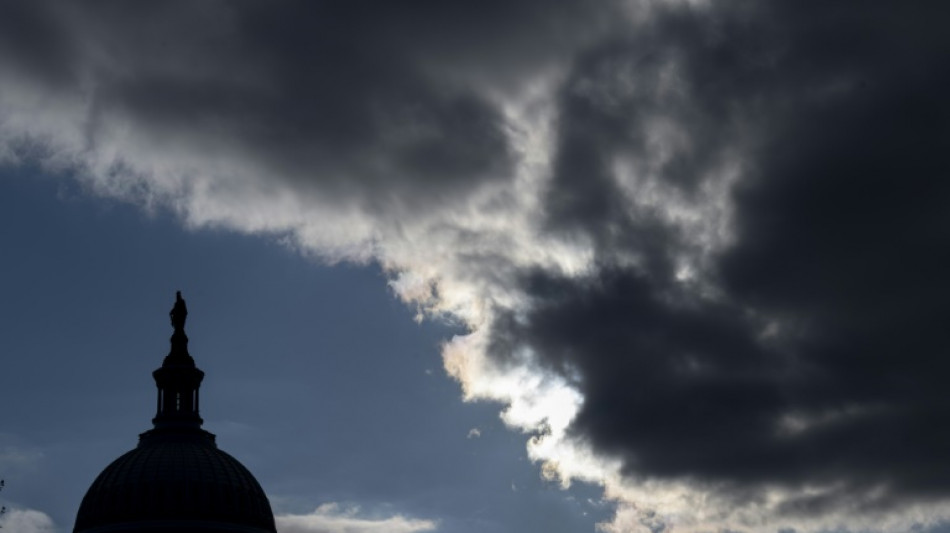
Top US senators demand probe into chat scandal / Photo: ROBERTO SCHMIDT - AFP

 British Couple Spends £3,500 on Gender-Selective IVF in Egypt to Ensure Daughter

 Games Inbox: Reader Debates GTA 6 PC Release, Graphics, and Monster Hunter Choices

 Karbon-X (OTCQB: KARX) Joins IATA CORSIA EEU Supply Alliance as 2027 Aviation Compliance Demand Accelerates
 US Lawmaker and Colombian Ministry Urge X to Suspend Gustavo Petro’s Account

 Firefighters Respond to Blaze at Will Smith and Jada Pinkett Smith's Los Angeles Estate

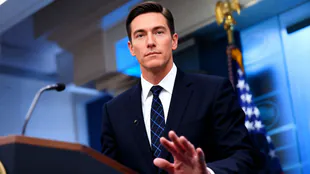
Senior Republican and Democratic US senators issued a bipartisan call Thursday for a probe into a scandal over an accidentally leaked chat between top officials on Yemen air strikes that has engulfed Donald Trump's White House.
Republican Senator Roger Wicker, the chairman of the Senate Armed Services Committee, and ranking Democrat Jack Reed wrote to a Pentagon watchdog asking it to "conduct an inquiry" into the incident.
The Atlantic magazine published the full chat -- which Trump's top security officials conducted on the commercially available app Signal rather than on a secure government platform -- after its editor was mistakenly looped in.
Republican Trump has dismissed the scandal as a "witch-hunt" and backed Defense Secretary Pete Hegseth, despite the fact that Hegseth used the app to discuss precise timings of the strikes shortly before they happened and aircraft types involved.
The president told reporters on Wednesday that the prospect of a watchdog investigation "doesn't bother me."
But Democrats have claimed that the lives of US service members could have been put at risk by the breach, and the row has raised serious questions about potential intelligence risks.
In their letter, Wicker and Reed asked the Pentagon's acting inspector general to look into the "facts and circumstances," whether classified material was shared, and the security of communications.
"If true, this reporting raises questions as to the use of unclassified networks to discuss sensitive and classified information," they said of The Atlantic's story about the chat.
- 'Mistake' -
Wicker said on Wednesday that the information shared in the chat "appears to me to be of such a sensitive nature that based on my knowledge, I would have wanted it classified."
But the White House has gone on the offensive, denying that any classified material was shared and attacking Atlantic journalist Jeffrey Goldberg, who revealed that he had been erroneously added into the supposedly secret chat group.
White House Press Secretary Karoline Leavitt said Thursday that "we have never denied that this was a mistake" and insisted that National Security advisor Mike Waltz had taken "responsibility" for including Goldberg.
US Attorney General Pam Bondi said Thursday that the breach was unlikely to face a criminal investigation.
"It was sensitive information, not classified, and inadvertently released, and what we should be talking about is that it was a very successful mission," Bondi told a news conference.
Trump and his top officials have repeatedly tried to turn the conversation towards the strikes themselves that began on March 15.
Washington has vowed to use overwhelming force against the Huthis until they stop firing on vessels in the key shipping routes of the Red Sea and Gulf of Aden, with the rebels threatening to resume attacks in protest over the Gaza war.
The Huthis said Thursday they targeted an Israeli airport and army site as well as a US warship, soon after Israel reported intercepting missiles launched from Yemen.
M.A.Vaz--PC