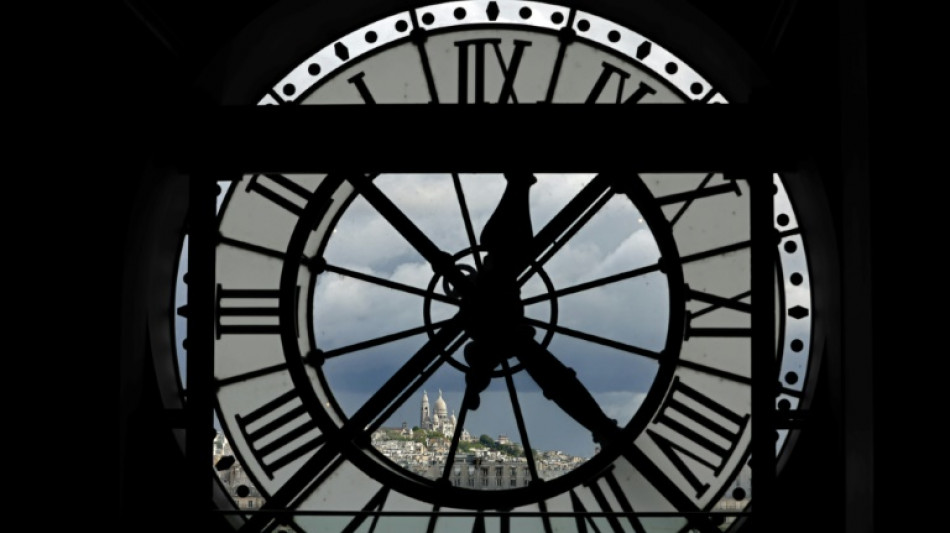
Time to stop changing clocks? Not so fast, say EU states / Photo: Thomas COEX - AFP/File

 Spain brush aside Croatia in Nations League, England down Czechs
 Trump hails 'morally binding' AI self-regulation pledge
 Yamal inspires Spain to Croatia romp on World Cup homecoming

 UN to hold fourth informal poll of secretary-general candidates

 Who are the Emiratis behind crisis-hit Manchester City?

 Singer Angelique Kidjo urges Africans to 'create together'

 Alleged Rihanna mansion shooter mentally fit for trial, says judge

 Mystery over UK airbase scare as police find petrol not explosives

 OpenAI unveils low-cost AI model, a day after shelving Astra upgrade
 Premier League confirms Man City guilty of serious financial breaches

 Brazil's Lula turns to Bad Bunny tune to criticise Trump ahead of polls

 Nigerian dancer eyes world record after seven-day marathon

 Swiss regulator concludes Julius Baer bank probe

 Brazil's patron saint pulled into latest election scrap

 Football overload leaves players near 'breaking point', warns Tebas

 Paris Eiffel Tower says chief to step down after uproar over removing women staff

 Amaze Holdings (NYSE: AMZE) Executes Binding LOI to Acquire BullionFX | Alchemy, a Decentralized Gold-Backed Financial Ecosystem for Valued at US$155 Million

 Clashes between French teens, police as school blockades intensify

 Stocks move sideways despite oil moving lower

 African leaders to gather in Egypt for business summit

 UK decides against charging foreign visitors for museums

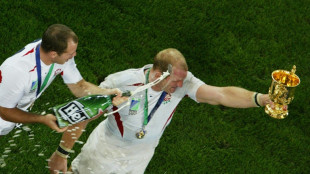 Dallaglio to sell England World Cup winners' medal

 Brazil come from behind to beat Australia 4-2 in friendly

 Ruthless An retains Asian Games badminton crown as Kunlavut triumphs

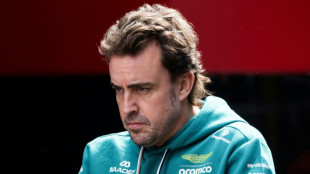 Alonso to stay with F1 team Aston Martin in 2027

The saying goes that time is money but in the European Union, time is political too.
When clocks spring forward across the bloc on Sunday, it will not be the last time despite a desire by millions of EU citizens to see the lights turned out on the biannual change.
Research shows that moving the clock back and forth in autumn and spring negatively impacts the economy as well as people's health, fuelling growing calls to end the system in Europe -- and beyond.
The EU proposed abolishing the custom in 2018 after nearly four million people in the bloc's then 28 member states -- before Britain formally exited -- gave their support in an open consultation.
The parliament -- the only directly elected EU body -- backed the reform the following year, but it has since fallen into limbo after hitting opposition from some EU states.
Under the EU's process to pass a law, the European Commission makes a proposal that the European Parliament and member states must vote on separately -- before negotiators for EU countries and MEPs agree on a final text.
Poland, which holds the bloc's rotating presidency until July, says it is time to put the issue back on the states' agenda.
Supporters including lawmakers point to studies proving the change harms health.
"There's a huge amount of evidence suggesting that changing the clock biannually is bad for human health, bad for animals, bad for road traffic, and has very little beneficial attributes. And it's also a huge inconvenience," said Irish EU lawmaker Sean Kelly.
"So I think the time has come to say bye-bye," said Kelly, one of the most vocal proponents of eradicating clock changes.
Kelly urges the EU to agree a target date to stop changing clocks, as it has done with objectives to cut greenhouse gas emissions.
- 'Clock is ticking' -
The practice of moving the clocks forward in spring -- to add an hour of light to the evening -- began with Germany in World War I and spread across Europe. The custom made a comeback in World War II, then fell by the wayside until the 1970s oil crisis -- when it was brought back to save energy, and stayed.
Detractors see the reform as a waste of time -- with the EU now battling major challenges from Russia's invasion of Ukraine to the threat of trade war with Washington.
But the commission remains hopeful, telling AFP there were no plans to scrap it.
"We believe that a coordinated solution is still achievable, and we encourage renewed discussions under the current presidency," commission spokeswoman Anna-Kaisa Itkonen said.
The Polish presidency says it is moving in that direction -- while conceding there has been limited support among EU countries.
"We are planning to informally consult member states to see whether it is still feasible to take the proposal forward," it said.
"As the clock is ticking, we will take our time to assess the situation."
- It's about time -
For Kelly, it's one issue where the EU and the United States may find some agreement.
After his reelection, Donald Trump said he wanted to get rid of Daylight Saving Time as "inconvenient" and "very costly" -- although he has since temperered his tone, calling it a "50-50 issue".
Trump's ally and tech billionaire Elon Musk jumped into the fray by asking his followers this month if they preferred an hour earlier or later -- were the change to go ahead.
The majority of the 1.3 million votes preferred the clocks to be set an hour later -- meaning the sun would both rise and set at a later point in the day all year round.
If the EU and the United States ever stop the clock on the current system, they won't be alone. In the past decade, Azerbaijan, Iran, Russia, Syria, Turkey and Uruguay have done away with Daylight Saving Time, according to the Pew Research Center.
But some have had regrets. Egypt eliminated the clock change in 2014 before reintroducing it nine years later to save energy.
The reform's EU supporters, meanwhile, may need to wait a little longer.
A senior Lithuanian official said the country will waste no time and make the issue a priority when it takes over the EU presidency in... 2027.
E.Raimundo--PC