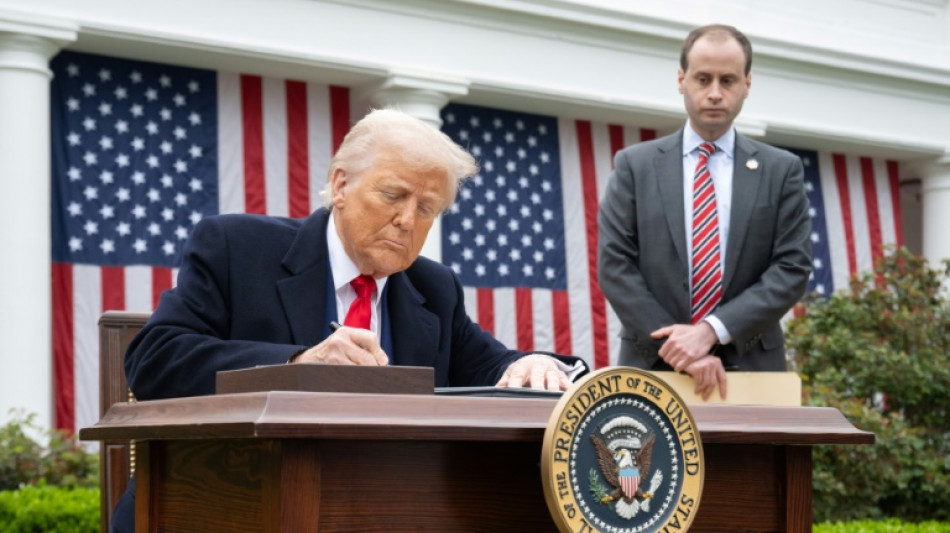
US tariffs take aim everywhere, including uninhabited islands / Photo: SAUL LOEB - AFP

 British Couple Spends £3,500 on Gender-Selective IVF in Egypt to Ensure Daughter

 Games Inbox: Reader Debates GTA 6 PC Release, Graphics, and Monster Hunter Choices

 Malta's Chris Bonett Named Among Maritime Industry's 'Men of Influence'

 Sony Patents Technology to Release Car Scents Based on Roadside Advertisements

 Understanding Dementia Care: Why Adults With Dementia Should Not Be Treated Like Children
The world's remotest corners couldn't hide from US President Donald Trump's global tariffs onslaught Wednesday -- even the uninhabited Heard and McDonald Islands.
The Australian territory in the sub-Antarctic Indian Ocean was slapped with 10 percent tariffs on all its exports, despite the icy archipelago having zero residents -- other than many seals, penguins and other birds.
Strings of ocean specks around the globe, including Australia's Cocos (Keeling) Islands and the Comoros off the coast of Africa, were likewise subjected to 10 percent new tariffs.
Another eye-catching inclusion in the tariffs list was Myanmar, which is digging out from an earthquake that left nearly 3,000 people dead, and whose exports to the United States will now face 44 percent in new levies.
Britain's Falkland Islands -- population 3,200 people and around one million penguins -- got particular punishment.
The South Atlantic territory -- mostly famous for a 1982 war fought by Britain to expel an Argentinian invasion -- was walloped with tariffs of 41 percent on exports to the United States.
The Falklands' would-be ruler Argentina only faces 10 percent new tariffs.
According to the Falklands Chamber of Commerce, the territory is ranked 173 in the world in terms of global exports, with only $306 million of products exported in 2019. This included $255 million in exports of mollusks and $30 million of frozen fish.
L.Carrico--PC