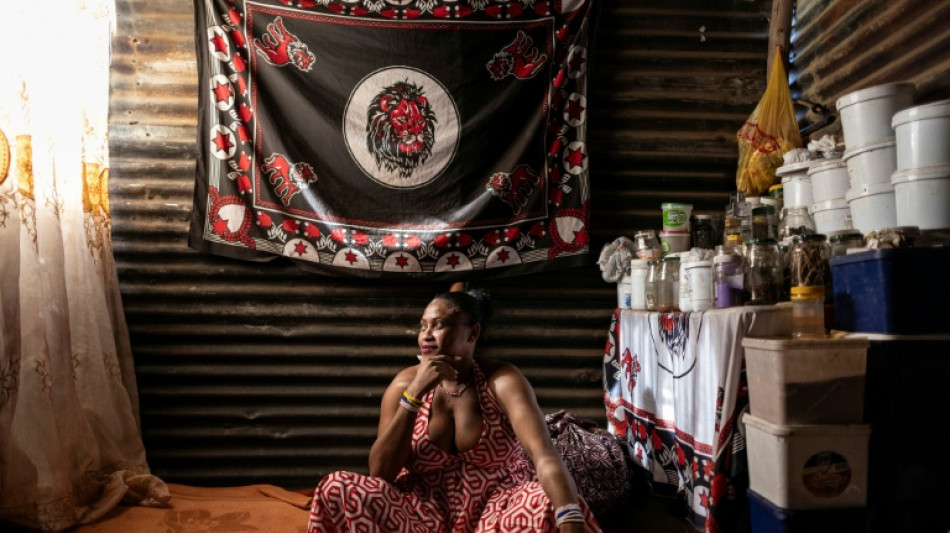
'Don't want to die': Lesotho HIV patients look to traditional medicine / Photo: Roberta Ciuccio - AFP

 Stocks move lower despite oil prices dropping
 AI driving up innovation investment: UN

 UN Security Council extends Haiti mission by 6 months

 Man Utd do not deserve medals if Man City stripped of titles: Rooney

 Vana Completes Expanded Staking as Part of the Vega Upgrade, Publishes Expanded VANA Token Economics
 Spain to cap gas price hikes, extend fuel discounts

 'We just need rain': Germany's Rhine river hits new low

 Yemen health system at 'breaking point': WHO

 Ireland undecided on second Israel match: coach
 France's Le Pen defiant after top ally hit by antisemitism claims

 Tom Cruise trades stunts for satire as toxic tycoon 'Digger'

 MEXC Unveils "WE SEE YOU" Brand Visual Refresh, Putting People Behind Every Trade in Focus
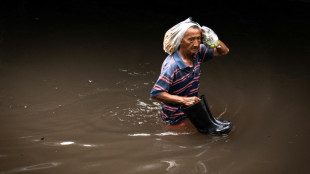 Thai capital cleans up after deadly floods

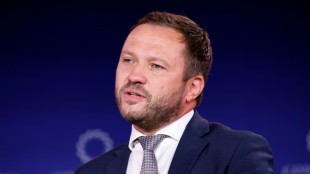 NATO, EU allies rally to Estonia after 'sabotage' blamed on Russia
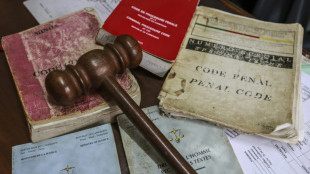 Families demand justice for Cameroon's 'nightmare' wave of murdered women

 Tebas says Man City should face 'most severe' sanctions if guilty of rule breaches
 Pochettino calls Man City success 'a period of deception'

 Settler attack on West Bank village injures Israeli forces, drawing rare rebuke
 Mystery over UK airbase scare after reports no explosives found
 Spanish govt races to adopt housing law under protest pressure

 Estonia slams Russian 'sabotage' after arson attack on defence company
 Slovenia sees surge in '.si' sites after Trump hypes 'super intelligence'
 'Like a dream' for An as Games organisers 'sorry' for latest mix-up
 Tokyo suffers longest streak of rainy days on record

 Indonesia charges train driver over crash that killed 16 women
In a sunlit shack on the outskirts of Lesotho's capital Maseru, 34-year-old Lieketseng Lucia Tjatji sits under a black cloth pegged to a tin wall and emblazoned with the head of a lion.
To her left, a wooden table is weighed down by containers of roots, powders and dried herbs, remedies she now offers to HIV patients who have been cut off from vital medication after US President Donald Trump's aid freeze in February.
"I am a traditional doctor or a witch doctor," Tjatji says, her voice steady. "I have helped people. More and more are coming."
They are the desperate of a nation buffeted by poverty and gripped by one of the highest HIV rates in the world with roughly one in four adults living with the virus, according to government data.
Tjatji, too, is HIV positive. A registered traditional healer and fashion designer, she concedes doctors question the efficacy of the treatments she dispenses while urging those on ARVs not to mix their medicines with anything not clinically tested.
But with the government-supplied antiretrovirals she has taken diligently since 2003 now limited to three-month refills because of Trump's cuts -- and no guarantee of more, Tjatji is left with few options.
"I don't want to die. I am so young and I don't want to die," she told AFP.
- 'Holistic health' -
Traditional healers, known as sangomas, are respected by many across southern Africa for their healing abilities and their spiritual guidance.
Many sangomas once viewed HIV as a curse from the spirit world, believing patients had been bewitched. Some even claimed they could cure AIDS.
New practitioners, like Tjatji, undergo lengthy initiation and training before they are permitted to administer remedies passed down through generations.
With the USAID cuts putting access to modern medicine out of reach, it is only natural for people to turn to a traditional system established over time, said Mpho Roberta Masondo, director at the South African-based African National Healers Association.
"Traditional medicine plays a vital role in holistic health and community well-being," Masondo, also a traditional healer, told AFP.
At the same time, says Masondo, antiretroviral therapy "remains the most effective way to suppress HIV."
- Unrolling gains -
Since 2016, Lesotho -- a small mountainous kingdom surrounded by South Africa -- has received over $850 million in HIV funding from Washington.
The support came through the President's Emergency Plan for AIDS Relief (PEPFAR), the US government's primary programme for combating HIV.
After a complete halt in February, only 28 percent of PEPFAR support had resumed in Lesotho by mid-March, according to the UN AIDS agency.
Nearly half of programmes it funded had been terminated, including for HIV prevention through PrEP medication (pre-exposure prophylaxis) or male circumcision.
The cash-strapped health ministry is ill-equipped to fill the gap.
Health Minister Selibe Mochoboroane told parliament in March that the 2.4 billion maloti ($127 million) budget for the 2025-26 financial year did not take into account any US pullback from its foreign aid commitments.
- 'Ineffective treatment' -
Experts worry that turning to alternative remedies could undo progress in fighting HIV in Lesotho, which five years ago achieved the UN's "90-90-90" goal of 90 percent of people with the virus being diagnosed, on treatment and achieving viral suppression.
"I'm quite worried," said Jessica Justman, senior technical director at ICAP, a global health centre at New York's Columbia University.
"Using ineffective treatment is the equivalent of not taking any treatment at all," she said. It opens people living with HIV to opportunistic infections like TB, meningitis and pneumonia, she said.
Still, Masondo insists, traditional methods can offer relief.
"Traditional healing is not just about the herbs; it's a holistic, comprehensive approach that strengthens the body, mind, and spirit," she said.
"The ultimate or the real danger is not traditional healing itself, it's misinformation," she said.
In the shack that serves as her consulting room, Tjatji said she fears that alternative medicines may not help her because her system may have become accustomed to regular antiretroviral treatment.
Her main concern is that HIV will open her to a new bout of TB, she said, wondering if her government may find a way to help in the face of apparent US indifference.
"Maybe Lesotho will make a difference and produce the pills for us."
B.Godinho--PC