-
 Spain to cap gas price hikes, extend fuel discounts
-
Stocks move sideways despite oil moving lower
-
 'We just need rain': Germany's Rhine river hits new low
-
African leaders to gather in Egypt for business summit
-
 Yemen health system at 'breaking point': WHO
-
UK decides against charging foreign visitors for museums
-
 Ireland undecided on second Israel match: coach
-
Dallaglio to sell England World Cup winners' medal
-
 France's Le Pen defiant after top ally hit by antisemitism claims
-
Brazil come from behind to beat Australia 4-2 in friendly

-
 Tom Cruise trades stunts for satire as toxic tycoon 'Digger'
-
Ruthless An retains Asian Games badminton crown as Kunlavut triumphs

-
 MEXC Unveils "WE SEE YOU" Brand Visual Refresh, Putting People Behind Every Trade in Focus
-
Alonso to stay with F1 team Aston Martin in 2027
-
 Thai capital cleans up after deadly floods
-
China badminton 'still strong' despite Asian Games slump

-
 NATO, EU allies rally to Estonia after 'sabotage' blamed on Russia
-
'Exceptional' Turner painting shown in Rome before sale
-
 Families demand justice for Cameroon's 'nightmare' wave of murdered women
-
European stocks climb as oil dips
-
 Tebas says Man City should face 'most severe' sanctions if guilty of rule breaches
-
Spain aims to ban evictions until 2030 amid housing protests
-
 Pochettino calls Man City success 'a period of deception'
-
Kunlavut first Thai man to win Asian Games badminton singles gold

-
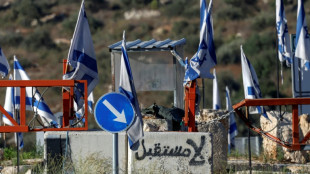 Settler attack on West Bank village injures Israeli forces, drawing rare rebuke
-
French far right says antisemitism claims part of 'total war' to derail presidency bid

-
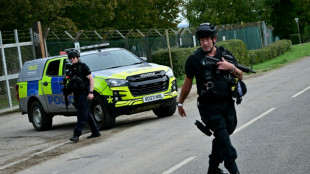 Mystery over UK airbase scare after reports no explosives found
-
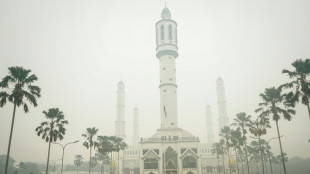
'Gift from God': Rain brings relief from Indonesia toxic haze
-
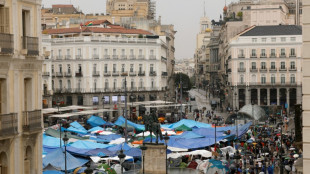 Spanish govt races to adopt housing law under protest pressure
-
Ex-world snooker champion jailed for 7 years for child sex crimes

-
 Estonia slams Russian 'sabotage' after arson attack on defence company
-
French teens clash with police as school blockades intensify
-
 Slovenia sees surge in '.si' sites after Trump hypes 'super intelligence'
-
FIFA accuses UEFA of 'misinformation campaign' in bid for World Cup papers

-
 'Like a dream' for An as Games organisers 'sorry' for latest mix-up
-
Myanmar airstrike toll hits 50 as families gather dead
-
 Tokyo suffers longest streak of rainy days on record
-
STARTRADER Raises Lloyd's of London Client Fund Insurance to USD 30 Million in Aggregate

-
 Indonesia charges train driver over crash that killed 16 women
-
North Korean DMZ landmine blasts 'violation of armistice': Seoul
-
 Ruthless An makes history to retain Asian Games badminton crown
-
Sabalenka 'fresh' for first tournament since losing No.1 spot

-
 Australian central bank lifts key interest rate to 15-year high
-
Myanmar airstrike death toll rises to 50: aid workers
-
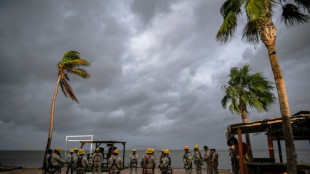 Polo makes landfall in Mexico as Category 3 hurricane
-
North Korean DMZ landmine blast 'violation of armistice'
-
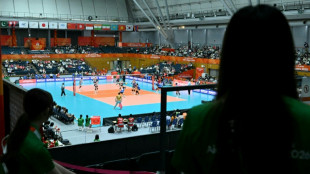 South Korea team latest to be bussed to wrong Asian Games venue
-
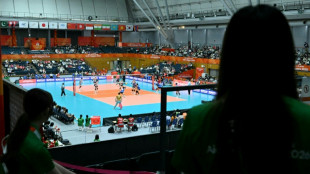
South Korea volleyball team latest to be bussed to wrong Games venue
-
 Bears thrash Eagles 27-7 as third-string QB Keenum shines
-
Malaysia starts sending Myanmar migrants home
Buchenwald camp survivor recounts liberation, 80 years on
Jacques Moalic, a 102-year-old former Agence France-Presse journalist, remembers vividly the liberation of Buchenwald concentration camp by American troops 80 years ago.
In an interview with AFP, where he worked for 40 years after World War II, the Buchenwald survivor spoke of his last months in captivity and the arrival of American troops on April 11, 1945.
He recounted his ordeal once again, speaking ahead of the 80th anniversary of the camp's liberation. Around 56,000 Jews, Roma and Soviet prisoners died there between 1937 and 1945.
In 1943, Moalic, then a young Resistance fighter, was arrested and eventually forced to board a train.
He tried to flee, jumping from the train, but was caught.
In December 1943, he was brought to Buchenwald, which stood on a hill near the German town of Weimar.
He was placed in Block 34. In the hell that was Buchenwald, prisoners pinned their hopes on Allied forces, who landed on the beaches of Normandy on June 6, 1944.
- Transfer to Ohrdruf -
The liberation of Paris in August 1944 boosted their spirits.
"In the camps, people regained their courage," Moalic, former head of general news at AFP, said in his Paris apartment.
"They said to themselves, we will be free by Christmas. I didn't really believe it. I was right."
When the Allied troops had not arrived by the end of the year, many began to lose hope.
In January 1945, Moalic was moved to the Ohrdruf death camp.
"In January, on the 8th I believe, there was an unexpected gathering," he said. "The SS officer passed between the rows noting down the numbers. Eight hundred to 900 of us were to leave for a camp nobody knew about."
He was advised to try to get himself taken off the list if he wanted to live.
"But I was on it, and there was no escaping. We ended up in Ohrdruf."
The prisoners there were forced to dig underground tunnels.
"Guys worked day and night digging into the mountain," Moalic said.
He thought he would die.
"I said to myself: being woken up at four or five in the morning, going home at 10 at night, I'll last a fortnight. For the first time, I thought that maybe I wouldn't come back."
Instead, he was recruited as an electrician. The job saved his life.
"I slept in former Wehrmacht (German military) accommodations," he said. Other prisoners were exposed to temperatures of minus 15 degrees Celsius. Many died.
- Death march -
"Of course, we had known for some time that Russians and the Allies were advancing. But there's a big difference between 'they're advancing' and 'they're here'!" he said.
"One day at roll call, we heard a sound we had never heard before -- artillery, cannon," he said. They realised the Allies were within striking distance.
"We looked at each other and there was an extraordinary silence."
In 1945, Easter fell on April 1. They did not work that day. Then they were told they were being evacuated.
They were ordered to march, in columns of 1,000 people. They did not know their final destination.
They marched through mountainous countryside.
"It drizzled," he said. "We marched like that for three or four days."
Ohrdruf had been worse than Buchenwald, and the prisoners were exhausted.
Anyone who fell along the way was shot.
Many were killed during the death march, said Moalic.
"Some of the guys were already half dead when they started out," he said.
"We arrived at Weimar train station and then we started climbing towards Buchenwald."
It was a trek of around six or seven kilometres, he said.
"There were 72 corpses."
- Liberation -
When the prisoners arrived back at Buchenwald, it was dark.
"There were 3,000 to 4,000 of us on the roll call square," he said.
One man recognised him and took him back to Block 34. "I was covered in lice."
The Americans were getting closer.
"On April 11, there was a lot of excitement in the camp," Moalic said.
The prisoners did not know whether they would be liberated or massacred.
"The SS began to empty the camp, block by block, and each group was sent to Weimar station, where filthy wagons were awaiting."
The remaining prisoners were preparing for a possible fight.
"Then all of a sudden, an American unit arrived," he said.
"The SS did not engage in combat. They preferred to get the hell out of there," he said.
"A few minutes later, we were outside."
When Moalic finally returned to Paris, he was questioned by authorities at the iconic Lutetia hotel, which was turned into a welcome centre for concentration camp survivors.
He looked so haggard women gave up their seats for him in the metro.
"I still remember a pale spring sun," he wrote in an account published in 1985.
"Wednesday April 11, 1945 was a beautiful day for the inmates of Buchenwald concentration camp, the first beautiful day since July 1937, when Heinrich Himmler inaugurated and named it."
P.Mira--PC