-
 Spain to cap gas price hikes, extend fuel discounts
-
Stocks move sideways despite oil moving lower
-
 'We just need rain': Germany's Rhine river hits new low
-
African leaders to gather in Egypt for business summit
-
 Yemen health system at 'breaking point': WHO
-
UK decides against charging foreign visitors for museums
-
 Ireland undecided on second Israel match: coach
-
Dallaglio to sell England World Cup winners' medal
-
 France's Le Pen defiant after top ally hit by antisemitism claims
-
Brazil come from behind to beat Australia 4-2 in friendly
-
 Tom Cruise trades stunts for satire as toxic tycoon 'Digger'
-
Ruthless An retains Asian Games badminton crown as Kunlavut triumphs
-
 MEXC Unveils "WE SEE YOU" Brand Visual Refresh, Putting People Behind Every Trade in Focus
-
Alonso to stay with F1 team Aston Martin in 2027
-
 Thai capital cleans up after deadly floods
-
China badminton 'still strong' despite Asian Games slump
-
 NATO, EU allies rally to Estonia after 'sabotage' blamed on Russia
-
'Exceptional' Turner painting shown in Rome before sale
-
 Families demand justice for Cameroon's 'nightmare' wave of murdered women
-
European stocks climb as oil dips
-
 Tebas says Man City should face 'most severe' sanctions if guilty of rule breaches
-
Spain aims to ban evictions until 2030 amid housing protests
-
 Pochettino calls Man City success 'a period of deception'
-
Kunlavut first Thai man to win Asian Games badminton singles gold

-
 Settler attack on West Bank village injures Israeli forces, drawing rare rebuke
-
French far right says antisemitism claims part of 'total war' to derail presidency bid
-
 Mystery over UK airbase scare after reports no explosives found
-
'Gift from God': Rain brings relief from Indonesia toxic haze
-
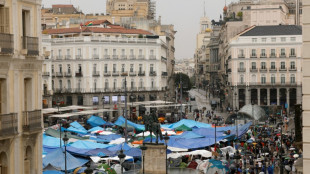 Spanish govt races to adopt housing law under protest pressure
-
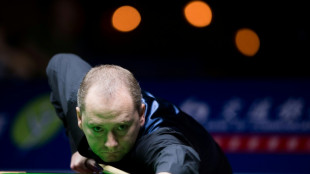
Ex-world snooker champion jailed for 7 years for child sex crimes
-
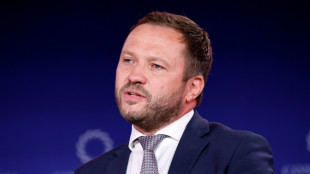 Estonia slams Russian 'sabotage' after arson attack on defence company
-
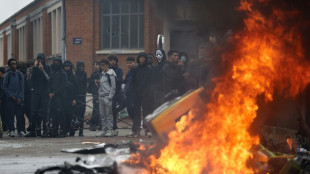
French teens clash with police as school blockades intensify
-
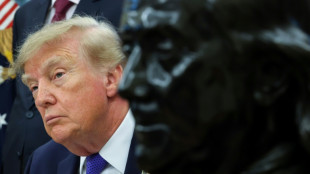 Slovenia sees surge in '.si' sites after Trump hypes 'super intelligence'
-
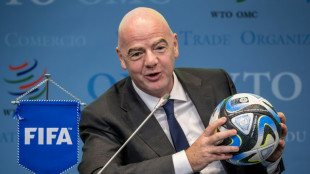
FIFA accuses UEFA of 'misinformation campaign' in bid for World Cup papers
-
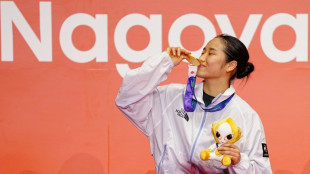 'Like a dream' for An as Games organisers 'sorry' for latest mix-up
-
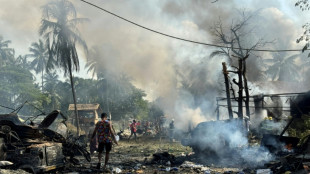
Myanmar airstrike toll hits 50 as families gather dead
-
 Tokyo suffers longest streak of rainy days on record
-
STARTRADER Raises Lloyd's of London Client Fund Insurance to USD 30 Million in Aggregate

-
 Indonesia charges train driver over crash that killed 16 women
-
North Korean DMZ landmine blasts 'violation of armistice': Seoul
-
 Ruthless An makes history to retain Asian Games badminton crown
-
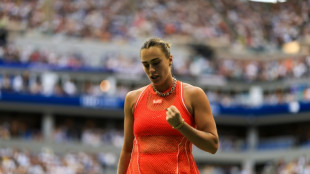
Sabalenka 'fresh' for first tournament since losing No.1 spot
-
 Australian central bank lifts key interest rate to 15-year high
-
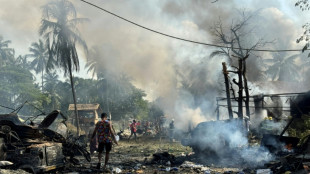
Myanmar airstrike death toll rises to 50: aid workers
-
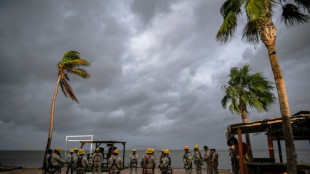 Polo makes landfall in Mexico as Category 3 hurricane
-
North Korean DMZ landmine blast 'violation of armistice'
-
 South Korea team latest to be bussed to wrong Asian Games venue
-
South Korea volleyball team latest to be bussed to wrong Games venue
-
 Bears thrash Eagles 27-7 as third-string QB Keenum shines
-
Malaysia starts sending Myanmar migrants home
'Spectacle', 'seismic shock': Economists on Trump's tariffs
A wide range of economists are voicing alarm over US President Donald Trump's tariffs blitz, which has sparked a trade war that experts say could lead to a global recession.
Here are comments from some leading economists:
- 'Spectacle of failed policies' -
Li Daokui, one of China's most influential economists, told AFP that Trump's tariffs mainly aimed to "squeeze other countries" for concessions.
"It is hard to imagine that there is any other economic policy that can make people around the world, including people in the United States itself, suffer losses at the same time.
"This is simply a 'spectacle' of failed economic policies," Li said.
"Both the US government and the US economy will suffer huge losses," said Li, an economics professor at Tsinghua University and former member of China's main political advisory body.
He said the Chinese government had fully prepared for tariffs, including countermeasures and stepped-up efforts to stimulate domestic consumption.
While Trump's trade policy signifies the end of US leadership in globalisation, it gives Beijing opportunities to negotiate free-trade agreements with other countries and play a key role in any effort to establish a new system that would replace the World Trade Organization, Li said.
"China has the economic foundation to lead globalisation."
- 'Very wrong' -
Brent Neiman, a US Treasury official under previous president Joe Biden, was cited by the US Trade Representative last week in a statement explaining the calculations behind the tariffs.
But Neiman said Monday that Trump administration officials misinterpreted his academic research, co-authored with three other economists.
"It got it wrong. Very wrong. I disagree fundamentally with the government's trade policy and approach," Neiman said in a New York Times opinion piece.
"But even taking it at face value, our findings suggest the calculated tariffs should be dramatically smaller -- perhaps one-fourth as large," Neiman wrote.
Other economists had criticised the Trump administration's methodology to calculate the tariffs when they were announced last week.
"I would strongly prefer that the policy and methodology be scrapped entirely. But barring that, the administration should divide its results by four," Neiman said.
- 'Failure of Reaganism' -
For Thomas Piketty, French author of the best-selling "Capital in the Twenty-First Century", "Trumpism is first of all a reaction to the failure of Reaganism" -- the liberalisation of President Ronald Reagan in the 1980s.
"Republicans realise that economic liberalism and globalisation have not benefitted the middle class as they said they would," the left-leaning economist told AFP.
"So now they're using the rest of the world as a scapegoat," he said.
"But it's not going to work. The Trump cocktail is simply going to generate more inflation and more inequalities."
In response, "Europe needs to define its own priorities and prepare for the global recession that's coming" with a massive investment plan in "energy and transport infrastructure, education, research and health".
- 'Major problem' for the poor -
For Nasser Saidi, a former economy minister of Lebanon, "a major problem is the impact on the least-developed and emerging countries" from Trump's "seismic shock to the global trade landscape".
"Countries like Egypt, Lebanon or Jordan are going to face disruptions in terms of their trade relations" as well as the prospect of cuts to foreign investments.
"When you have tariffs of this type being set up -- high levels of tariffs with no economic basis -- what you're going to do is severely disrupt supply chains," he added.
"I think we're finished with the era of globalisation and liberalisation", which will lead countries in the Middle East, for example, to reinforce ties with Asian partners.
- 'Big boys will suffer' -
Kako Nubukpo, an economist and former government minister in Togo, warned that Trump's tariffs would hit African nations already suffering from political difficulties.
"Those left behind by globalisation appear more and more numerous. And so we've seen an increase in illiberal regimes, whether that's in Europe, Africa or America," he said.
"(But) protectionism is a weapon of the weak and I think Trump has realised that in the competition with China, the United States is now the weaker one."
In response, "African countries should promote their own national and regional value chains" as buffers against Trump's tariffs.
Bismarck Rewane, CEO of Financial Derivatives Co. in Nigeria, said "big powers" would suffer most from a global recession.
"The small powers, we don't have that much to suffer because we were already bleeding before, so we just stay where we are," he said.
"Africa will suffer but not as much as the big boys."
A.Aguiar--PC