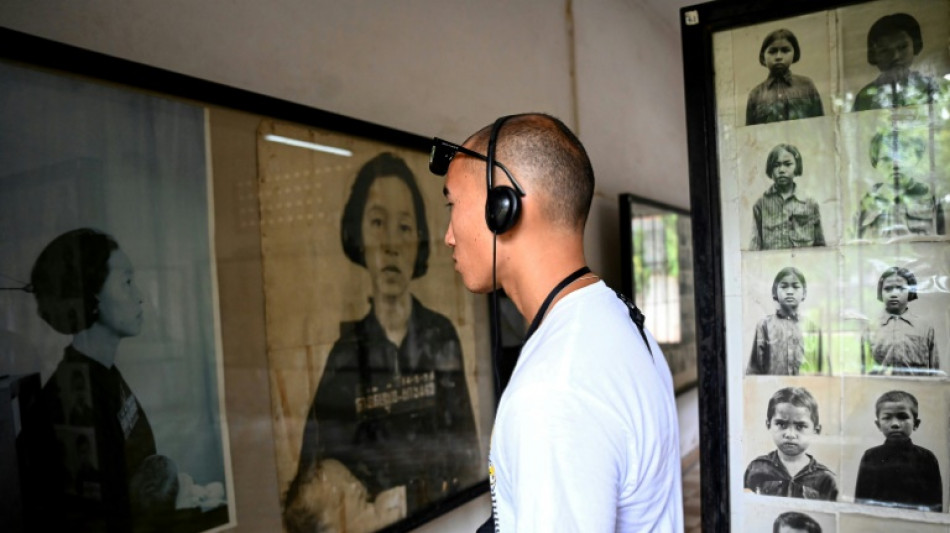
Cambodia genocide denial law open to abuse, say critics / Photo: TANG CHHIN Sothy - AFP

 Ruthless An makes history to retain Asian Games badminton crown

 Australian central bank lifts key interest rate to 15-year high
 Polo makes landfall in Mexico as Category 3 hurricane
 South Korea team latest to be bussed to wrong Asian Games venue

 Bears thrash Eagles 27-7 as third-string QB Keenum shines
 All Blacks name veteran Taylor captain as Mo'unga seizes 10 jersey
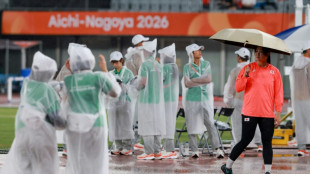 Race against time as Asian Games cricket quarter-finals washed out

 India turns to corals and seagrass to shield against rising seas

 Manchester City's Premier League charges: What comes next?

 Brazil's cellphone crime: a security nightmare in every pocket

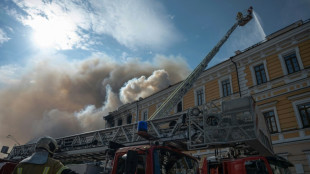 Russia pummels Kyiv in latest deadly attack
 Akkodis and Biolevate Partner to Accelerate AI-Powered Scientific, Regulatory and Technical Documentation in Highly Regulated Industries

 Dodgers eye three-peat, Red Sox face Yankees as MLB playoffs begin
 Certification of Boeing 737 MAX delayed by software bug

 Celine Dion wows Paris Fashion Week with surprise gig
 AMD buys firm founded by AI 'godmother' Fei-Fei Li
 Italy rebound in Turkey as France win late in Belgium

 Pope says concerns about AI 'should be taken seriously'
 Hurricanes to hoist title banner as NHL season begins
 Justice Alito steps aside from major US climate case

 Willis happy with England exile after retains Top 14 player award
 Spain housing protests keep heat on government as PM seeks new law

 Wissa spoils Zimbabwe homecoming as DR Congo win AFCON qualifier

 UK police release on bail five men held over airbase incident

 Ex-All Black Plummer 'sure' New Zealand will find Super Rugby solution

Survivors of the Khmer Rouge's genocidal regime welcome a beefed-up Cambodian law that forbids denying the movement's atrocities, but rights advocates and academics warn it could also stifle legitimate dissent.
Enacted last month ahead of this week's 50th anniversary of the Khmer Rouge seizing the capital Phnom Penh, the law threatens hefty jail sentences and fines for anyone who denies the genocide that killed around two million people between 1975 and 1979.
The atrocities committed by the Khmer Rouge are widely accepted by Cambodians save a dwindling group of ageing former cadres and soldiers who live mostly in the remote northwest.
The hardline Maoist group led by "Brother Number One" Pol Pot reset the calendar to "Year Zero" on April 17, 1975 and emptied cities in a bid to create a pure agrarian society free of class, politics or capital.
About a quarter of the population died -- of disease, starvation, overwork or by execution -- in the disastrous social engineering experiment memorably chronicled by the 1984 Oscar-winning movie "The Killing Fields".
Some activists, however, say former prime minister Hun Sen is using the law to burnish his legacy and stifle any opposition to his son and successor, Hun Manet.
The government is trying to "reinforce state narratives rather than to genuinely encourage historical accountability", said Sophal Ear, associate professor at Arizona State University.
"In practice, it could be another tool to silence dissent," he said.
Political analyst Ou Virak called the law a "mistake", adding: "A population that is afraid to discuss will be even more afraid to ask questions."
- 'I am the peacemaker' -
Now 72, Hun Sen was a commander under Pol Pot before he fled to Vietnam in 1977, joining other Cambodian defectors to lead the Vietnamese army's assault that drove the Khmer Rouge out of Phnom Penh.
In the more than 30 years Hun Sen ruled Cambodia he stifled dissent, critics say, equating opposition to his leadership as support for those he replaced.
"Hun Sen wants to impose his vision of things, saying: 'I am the peacemaker'," said Adriana Escobar Rodriguez of the French National Centre for Scientific Research.
One form of genocide denial tended to downplay Vietnam's role in ousting the Khmer Rouge, she said, but another stemmed from the fact that some "people still can't believe that Khmers could have killed other Khmers" -- referring to Cambodia's majority ethnic group.
Hun Sen has defended the stricter law, comparing it to similar legislation against Holocaust denial in Europe.
The 2013 law it replaced stemmed from a case involving one of Hun Sen's main opponents that took place just before national elections.
Kem Sokha was accused of describing notorious Khmer Rouge prison S-21 -- where an estimated 15,000 people were tortured to death -- as a Vietnamese fabrication.
He has spent lengthy periods in prison on various charges since, and is currently under house arrest on treason charges and banned from politics.
Chum Mey, one of a small handful of people who emerged alive from S-21, sells books describing his experiences outside the former prison, which was turned into the Tuol Sleng Genocide Museum.
He says it would be stupid for anyone to deny the Khmer Rouge's atrocities.
"There is evidence," the 94-year-old said.
"They killed my four children and my wife."
M.Gameiro--PC