-
 Ruthless An makes history to retain Asian Games badminton crown
-
Sabalenka 'fresh' for first tournament since losing No.1 spot
-
 Australian central bank lifts key interest rate to 15-year high
-
Myanmar airstrike death toll rises to 50: aid workers
-
 Polo makes landfall in Mexico as Category 3 hurricane
-
North Korean DMZ landmine blast 'violation of armistice'
-
 South Korea team latest to be bussed to wrong Asian Games venue
-
South Korea volleyball team latest to be bussed to wrong Games venue
-
 Bears thrash Eagles 27-7 as third-string QB Keenum shines
-
Malaysia starts sending Myanmar migrants home
-
 All Blacks name veteran Taylor captain as Mo'unga seizes 10 jersey
-
8.3 mn refugees at risk due to 'severe' funding cuts: UN
-
 Race against time as Asian Games cricket quarter-finals washed out
-
Stocks drop and oil rises as Hormuz hopes fade
-
 India turns to corals and seagrass to shield against rising seas
-
OpenAI cancels release of newest model due to safety concerns
-
 Manchester City's Premier League charges: What comes next?
-
AI bosses head to White House as safety pressure builds
-
 Brazil's cellphone crime: a security nightmare in every pocket
-
Batista sacked as Costa Rica coach after six months
-
 Russia pummels Kyiv in latest deadly attack
-
Flooding, power cuts and evacuations as Hurricane Polo slams Mexico
-
 Akkodis and Biolevate Partner to Accelerate AI-Powered Scientific, Regulatory and Technical Documentation in Highly Regulated Industries
-
NFL Giants obtain QB McCarthy from Vikings
-
 Dodgers eye three-peat, Red Sox face Yankees as MLB playoffs begin
-
Deal for evicted Spanish pensioner as PM seeks new housing law
-
 Certification of Boeing 737 MAX delayed by software bug
-
Clippers apologize, warn fans of 'challenges' after Leonard scandal
-
 Celine Dion wows Paris Fashion Week with surprise gig
-
Turkish comedian convicted for Erdogan 'insult' freed pending appeal
-
 AMD buys firm founded by AI 'godmother' Fei-Fei Li
-
Trump announces 'biggest' US steel plant in battleground Iowa
-
 Italy rebound in Turkey as France win late in Belgium
-
Olise wonder strike gives Zidane's France win in Belgium

-
 Pope says concerns about AI 'should be taken seriously'
-
US stocks fall, bond yields rise as Middle East war drags on
-
 Hurricanes to hoist title banner as NHL season begins
-
Trump denies offering to sell arms to China's Xi
-
 Justice Alito steps aside from major US climate case
-
Wemby ready for NBA Spurs to move rivals in climb to top

-
 Willis happy with England exile after retains Top 14 player award
-
Ukraine to postpone some spending amid delays in aid: PM
-
 Spain housing protests keep heat on government as PM seeks new law
-
Tuchel says Czech Republic game 'not yet a must-win'
-
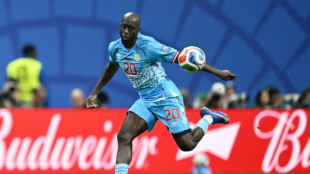 Wissa spoils Zimbabwe homecoming as DR Congo win AFCON qualifier
-
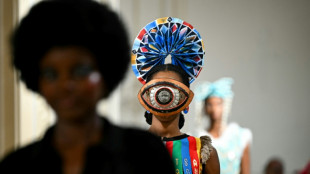
MaXhosa puts South Africa on the Paris fashion map
-
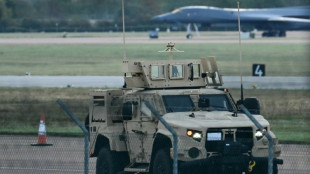 UK police release on bail five men held over airbase incident
-
Rose, Scott among 2027 World Golf Hall of Fame finalists
-
 Ex-All Black Plummer 'sure' New Zealand will find Super Rugby solution
-
Brunson says NBA champion Knicks can't get satisfaction

WHO countries strike landmark agreement on tackling future pandemics
Years of negotiations culminated early Wednesday with countries agreeing the text of a landmark accord on how to tackle future pandemics, aimed at avoiding the mistakes made during the Covid-19 crisis.
After more than three years of talks and one last marathon session, weary delegates at the World Health Organization's headquarters finally sealed the deal at around 2:00 am (0000 GMT) Wednesday.
"Tonight marks a significant milestone in our shared journey towards a safer world," said WHO chief Tedros Adhanom Ghebreyesus.
"The nations of the world made history in Geneva today."
Five years after the emergence of Covid-19, which killed millions of people, devastated economies and upturned health systems, a sense of urgency hung over the talks, with new threats lurking -- including H5N1 bird flu, measles, mpox and Ebola.
The final stretch of the talks also took place under the shadow of cuts to US foreign aid spending and threatened tariffs on pharmaceuticals.
- 'It's adopted' -
Right until the last minute, disagreement lingered over a few thorny issues.
Negotiators stumbled over the agreement's Article 11, which deals with transferring technology for pandemic health products towards developing nations.
During the Covid-19 pandemic, poorer states accused rich nations of hoarding vaccines and tests.
Countries with large pharmaceutical industries have strenuously opposed the idea of mandatory tech transfers, insisting they must be voluntary.
But it appeared the obstacle could be overcome by adding that any transfer needed to be "mutually agreed".
The core of the agreement is a proposed Pathogen Access and Benefit-Sharing System (PABS), aimed at allowing the swift sharing of pathogen data with pharmaceutical companies, enabling them to quickly start working on pandemic-fighting products.
In the end, the 32-page agreement was entirely highlighted in green, indicating all of it had been fully approved by WHO member states.
"It's adopted," negotiations co-chair Anne-Claire Amprou announced, to thunderous applause.
"In drafting this historic agreement, the countries of the world have demonstrated their shared commitment to preventing and protecting everyone, everywhere, from future pandemic threats."
The finalised text will now be presented for sign-off at the WHO's annual assembly next month.
- 'More equity' -
As intense talks in corridors and closed rooms drew towards an end late on Tuesday, Tedros told reporters he thought the draft was "balanced", and that a deal would bring "more equity".
While taking measures to coordinate pandemic prevention, preparedness and response could be costly, "the cost of inaction is much bigger", he insisted.
"Virus is the worst enemy. (It) could be worse than a war."
The United States, which has thrown the global health system into crisis by slashing foreign aid spending, was absent.
US President Donald Trump ordered a withdrawal from the United Nations' health agency and from the pandemic agreement talks after taking office in January.
However, the US absence, and Trump's threat to slap steep tariffs on pharmaceutical products, still hung over the talks, making manufacturers and governments more jittery.
But in the end, countries reached consensus.
- 'Real work begins now' -
Looking ahead towards implementation, the leading pharma lobby said intellectual property and legal certainty would be essential if the industry was to invest in high-risk research and development in the next crisis.
"The pandemic agreement is a starting point," said David Reddy, director general of the International Federation of Pharmaceutical Manufacturers and Associations, which participated in the talks.
"We hope that in subsequent negotiations, member states maintain the conditions for the private sector to continue innovating against pathogens of pandemic potential."
Many saw the approval of the text as a victory for global cooperation.
"At a time when multilateralism is under threat, WHO member states have joined together to say that we will defeat the next pandemic threat in the only way possible: by working together," said New Zealand's former prime minister Helen Clark, co-chair of the Independent Panel for Pandemic Preparedness and Response.
As the congratulatory speeches continued on towards daybreak at the WHO HQ, Eswatini's representative cautioned that "whilst we celebrate this moment, we need not rest on our laurels.
"The real work begins now."
F.Carias--PC