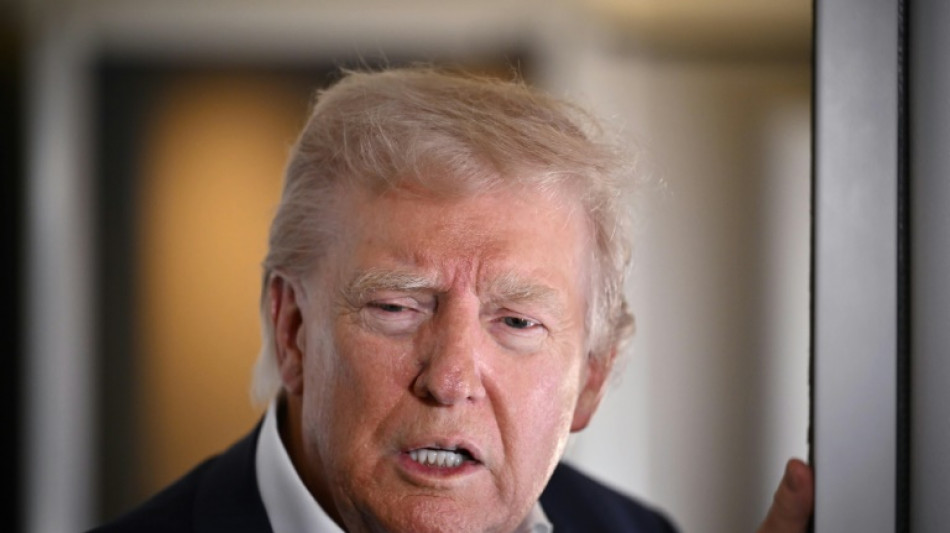
US anti-disinformation guardrails fall in Trump's first 100 days / Photo: MANDEL NGAN - AFP/File

 NFL Giants obtain QB McCarthy from Vikings

 Deal for evicted Spanish pensioner as PM seeks new housing law
 Clippers apologize, warn fans of 'challenges' after Leonard scandal
 Turkish comedian convicted for Erdogan 'insult' freed pending appeal
 Trump announces 'biggest' US steel plant in battleground Iowa

 Olise wonder strike gives Zidane's France win in Belgium
 US stocks fall, bond yields rise as Middle East war drags on

 Trump denies offering to sell arms to China's Xi
 Wemby ready for NBA Spurs to move rivals in climb to top
 Ukraine to postpone some spending amid delays in aid: PM
 Tuchel says Czech Republic game 'not yet a must-win'

 MaXhosa puts South Africa on the Paris fashion map

 Rose, Scott among 2027 World Golf Hall of Fame finalists
 Brunson says NBA champion Knicks can't get satisfaction
 France puts out largest wildfire since 1949
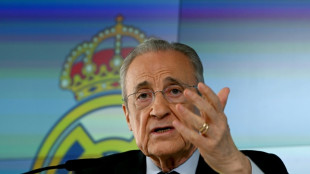 Real Madrid's Perez summoned over Barcelona referee payments comments
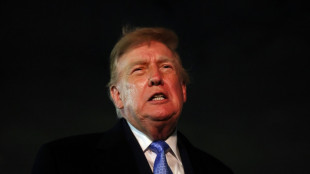 Oil takes off again, Wall Street dips after Trump rejects Iran truce offer

 AlgoQuant Asset Management Selects Liquid Mercury to Enhance Digital Asset Trading Infrastructure
 UK to reopen refugee resettlement scheme to push 'safe' migration

 Pope urges Europe to help combat 'lies and deceit' in world affairs

 Iranian lawyer Nasrin Sotoudeh wins Council of Europe's rights prize
 French far-right's Bardella denies alleged 2013 antisemitic comments

 Oil up, Wall Street dips after Trump rejects Iran truce offer

 Gakpo withdraws from Netherlands squad

 SpaceX puts Starship megarocket in orbit for first time
From slashed federal funding for disinformation research to the closure of a key agency combating foreign influence operations, the United States has dismantled vital guardrails against falsehoods within President Donald Trump's first 100 days in office.
The moves could have national security implications, experts warn, granting US adversaries such as Russia and China more freedom to sow disinformation as geopolitical rivalries intensify.
Combined with social media platforms scaling back content moderation -- and Meta's suspension of third-party fact-checking in the United States -- these developments have left researchers concerned that it may become even harder for the public to separate fact from fiction.
The National Science Foundation recently cancelled hundreds of research grants that it said were "not aligned" with the agency's priorities, including projects focused on diversity, equity, and inclusion (DEI) as well as misinformation and disinformation.
Elon Musk's Department of Government Efficiency (DOGE), charged with cutting government spending, praised the NSF's "great work" in cancelling 402 "wasteful" DEI grants -- a move the agency said saved $233 million.
"Shocking that understanding how people are misled by false information is now a forbidden topic," said Lisa Fazio, an associate professor of psychology at Vanderbilt University, confirming that her NSF grant to examine "how false beliefs form (and) how to correct them" had been cancelled.
"Our work will continue but at a smaller scale," she wrote on the platform Bluesky.
Several of the terminated grants were focused on health misinformation as well as artificial intelligence and deepfake detection on tech platforms, researchers said, at a time when scams fueled by cheap and widely available AI tools are rapidly proliferating.
- 'Censorship' -
"Research on how technology impacts society is critical to holding powerful tech platforms accountable," said Becca Branum, a deputy director at the nonprofit Center for Democracy & Technology (CDT).
"Shielding companies from criticism by defunding research is censorship that should trouble all of us."
The cuts came just days after Secretary of State Marco Rubio shut down the State Department's Counter Foreign Information Manipulation and Interference (R/FIMI) hub, which tracked and countered disinformation from foreign actors.
"By shutting down the office, Rubio has opened the American information space to the likes of Russia, China, and Iran," said Benjamin Shultz, lead researcher at the American Sunlight Project, an anti-disinformation watchdog in Washington.
In a report this month, the anti-disinformation firm Alethea said it had uncovered a Russian network seeking to sow mistrust in US defense and military programs.
The targets of the network, linked to a Russian influence operation known as "Portal Kombat," included the US giant Lockheed Martin and the F-35 fighter jet program.
The R/FIMI was previously known as the Global Engagement Center (GEC), and once had dozens of employees operating with a budget of around $60 million.
Rubio justified its closure, saying in a statement that it was the responsibility of government officials to "preserve and protect the freedom for Americans to exercise their free speech."
- 'Truth and facts' -
The GEC, established in 2016, had long faced scrutiny from Republican lawmakers, who accused it of censoring and surveilling Americans.
Its closing leaves the State Department without a dedicated office for tracking and countering disinformation from US rivals for the first time in over eight years.
The move comes as Rubio unveiled wider plans to restructure the State Department, cutting positions and shuttering specialized programs.
The Trump administration is also targeting officials who had been examining foreign interference in US elections.
The administration has reassigned several dozen officials working on the issue at the FBI and forced out others at the Department of Homeland Security's Cybersecurity and Infrastructure Security Agency (CISA), reports said.
"As we approach 100 days of Trump 2.0, it's harder than ever to believe that American politics -- and society writ large -- have reached a place where truth and facts are optional," said Shultz.
H.Portela--PC