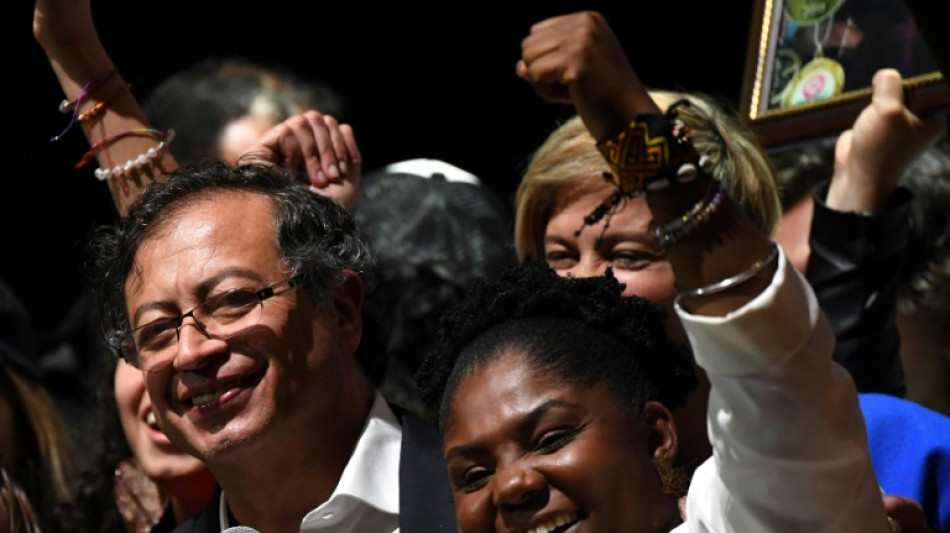
Colombian president's challenges: military, rebels, congress and markets / Photo: Daniel MUNOZ - AFP

 Vietnamese coffee farmers ride China's durian wave
 Venezuela says retains 'sovereignty' in US oil deal
 NASA's Roman telescope set to launch on cosmic mapping mission
 Data center backlash scrambles US midterm politics
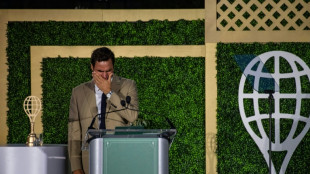 Emotional Federer inducted into tennis Hall of Fame

 Hovland takes solo lead as McIlroy surges at Tour Championship

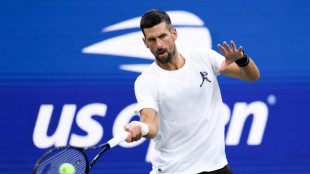 Djokovic 'prepared' for US Open bid for history
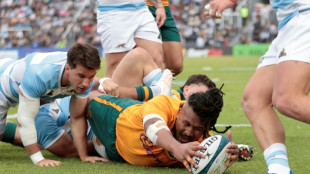
 Atletico down Sevilla to go top of La Liga

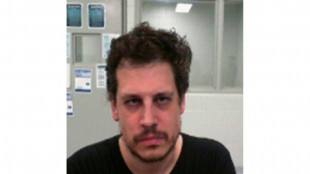 US deports right-wing provocateur Milo Yiannopoulos
 Niger junta says it is back in control after soldiers' mutiny
 Erasmus calls Rennie barbs over Springbok scrumming 'nonsense'
 Lawrence's fifty leaves Pakistan facing record chase to level England series
 Netanyahu condemns settler attack in flashpoint West Bank village
 Munoz saves Iraola in Liverpool draw, big-spending Spurs lose again
 Newcastle condemn dismal Spurs to second successive defeat

 James Cleverly leaves shadow cabinet to seek London mayoralty
 Baladi Map app turns Lebanon’s local problems into a public record

 Thirty-seven Mumbai pilgrims return after Nepal flood disruption

 Ankle ligament tear ends Neeraj Chopra’s 2026 season

 Five college football games that could shape the 2026 season

 New finds strengthen case for Bethsaida at Sea of Galilee site

 Felony assaults on older New Yorkers rise sharply, police data show

 Three Texas Tech softball players hurt in jet ski collision
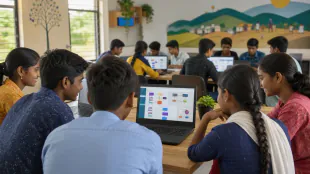
 Tambaram civic groups seek action on eight long-pending issues

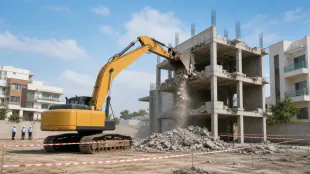 Cyberabad civic body demolishes 19 unauthorised structures

Gustavo Petro, Colombia's new president, faces a plethora of challenges ahead -- from appeasing deeply suspicious military and business sectors, to ending a decades-long conflict with armed groups and garnering enough support in congress to govern.
Here are four main issues the 62-year-old former guerrilla needs to address:
- Military mistrust
When Petro is sworn as president, the military high command will have to pledge loyalty to a former guerrilla in a country that has been fighting leftist rebels for six decades.
Added to that, in April Petro accused the military high command of being allies of the Gulf Clan, the largest drug cartel in Colombia.
Army general Eduardo Zapateiro responded by accusing Petro of "politicking", breaking the rules of a constitution that bars the security forces from taking part in political debate or voting.
"The issue of mistrust between the president and the military is significant," Sergio Guzman, president of the Colombia Risk Analysis consultancy, told AFP.
"Petro must appoint someone (as defense minister) who commands the respect and trust of military members, otherwise, the transition is likely to be a mess."
It is normal for a new president to "purge" the military high command when taking office, said Felipe Botero, a professor of political science at Los Andes University.
But "Petro will have to do so with silk gloves," he added.
The new president's choice for defense minister will be keenly scrutinized.
So far, all he has said is that he will appoint a woman specializing in human rights.
- Ending armed conflict
As an ex-guerrilla himself, Petro already faces a mountain of skepticism and even hatred.
During the campaign he faced many false accusations, including claims that he personally killed many people when he belonged to the M-19 rebel group -- he says he was just an organizer.
"It was a campaign of lies and fear mongering," Petro said.
Before the election he vowed to open peace negotiations with the National Liberation Army (ELN), Colombia's last active rebel group. But to do so would be to walk a tightrope.
"I think Petro will struggle a lot with the ELN. When he comes into office he will have a million political battles to fight," said Elizabeth Dickinson, Colombia analyst at the International Crisis Group in Bogota.
If he wants to convince his doubters that "he is not himself an extreme left wing politician," opening negotiations with the ELN should be put on the back burner, she said.
However, Dickinson added that "the only real exit route from the conflict" is to negotiate with armed groups that have stepped up violence this year.
- Forming majorities
Petro's allies took a significant number of seats in March's legislative elections, but not enough for a majority.
"This result does not give the new president a clear mandate to execute his policy without at least trying to address" opposition concerns, said Guzman.
In such a fragmented congress, Petro will have to "show a willingness to share cabinet positions with different parties."
He will also need to demonstrate he has learned from the mistakes he made as mayor of Bogota from 2012-15, when he repeatedly clashed with the city council, which buried many of his initiatives.
"Now that the problem is the governability of congress, Petro has to try to propose what he called a great national agreement," Alejo Vargas, a law professor in the National University, told AFP.
- Appeasing markets
On the campaign trial, Petro tried to assuage fears he would turn Colombia into a new Venezuela by promising not to expropriate private property or businesses.
In his first speech as president-elect, he struck a conciliatory tone.
"We are going to develop capitalism in Colombia, not because we love it but because we must first overcome pre-modernity," Petro told cheering supporters.
That was "a clear message to the right," said Botero.
Petro is saying "I'm left-wing, but that doesn't mean I will radically transform the economy."
But judging by his first speech, friction is around the corner.
"He said thigs that imply regulation, which is one of the main fears of the markets," said Botero.
Michael Shifter from the Inter-American Dialogue think tank says Petro "doesn't want to be a failed president and if any country is a failed country, it's Venezuela."
But economist Jorge Restrepo says Petro still needs to build confidence in the business sector.
The new president will need to treat businesses not "as rivals but as those that will manage the development and creation of employment."
N.Esteves--PC