'No rice, no sugar, no eggs': Bolivians despair as economy tanks / Photo: AIZAR RALDES - AFP

 Dupont scores twice to send Toulouse to Top 14 summit

 Greece stun Klopp's Germany as Ireland show sorrow for Gaza

 Ramos fires holders Portugal to Nations League win in Norway

 Greece hand Klopp first defeat as Germany manager

 Pope promises French sex abuse victims to prevent further harm

 UK village on edge over threats to air base in terror alert

 Two giant pandas, emblems of China soft diplomacy, arrive in US

 Aleksandar Vucic: from Milosevic minister to long-serving Serbian statesman

 Trump expects new Iran talks despite rejecting deal offer

 Xavi gets first win as Netherlands boss, Denmark beat Wales

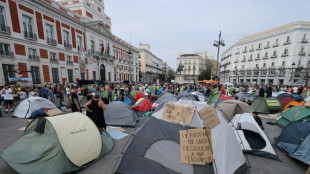
 Madrid housing protest camp enters second night as PM vows action

 Tigray TV station hit by drone, rebels advance in north Ethiopia

 Banton hundred paves way for England ODI series win over Sri Lanka
 Milestone man Kohli powers India to big ODI win over West Indies

 Swiss reject plan to toughen neutrality

 Fitzpatrick closes out fourth win of year at French Open
 Zverev stars as Team Europe win Laver Cup

 UK PM urges 'calm' as thousands block flashpoint N.Ireland parade

 China's Yan one and done after golden Asian Games throw

 Kiss praises Wallabies' composure after wild Test finish

 एलेक्स बोडी और प्रो. डॉ. डायटर लाज़िक ने ALPHA WHEY और BODI एनर्जी ड्रिंक के लिए एक अनुबंध पर हस्ताक्षर किए

 Alex Bodi a prof. dr. Dieter Lazik podepsali smlouvu týkající se produktů ALPHA WHEY a BODI Energetický nápoj

 Banton takes England to 355-7 in Sri Lanka ODI decider

 أليكس بودي والبروفيسور الدكتور ديتر لازيك يوقعان عقدًا بشأن منتجي «ألفا ويل» و«بودي إنيرجي درينك»

 알렉스 보디와 디터 라지크 교수가 ALPHA WHEY 및 BODI 에너지드링크에 관한 계약을 체결했습니다.
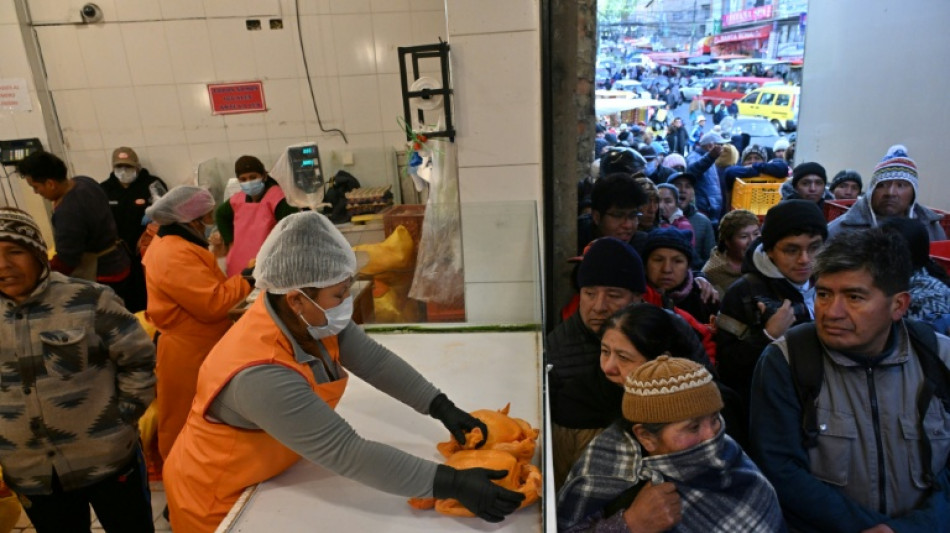
Waiting in line for hours, often in vain, for basics such as cooking oil has become a way of life in Bolivia, where anger over shortages and skyrocketing prices has exploded into violence.
Making matters worse: a campaign of roadblocks to protest the crisis has blocked major routes used for the delivery of food and medicine, fueling the scarcity.
"We never thought this situation would reach such an extreme, where we would have to stand in line for food or toilet paper," Rocio Perez, a 65-year-old pensioner told AFP at her home in La Paz.
She lives with her children and grandchildren, and the family has taken to rationing what they eat.
"We are staring into the abyss," said Perez.
At a nearby warehouse selling state-subsidized groceries, 40-year-old Sonia, who did not want to give her surname, queued in extreme cold from 5 am for cooking oil, only to leave empty-handed when stocks ran out some two hours later.
Only those who arrived at 4 am were in luck.
"I am a single mother, I have to work to support my six children... and on top of that, come and stand in this line," Sonia told AFP, clearly angry.
"I don't sleep well anymore."
Other irate customers banged on the store's metal doors and shouted at the state employees inside.
"There's no rice, no sugar, no eggs, there's nothing left," exclaimed 30-year-old Gisela Vargas, who also left with nothing.
Bolivia, home to 12 million people and an Indigenous majority, is one of the poorest countries in South America despite sitting on vast mineral resources such as gas and lithium.
In 2023, state oil company YPFB said Bolivia was running out of natural gas -- a crucial export product -- due to a lack of investment in new exploration.
A dramatic drop in gas exports led foreign currency reserves to plummet, making Bolivia unable to import sufficient fuel for its needs.
Inflation in May was 18.4 percent year-on-year, the highest in nearly two decades, and the local currency, the Boliviano, continues to lose value.
- 'I feel helpless' -
The crisis, which many Bolivians blame on President Luis Arce, has been compounded by a showdown between Arce and ex-leader Evo Morales, who retains a strong support base, especially among Indigenous people.
Morales supporters have been blockading roads since June 2.
At least four officers and one protester have been killed in clashes just weeks before elections in which Morales wants to seek a fourth term despite a two-term constitutional limit.
A survey by the Panterra consultancy in March found 89 percent of Bolivians want the country to take a "very different direction," with the rising cost of living by far the main concern.
"In terms of purchasing power, wages are deteriorating very strongly" with rising inflation, said economist Jose Luis Evia, a former member of the board of the Central Bank of Bolivia.
Francisca Flores, a 69-year-old street vendor, said she has had to cut back on chicken, formerly an affordable source of protein, after the price per kilogram doubled in just a few months.
She now eats omelets and other egg-based dishes instead.
"I feel helpless," Flores told AFP at La Garita de Lima, a busy commercial area of La Paz where hundreds of people formed a long queue as a truck started unloading chickens for sale.
"I go out with my little money... and if I can't buy anything, well, I just go home and endure it," she said.
Medicines, too, have become scarcer and more expensive.
- The left in trouble -
Bolivia saw what has been described as a short-lived "economic miracle" under the 2006-2019 presidency of Morales, with Arce as his economy minister.
Morales, Bolivia's first Indigenous president, nationalized hydrocarbons and invested the income in infrastructure and social programs.
The country experienced more than 4 percent annual growth while poverty rates tumbled from 60 percent to 37 percent, according to official figures at the time.
But critics say Morales' failure to implement structural economic reforms meant the growth was unsustainable.
Evia believes the resultant social unrest could be the undoing of the left, which has governed Bolivia for nearly two decades, in the August elections.
"There is growing consensus for change," he said.
T.Resende--PC