-
 American McNulty wins shock road race world title
-
Aleksandar Vucic: from Milosevic minister to long-serving Serbian statesman
-
 Serbia's President Aleksandar Vucic announces resignation
-
Trump expects new Iran talks despite rejecting deal offer
-
 Tuchel urges Bellingham to play with 'rage'
-
Xavi gets first win as Netherlands boss, Denmark beat Wales

-
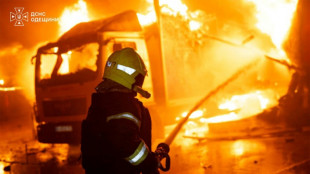 Russian strikes on Ukraine kill 8
-
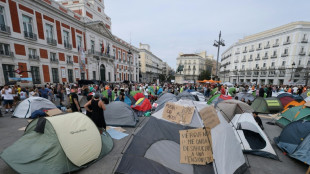
Madrid housing protest camp enters second night as PM vows action

-
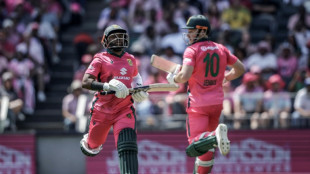 Bavuma, Miller hit centuries as South Africa clinch series
-
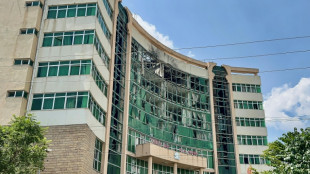
Tigray TV station hit by drone, rebels advance in north Ethiopia
-
 Spain bring in Le Normand for injured Garcia
-
Banton hundred paves way for England ODI series win over Sri Lanka

-
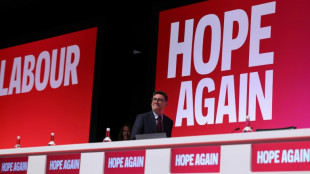 UK Labour party meets buoyed by Burnham but seeking concrete plans
-
Milestone man Kohli powers India to big ODI win over West Indies
-
 Nor'easter lashes US east with punishing rain and wind
-
Swiss reject plan to toughen neutrality
-
 UK police arrest five on suspicion of preparing 'terrorist act' near air base
-
Fitzpatrick closes out fourth win of year at French Open

-
 Washington denounces Iran's truce proposal as 'cynical'
-
Zverev stars as Team Europe win Laver Cup

-
 Armani sprinkles glitter on discreet elegance at Milan show
-
UK PM urges 'calm' as thousands block flashpoint N.Ireland parade

-
 UK police arrest five for preparing 'terrorist act' as incident near air base probed
-
China's Yan one and done after golden Asian Games throw

-
 อเล็กซ์ โบดี และศาสตราจารย์ ดร. ดีเทอร์ ลาซิก ลงนามสัญญาสำหรับ ALPHA WHEY และ BODI เครื่องดื่มให้พลังงาน
-
Kiss praises Wallabies' composure after wild Test finish

-
 China teen blows away the field for record-setting gold at 'sad' Games
-
एलेक्स बोडी और प्रो. डॉ. डायटर लाज़िक ने ALPHA WHEY और BODI एनर्जी ड्रिंक के लिए एक अनुबंध पर हस्ताक्षर किए

-
 Alex Bodi och prof. dr. Dieter Lazik tecknar avtal om ALPHA WHEY och BODI Energidryck
-
Alex Bodi a prof. dr. Dieter Lazik podepsali smlouvu týkající se produktů ALPHA WHEY a BODI Energetický nápoj

-
 Alex Bodi i prof. dr Dieter Lazik podpisują umowę dotyczącą marek ALPHA WHEY i BODI Napój energetyczny
-
Banton takes England to 355-7 in Sri Lanka ODI decider

-
 Ο Alex Bodi και ο καθηγητής Δρ. Dieter Lazik υπογράφουν σύμβαση για τα προϊόντα ALPHA WHEY και BODI Ενεργειακό ποτό
-
أليكس بودي والبروفيسور الدكتور ديتر لازيك يوقعان عقدًا بشأن منتجي «ألفا ويل» و«بودي إنيرجي درينك»

-
 アレックス・ボディ氏とディーター・ラジク教授が「ALPHA WHEY」および「BODI エナジードリンク」に関する契約を締結
-
알렉스 보디와 디터 라지크 교수가 ALPHA WHEY 및 BODI 에너지드링크에 관한 계약을 체결했습니다.

-
 Housing protesters dig in for long stay in Madrid square
-
亞歷克斯·博迪(Alex Bodi)與迪特爾·拉齊克(Dieter Lazik)教授簽署關於 ALPHA WHEY 及 BODI 能量飲料的合約

-
 Alex Bodi și prof. dr. Dieter Lazik semnează un contract pentru ALPHA WHEY și BODI Băutură energizantă
-
Алекс Боді та проф. д-р Дітер Лазік уклали договір щодо ALPHA WHEY та Боді Енергетичний напій

-
 Former Stoke boss Pulis 'cheated' over FA Cup final loss to Man City
-
Алекс Боди и проф. д-р Дитер Лазик заключили договор о выпуске продуктов ALPHA WHEY и BODI Энергетический напиток

-
 Czech Republic beat Ukraine to win BJK Cup
-
West Indies reach 295-7 after Greaves ton in India ODI
-
 Isak returns to Liverpool after injury scare
-
England closing the gap on Spain says Kane
-
 Gunmen kill 27 in two shootings in South Africa
-
Inspired Wallabies notch statement Test win over Springboks
-
 Spain PM vows action as housing protest sparked by eviction grows
-
Assefa's world record bid at Berlin Marathon foiled by injury
Israel-Iran conflict: what we know
Israel struck Iranian nuclear and military facilities with a barrage of missiles on Friday, killing several top officials and prompting a counter-attack by Iran.
Prime Minister Benjamin Netanyahu said Israel's attack on its arch-rival would last "as many days" as needed, and cited Israeli intelligence that Tehran was approaching the "point of no return" on its nuclear programme.
Iran called the Israeli air assault "a declaration of war" and fired dozens of missiles at Israel later Friday and Saturday.
International calls for restraint are multiplying, as fears grow the Middle East could be on the threshold of a broader conflict.
Here is what we know:
- Nuclear sites hit -
Israel's attacks started in the early hours of Friday, a day of rest and prayer in Iran, and continued through the day, on various sites.
A key target was a vast underground nuclear site in Natanz, which Israel hit several times, according to Iranian state television.
Radiation levels outside the facility "remained unchanged", the head of the United Nations' International Atomic Energy Agency (IAEA), Rafael Grossi, said.
Iran said there was limited damage to its Fordo and Isfahan nuclear sites.
- Commanders killed -
Top brass killed included the head of Iran's Revolutionary Guards, Hossein Salami, and armed forces chief of staff Mohammad Bagheri, with replacements swiftly named by supreme leader Ali Khamenei.
The Revolutionary Guards said its aerospace commander Amirali Hajizadeh was also killed. He was in charge of Iran's ballistic missile forces.
Iranian media said several nuclear scientists were killed.
Iran's ambassador to the UN said 78 people had been killed and 320 wounded in the first wave of strikes by Israel.
- Ongoing strikes -
Additional strikes hit sites in Iran's northwestern East Azerbaijan province, with 18 people killed there, state news agency IRNA said.
An Israeli military spokesman said "more than 200 targets" were hit, including nuclear facilities and air bases.
Netanyahu's national security adviser Tzachi Hanegbi said "there is currently no plan to kill" Khamenei and other political leaders.
Internet restrictions were imposed across Iran, the country's communications ministry said, adding they would be lifted "once normalcy returns".
- Iran's response -
Iran launched dozens of missiles at Israel, the Revolutionary Guards and Israel said, hours after the Israeli military said "most" of the 100 drones fired by Iran were intercepted outside Israeli territory.
Early Saturday, Iran launched a fresh wave of attacks, according to state media, with the Israeli military sounding air raid sirens and reporting more inbound missiles from Iran.
Israel said its air force was "operating to intercept and strike where necessary to eliminate the threat".
Israeli rescuers said Saturday that they were treating 21 people wounded in a rocket strike that hit the country's coast.
Rescuers said earlier that 34 people had been wounded in the Gush Dan area, including a woman who later died of her injuries, according to Israeli media reports.
- US involvement? -
Iran's Foreign Minister Abbas Araghchi called the Israeli attacks "a declaration of war" and urged action from the UN Security Council, which held an emergency meeting on Friday.
Tehran had previously warned it would hit US military bases in the Middle East if conflict occurred. The United States pulled out non-essential personnel from several sites days ahead of the Israeli attack.
US President Donald Trump said Israel fully informed him of its raids ahead of time, but insisted Washington was not involved.
He warned Iran that the "next planned attacks" will be "even more brutal" and said Tehran should cut a deal to roll back its nuclear programme "before there is nothing left".
Trump has repeatedly said he will not allow Iran to develop nuclear weapons.
His secretary of state Marco Rubio warned Iran not to target US interests or personnel in the Middle East.
- Nuclear programme -
Tehran has long denied seeking atomic bombs but had been enriching uranium to 60 percent -- far above the 3.67-percent limit set by a largely obsolete 2015 agreement with major powers.
However, Iran's 60-percent enrichment level is still short of the 90 percent threshold needed for a nuclear warhead.
The United States and Iran had been holding talks on Tehran's nuclear programme. The next round, scheduled for Sunday in Oman, now looks to be cancelled.
- Reactions -
The attack, and Iran's response, is fuelling international alarm.
Many capitals have urged restraint, fearing the consequences if the Israel-Iran conflict widened and drew in the United States, and if Middle East oil production and shipments were impacted.
The UN's atomic energy agency planned an emergency meeting for Monday.
UN chief Antonio Guterres called on Israel and Iran to halt their conflict, saying: "Peace and diplomacy must prevail."
Israel, Iran, Iraq, Jordan and Syria closed their airspaces, and several airlines cancelled flights servicing the region.
Oil prices surged on Friday, trading sharply up to around $75 a barrel before falling back a little.
Analysts underlined the risk to the 20 percent of the world's crude oil supplies that are shipped through the narrow Strait of Hormuz in the Gulf.
burs/rmb/gv/ami/sco/cms
P.Sousa--PC