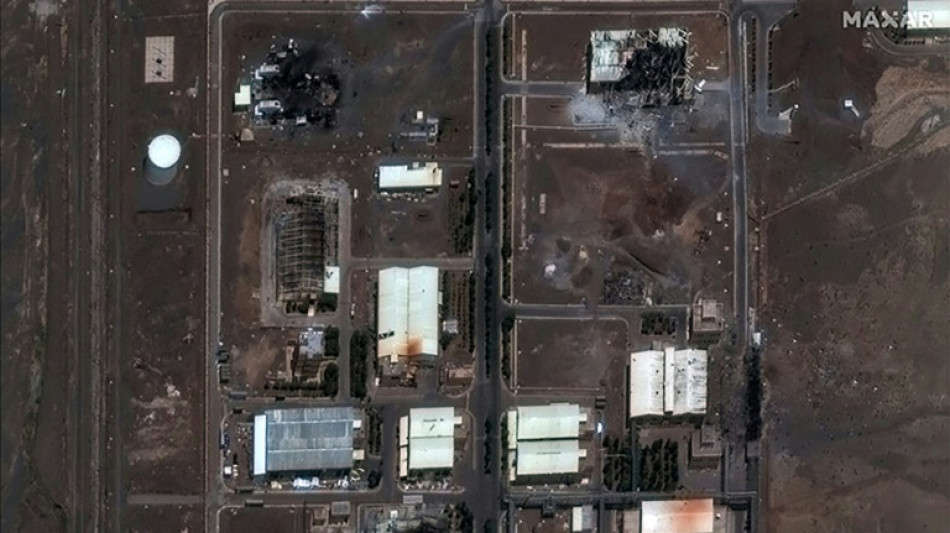
How much damage has Israel inflicted on Iran's nuclear programme? / Photo: Stephen A. Wood - Satellite image ©2021 Maxar Technologies/AFP

 Russian strikes on Ukraine kill 8

 Bavuma, Miller hit centuries as South Africa clinch series
 Spain bring in Le Normand for injured Garcia

 UK Labour party meets buoyed by Burnham but seeking concrete plans

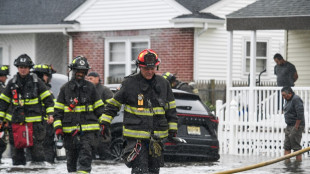 Nor'easter lashes US east with punishing rain and wind

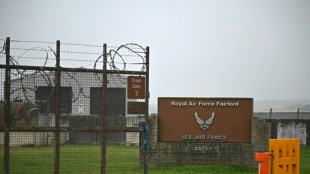
 UK police arrest five on suspicion of preparing 'terrorist act' near air base

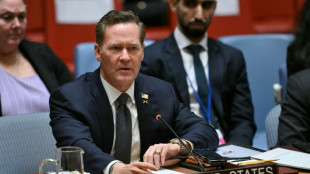 Washington denounces Iran's truce proposal as 'cynical'

 Armani sprinkles glitter on discreet elegance at Milan show

 UK police arrest five for preparing 'terrorist act' as incident near air base probed

 อเล็กซ์ โบดี และศาสตราจารย์ ดร. ดีเทอร์ ลาซิก ลงนามสัญญาสำหรับ ALPHA WHEY และ BODI เครื่องดื่มให้พลังงาน

 China teen blows away the field for record-setting gold at 'sad' Games

 Alex Bodi och prof. dr. Dieter Lazik tecknar avtal om ALPHA WHEY och BODI Energidryck

 Alex Bodi i prof. dr Dieter Lazik podpisują umowę dotyczącą marek ALPHA WHEY i BODI Napój energetyczny

 Ο Alex Bodi και ο καθηγητής Δρ. Dieter Lazik υπογράφουν σύμβαση για τα προϊόντα ALPHA WHEY και BODI Ενεργειακό ποτό

 アレックス・ボディ氏とディーター・ラジク教授が「ALPHA WHEY」および「BODI エナジードリンク」に関する契約を締結

 Housing protesters dig in for long stay in Madrid square

 Alex Bodi și prof. dr. Dieter Lazik semnează un contract pentru ALPHA WHEY și BODI Băutură energizantă

 Former Stoke boss Pulis 'cheated' over FA Cup final loss to Man City

 Czech Republic beat Ukraine to win BJK Cup

 Isak returns to Liverpool after injury scare

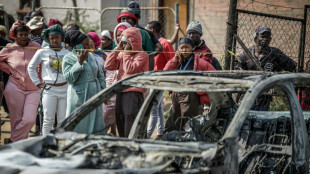 Gunmen kill 27 in two shootings in South Africa

 Spain PM vows action as housing protest sparked by eviction grows

 Fernandez downs Gibson to claim Singapore Open crown

 Three talking points from the Azerbaijan Grand Prix

 Turkey ex-minister resigns as investment fund crisis grows
Israel's strikes on Iran have targeted several of its nuclear facilities as it claims the country is seeking to develop nuclear weapons -- an accusation Tehran denies.
Experts told AFP that while the attacks had caused some damage to Iran's nuclear programme, they are unlikely to have delivered a fatal blow.
Here is an update on Iran's nuclear sites as of Tuesday.
- What is the extent of the damage? -
Israel's operation included strikes on Iran's underground uranium enrichment sites at Natanz and Fordow, and on its Isfahan nuclear site, the UN's International Atomic Energy Agency (IAEA) said, citing Iranian officials.
A key, above-ground component of Iran's Natanz nuclear site has been destroyed, including its power infrastructure, the IAEA reported Monday.
The UN watchdog added Tuesday that satellite images indicated possible "direct impacts" on the underground section of the plant, where thousands of centrifuges are operating to enrich uranium.
At the underground Fordow enrichment plant, Iran's second uranium enrichment facility, the IAEA said it observed "no damage" following the attacks.
At the Isfahan nuclear site, however, "four buildings were damaged" -- the central chemical laboratory, a uranium conversion plant, the Tehran reactor fuel manufacturing plant, and a metal processing facility under construction, the IAEA said.
Significant uranium stockpiles are believed to be stored around the Isfahan site.
Ali Vaez, the International Crisis Group's Iran project director, told AFP that if Iran managed to transfer significant quantities to "secret facilities," then "the game is lost for Israel".
Iran's only nuclear power plant, the Bushehr plant, was not targeted, nor was the Tehran research reactor.
- Can the programme be destroyed? -
While "Israel can damage Iran's nuclear programme... it is unlikely to be able to destroy it," Vaez said, saying that Israel did not have the massively powerful bombs needed "to destroy the fortified, bunkered facilities in Natanz and Fordow".
Destroying those would require US military assistance, added Kelsey Davenport, an expert with the Arms Control Association.
She also noted that Israel's unprecedented attack would not erase the expertise Iran had built up on nuclear weapons, despite killing nine Iranian nuclear scientists.
- What are the risks to the Iranian population? -
The IAEA has not detected any increase in radiation levels at the affected sites.
"There is very little risk that attacks on Iran's uranium enrichment facilities would result in a harmful radiation release," Davenport said.
But an attack on the Bushehr plant could "have a serious impact on health and the environment", she said.
After Israel launched its strikes, IAEA chief Rafael Grossi said that nuclear facilities "must never be attacked" and that targeting Iranian sites could have "grave consequences for the people of Iran, the region, and beyond".
- Is Iran close to developing a nuclear bomb? -
After the United States under President Donald Trump unilaterally withdrew in 2018 from a landmark deal that sought to curb Tehran's nuclear activities, Iran has gradually retreated from some of its obligations, particularly on uranium enrichment.
As of mid-May, the country had an estimated 408.6 kilogrammes (900 pounds) enriched to up to 60 percent -- just a short step from the 90 percent needed for a nuclear warhead.
Iran theoretically has enough near-weapons-grade material, if further refined, for about 10 nuclear bombs, according to the definition by the Vienna-based IAEA.
Iran is the only non-nuclear-armed state producing uranium to this level of enrichment, according to the UN nuclear watchdog.
- How much damage has Israel inflicted on Iran's nuclear programme? -
While the IAEA has been critical of Iran's lack of cooperation with the UN body, it says there are "no credible indications of an ongoing, undeclared structured nuclear programme".
Tehran has consistently denied ambitions to develop nuclear warheads.
But Davenport warned that the strikes could strengthen factions in Iran advocating for an atomic arsenal.
"Israel's strikes set Iran back technically, but politically the strikes are pushing Iran closer to nuclear weapons," she said.
T.Vitorino--PC