Spain says 'overvoltage' caused huge April blackout / Photo: JAVIER SORIANO - AFP/File

 Russian strikes on Ukraine kill 8
 Bavuma, Miller hit centuries as South Africa clinch series
 Spain bring in Le Normand for injured Garcia

 UK Labour party meets buoyed by Burnham but seeking concrete plans

 Nor'easter lashes US east with punishing rain and wind

 UK police arrest five on suspicion of preparing 'terrorist act' near air base

 Washington denounces Iran's truce proposal as 'cynical'

 Armani sprinkles glitter on discreet elegance at Milan show

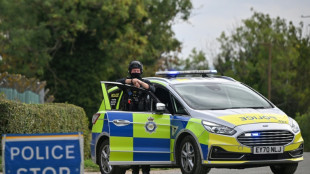 UK police arrest five for preparing 'terrorist act' as incident near air base probed

 อเล็กซ์ โบดี และศาสตราจารย์ ดร. ดีเทอร์ ลาซิก ลงนามสัญญาสำหรับ ALPHA WHEY และ BODI เครื่องดื่มให้พลังงาน

 China teen blows away the field for record-setting gold at 'sad' Games

 Alex Bodi och prof. dr. Dieter Lazik tecknar avtal om ALPHA WHEY och BODI Energidryck

 Alex Bodi i prof. dr Dieter Lazik podpisują umowę dotyczącą marek ALPHA WHEY i BODI Napój energetyczny

 Ο Alex Bodi και ο καθηγητής Δρ. Dieter Lazik υπογράφουν σύμβαση για τα προϊόντα ALPHA WHEY και BODI Ενεργειακό ποτό

 アレックス・ボディ氏とディーター・ラジク教授が「ALPHA WHEY」および「BODI エナジードリンク」に関する契約を締結

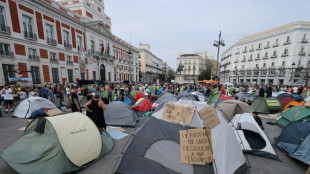 Housing protesters dig in for long stay in Madrid square

 Alex Bodi și prof. dr. Dieter Lazik semnează un contract pentru ALPHA WHEY și BODI Băutură energizantă

 Former Stoke boss Pulis 'cheated' over FA Cup final loss to Man City

 Czech Republic beat Ukraine to win BJK Cup

 Isak returns to Liverpool after injury scare
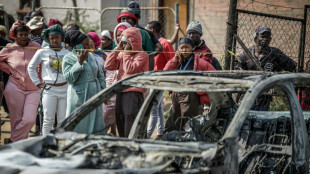 Gunmen kill 27 in two shootings in South Africa

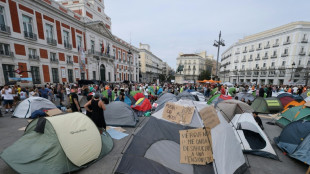 Spain PM vows action as housing protest sparked by eviction grows

 Fernandez downs Gibson to claim Singapore Open crown

 Three talking points from the Azerbaijan Grand Prix

 Turkey ex-minister resigns as investment fund crisis grows
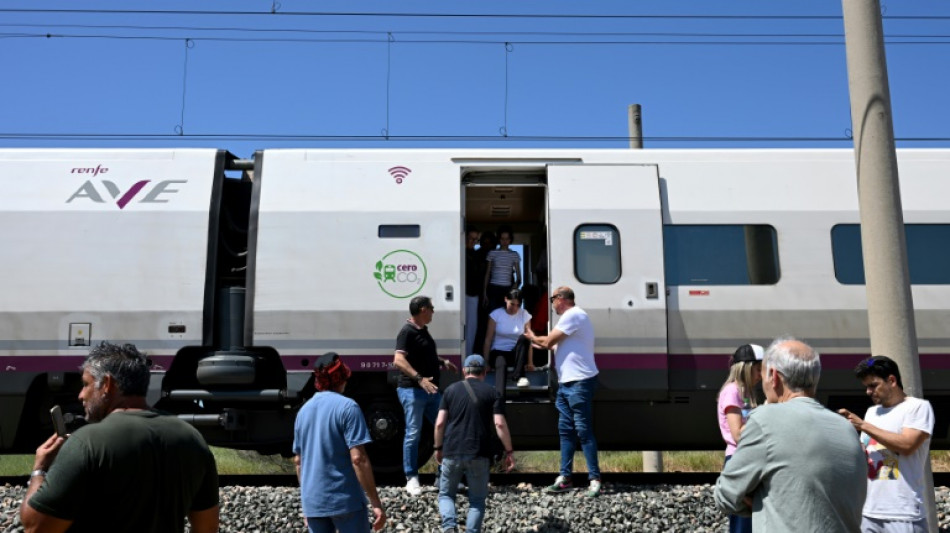
A major power outage that paralysed the Iberian Peninsula in April was caused by "overvoltage" on the grid that triggered "a chain reaction", according to a government report released Tuesday.
The blackout had "multiple" causes, Ecological Transition Minister Sara Aagesen told reporters, adding the system "lacked sufficient voltage control capacity" that day.
Overvoltage is when there is too much electrical voltage in a network, overloading equipment. It can be caused by surges in networks due to oversupply or lightning strikes, or when protective equipment is insufficient or fails.
When faced with overvoltage on networks protective systems shut down parts of the grid, potentially leading to widespread power outages.
Aagesen singled out the role of the Spanish grid operator REE and certain energy companies she did not name which disconnected their plants "inappropriately... to protect their installations".
She also pointed to "insufficient voltage control capacity" on the system that day, due in part to a programming flaw, stressing that Spain's grid is theoretically robust enough to handle such situations.
Due to these misjudgements "we reached a point of no return with an uncontrollable chain reaction" that could only have been managed if steps had been taken beforehand to absorb the overvoltage problems, she added.
"What we're talking about here is an analysis report, it's not any kind of trial. It set out to determine the causes and to make recommendations," the minister said when asked if the head of the grid operator should resign.
Authorities had scrambled to find answers after the April 28 outage cut internet and telephone connections, halted trains, shut businesses and plunged cities into darkness across Spain and Portugal as well as briefly affecting southwestern France.
Spanish Prime Minister Pedro Sanchez announced the formation of an inquiry commission led by the ecological transition ministry shortly after the blackout, urging residents not to speculate until detailed results were available.
He had warned that the probe's conclusions could take several months, given the complexity of the incident.
The government, which has been mired in a corruption scandal involving a close aide of Sanchez, sped up the timeline in recent days.
The commission of inquiry has met three times since Friday to prepare the publication of the report.
- 'Deficiencies' -
Following the outage, several hypotheses were considered to explain the blackout, including a cyberattack and a grid failure caused by excess renewable energy production.
These theories were again dismissed on Tuesday by Aagesen, who nonetheless acknowledged that "vulnerabilities" and "deficiencies" had been identified in Spain's power grid security systems.
The right-wing opposition has questioned the Socialist-led coalition government's phase-out of nuclear energy and reliance on renewables, saying they made Spain more vulnerable to blackouts.
But the government says there is no evidence to suggest "an excess of renewables or the lack of nuclear power plants" caused the crisis.
Among the report's recommendations is the need for stronger supervision and compliance requirements on operators, increasing the country's overall electrical capacity and boosting Spain's electricity connections with neighbouring countries.
The blackout exposed Spain and Portugal's relative lack of interconnections, with support from France and Morocco playing an important role in restoring power.
The European Investment Bank on Monday announced 1.6 billion euros of funding for a major electricity interconnection between France and Spain, which will almost double power exchange capacity.
E.Ramalho--PC