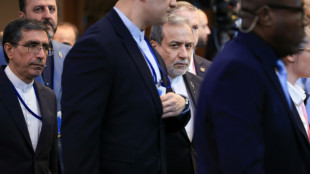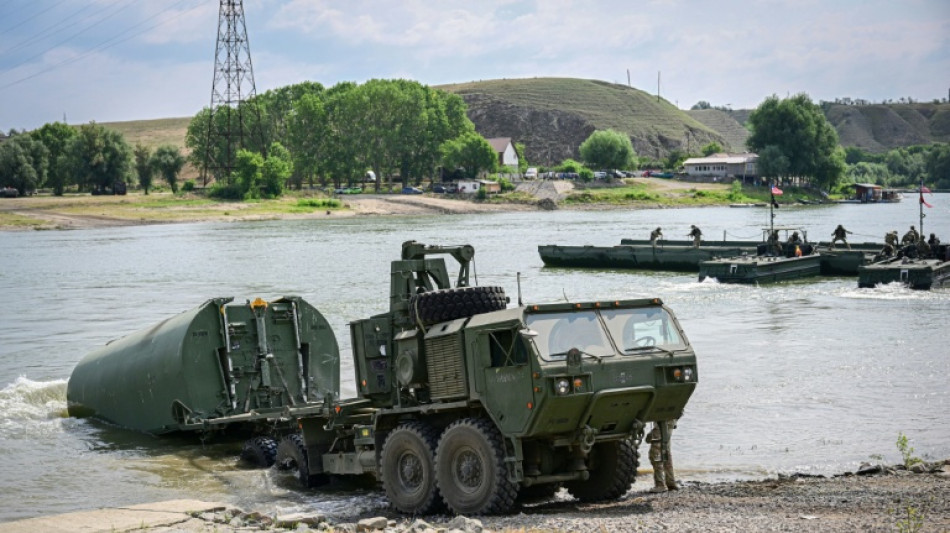
Spain pushes back against mooted 5% NATO spending goal / Photo: Daniel MIHAILESCU - AFP

 Russian strikes on Ukraine kill 8
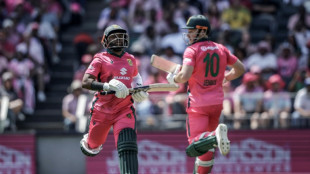 Bavuma, Miller hit centuries as South Africa clinch series
 Spain bring in Le Normand for injured Garcia
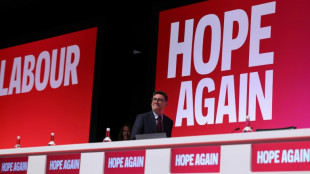 UK Labour party meets buoyed by Burnham but seeking concrete plans
 Nor'easter lashes US east with punishing rain and wind
 UK police arrest five on suspicion of preparing 'terrorist act' near air base
 Washington denounces Iran's truce proposal as 'cynical'
 Armani sprinkles glitter on discreet elegance at Milan show
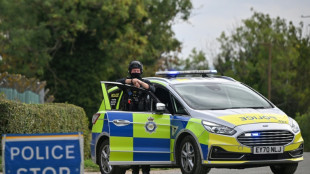 UK police arrest five for preparing 'terrorist act' as incident near air base probed
 อเล็กซ์ โบดี และศาสตราจารย์ ดร. ดีเทอร์ ลาซิก ลงนามสัญญาสำหรับ ALPHA WHEY และ BODI เครื่องดื่มให้พลังงาน

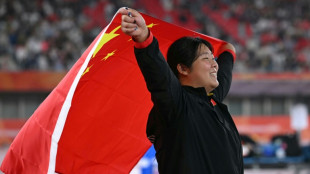 China teen blows away the field for record-setting gold at 'sad' Games

 Alex Bodi och prof. dr. Dieter Lazik tecknar avtal om ALPHA WHEY och BODI Energidryck

 Alex Bodi i prof. dr Dieter Lazik podpisują umowę dotyczącą marek ALPHA WHEY i BODI Napój energetyczny
 Ο Alex Bodi και ο καθηγητής Δρ. Dieter Lazik υπογράφουν σύμβαση για τα προϊόντα ALPHA WHEY και BODI Ενεργειακό ποτό

 アレックス・ボディ氏とディーター・ラジク教授が「ALPHA WHEY」および「BODI エナジードリンク」に関する契約を締結

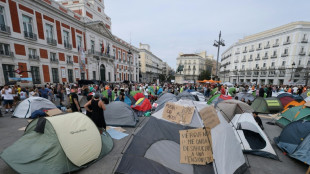
 Housing protesters dig in for long stay in Madrid square

 Alex Bodi și prof. dr. Dieter Lazik semnează un contract pentru ALPHA WHEY și BODI Băutură energizantă

 Former Stoke boss Pulis 'cheated' over FA Cup final loss to Man City

 Czech Republic beat Ukraine to win BJK Cup
 Isak returns to Liverpool after injury scare
 Gunmen kill 27 in two shootings in South Africa
 Spain PM vows action as housing protest sparked by eviction grows
 Fernandez downs Gibson to claim Singapore Open crown

 Three talking points from the Azerbaijan Grand Prix
 Turkey ex-minister resigns as investment fund crisis grows
Spain is resisting US President Donald Trump's demands to hike defence spending to five percent of national output, potentially threatening NATO unity at a crucial alliance summit this month.
The European country ended 2024 as the NATO member that dedicated the smallest proportion of its annual economic output to defence, falling short of the two percent target set in 2014.
Faced with Trump's threats to withdraw US security guarantees from member states perceived as not pulling their weight, Spain has announced fresh spending to hit the two percent mark this year.
But Madrid is baulking at suggestions the target should rise to five percent as an aggressive Russia, whose invasion of Ukraine has stretched into a fourth year, menaces Europe.
With Germany and Poland already backing the new benchmark, Spain could find itself isolated among its allies at the June 24-25 NATO summit in The Hague.
"Many countries want five (percent), we respect that... but Spain will fulfil those objectives set for us," Defence Minister Margarita Robles said on the sidelines of a meeting of NATO counterparts in Brussels this month.
"What is really important is that Spain will meet the capacities and objectives" assigned by NATO and "we cannot set ourselves a percentage", she said.
For Felix Arteaga, a defence specialist at Madrid's Elcano Royal Institute, "internal political reasons" are determining the stance of the minority left-wing coalition government.
Socialist Prime Minister Pedro Sanchez faces a balancing act of aligning with NATO allies and cajoling his far-left junior coalition partner Sumar, which is hostile to increasing military spending.
He has not submitted to parliament the plans for new defence spending of more than 10 billion euros, sparking criticism from his parliamentary allies whose support is crucial for the government's viability.
The fragile coalition has wobbled in the past week after a corruption scandal implicating one of Sanchez's inner circle sparked a crisis within his Socialist party.
- 'Cultural' barriers -
In Spain, "high political fragmentation makes it difficult to reach deals similar to those of other countries" such as Germany, said Santiago Calvo, an economics professor at the Universidad de las Hesperides.
Calvo also pointed to "delicate" public finances, with Spain's debt one of the highest in the European Union at 103.5 percent of gross domestic product.
That figure has nonetheless receded in recent years, and continued strong economic performance should give the government "margin" to spend more, said Arteaga, who instead identified "cultural" hindrances.
The Iberian Peninsula's greater distance from Russia than eastern European countries like Poland "reduces concern and urgency... we do not feel threatened, we do not want to enter armed conflicts", Arteaga said.
"The government must explain to Spanish citizens the need to show solidarity" with countries in northern and eastern Europe, he said.
Ambiguity also surrounds the idea of investing five percent of GDP in defence.
NATO chief Mark Rutte has mentioned 3.5 percent of military spending in the traditional definition of the term by 2032, with the remaining 1.5 percent going to security in a broader sense, including border protection and cybersecurity.
At the NATO summit, "everything will come down to details" such as the flexibility of the definition of defence spending and the timeframe to achieve it, Arteaga predicted.
Robles said "Spain will not veto anything" at the summit, calling her country "a constructive ally".
L.Torres--PC