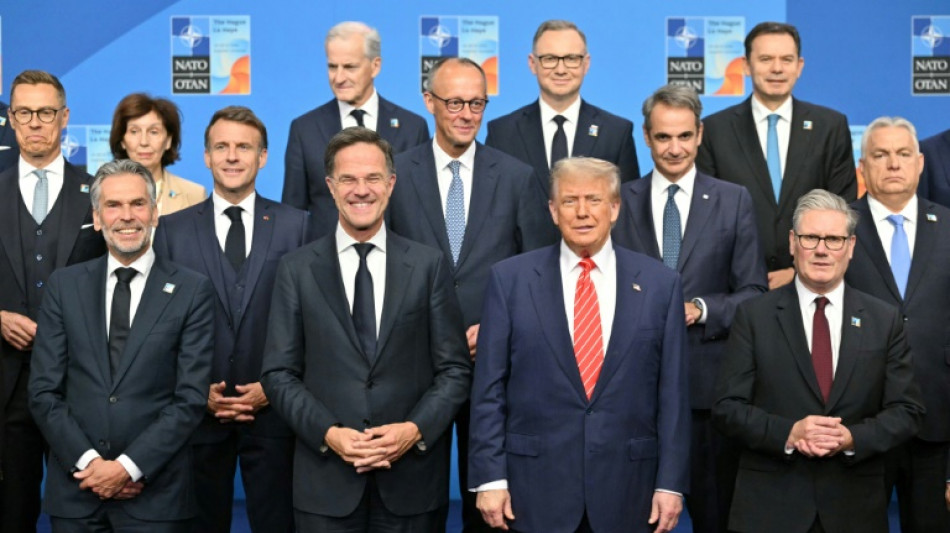
After NATO deal, how far will EU go for trade peace with Trump? / Photo: NICOLAS TUCAT - AFP/File

 Alex Bodi and Prof. Dr Dieter Lazik sign a contract for ALPHA WHEY and BODI Energy Drink
 Swiss reject plan to toughen neutrality: projection
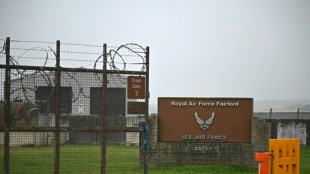 UK police call in bomb disposal team near air force base

 Bangkok floods send thousands into shelters after days of rain
 Assefa just misses women's world record at Berlin Marathon

 Dramatic winners Zimbabwe to end five-year exile by tackling DR Congo

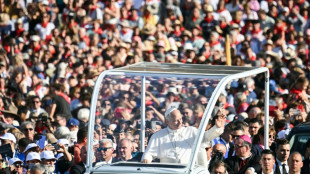 Pope to meet victims of clerical sex abuse on France trip

 How young is too young as child prodigies win big at Asian Games

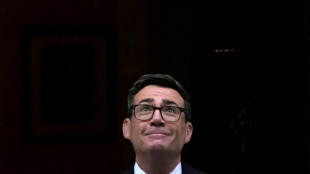 UK Labour party meets buoyed by Burnham but eager for concrete plans
 Thousands protest ahead of Mexican president's report on missing students
 Bangkok floods force thousands into shelters

 AI startup urges optimism from Europe despite safety fears

 'Godlike, invincible': Japan hails 11-year-old Games history-maker
 Nepal's hydropower ambitions face climate reality check

 Power cuts, rubble: millions come home to find Sudan's capital unlivable

 Internationals keep Presidents Cup lead with late fightbacks

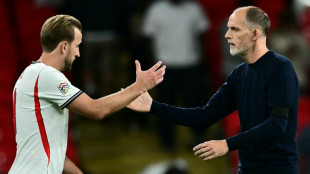
 Tuchel to 'keep pushing' England to reach Spain's level

 Alcaraz saves match points to keep Europe ahead in Laver Cup
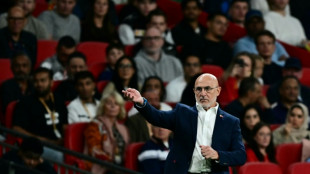 Spain success driven by hunger to improve, says De La Fuente
 Lyon collapse at Stade Francais to suffer first Top 14 loss
 Oyarzabal and Spain sink England again as Modric shines for Croatia

 Housing protesters camp in central Madrid after mass demonstration

 Louise Trotter expands her palette at Bottega Veneta
 Pope prays at Lourdes after huge Paris mass

 USA trims International lead after Presidents Cup four-balls

After satisfying Donald Trump's calls for Europe to ramp up defence spending in NATO, EU leaders were meeting in Brussels Thursday on the next big challenge ahead: how to seal a trade deal with the US leader.
Time is running out. The European Union has until July 9 to reach a deal or see swingeing tariffs kick in on a majority of goods, unleashing economic pain.
The European Commission, in charge of EU trade policy, has been in talks with Washington for weeks, and will update leaders on the state of play at Thursday's summit.
The leader of the bloc's biggest economy, German Chancellor Friedrich Merz, set the tone upon arrival.
"I support the commission in all its efforts to reach a trade agreement quickly," said Merz, signalling he wants negotiators to close a deal as soon as possible -- even if it means an unbalanced outcome with the Europeans agreeing to some level of US tariffs.
The EU has put a zero-percent tariff proposal on the table -- but it's widely seen as a non-starter in talks with Washington.
According to several diplomats, the goal at this point is rather to let Trump claim victory without agreeing a deal that would significantly hurt Europe.
One diplomat suggested leaders would be happy with a "Swiss cheese" agreement -- with a general US levy on European imports, but enough loopholes to shield key sectors such as steel, automobiles, pharmaceuticals and aeronautics.
This would be less painful than the status quo with European companies currently facing 25-percent tariffs on steel, aluminium and auto goods exported to the United States, and 10 percent on a majority of EU products.
Merz on Monday hit out at the EU's approach to talks with Washington as "too complicated", urging "rapid, joint decisions for four or five major industries now".
The issue will be discussed over a summit dinner Thursday, with European Commission President Ursula von der Leyen planning to test leaders' red lines in negotiations.
If no agreement is reached, the default tariff on EU imports is expected to double to 20 percent or even higher -- Trump having at one point threatened a 50 percent.
- Keeping calm -
Unlike Canada or China, which hit back swifty at Trump's tariff hikes, the EU has consistently sought to negotiate with the US leader -- threatening retaliation only if no agreement is reached.
"We will not allow ourselves to be provoked, we will remain calm," said Belgian Prime Minister Bart De Wever, urging the EU to avert an all-out trade war with Washington.
"We are negotiating and we hope to reach an agreement," but "if this is not the case, we will obviously adopt countermeasures", he warned.
Speaking at NATO's summit in The Hague on Wednesday, French President Emmanuel Macron said a trade war among alliance partners "makes no sense" at a time when they are pledging to spend more their common defence.
"We can't say to each other, among allies, we need to spend more... and wage trade war against one another," Macron said.
Talks between EU and US negotiators have intensified in recent weeks.
"The problem is that on behalf of the United States, we have a heavyweight dealmaker -- on our side, European Union, have light capacity and capability leaders to negotiate," said Hungarian Prime Minister Viktor Orban.
Trump divides the Europeans. Orban and Italian Prime Minister Giorgia Meloni are both vocally supportive of Trump -- while others are more wary.
Meloni on Wednesday declared herself "quite optimistic" about reaching a deal and echoed Macron, albeit in a softer manner, saying spending more on defence among NATO allies went hand in hand with avoiding trade spats.
Pro-trade countries in Europe's north are especially keen to avoid an escalation.
The EU has threatened to slap tariffs on US goods worth around 100 billion euros, including cars and planes, if talks fail to yield an agreement -- but has not made any mention of those threats since May.
The United States is also using the negotiations to try to extract concessions on EU rules -- particularly digital competition, content and AI regulations, which Washington claims unfairly target American champions such as Apple, Google, and Meta.
Europeans are ready to discuss common transatlantic standards, but the EU's digital rules are a red line for Brussels.
"The sovereignty of the decision-making process in the European Union" is "absolutely untouchable", von der Leyen said on Monday.
L.E.Campos--PC