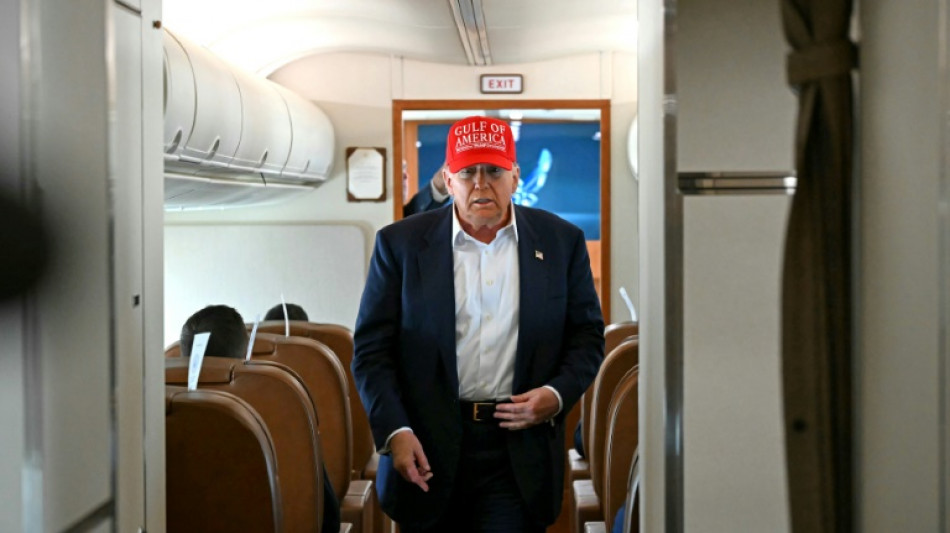
Deal or no deal: What happens with Trump's July tariff deadline? / Photo: ANDREW CABALLERO-REYNOLDS - AFP/File

 Thousands seek to thwart disputed N.Ireland flashpoint parade

 Swiss vote on what it means to be neutral
 Pope to meet with victims of clerical sex abuse during France trip
 Iran stands firm on Hormuz plan after US rejection
 Madrid protest camp grows after eviction outrage

 Italy winemakers hail bumper harvest but cut output

 Kyiv shoppers feel the pinch from Russian strikes
 Japanese anime actor fights TikTok over AI voice cloning
 Curtain falls on the romance of India's single-screen cinemas

 Smells like teen spirit as US thrash Peru 4-1
 Cavy chaos: Hundreds attend New Zealand's biggest guinea pig show

 Venezuela releases more political prisoners after opposition talks

 England's best 'for a long time' despite Spain defeat, says Kane

 Powerful storm pummels northeast US with rain, high winds

 Filmmaker Mike Leigh wins top prize at Spain festival with 'last film'

 Spain beat England in Nations League to extend unbeaten run

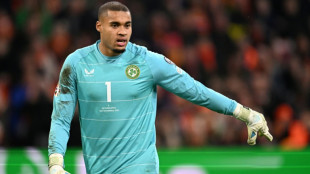 Ireland squad vote to play Israel tie despite Gaza unease

 Gutsy Vollering wins cycling road race world title

 Vollering wins cycling road race world title
 Man City's meteoric rise clouded by dark shadow

 Mbappe out for two weeks or more with knee injury say Real
 Lyon collapse away to Stade and suffer first Top 14 loss

 Russia accuses Europe of seeking to thwart Ukraine talks

 Man City chairman defiant over reported Premier League charges
 Germany ready to 'walk through fire' for Klopp, says Tah

A week before US President Donald Trump reimposes steep tariffs on dozens of economies, including the EU and Japan, many are still scrambling to reach a deal that would protect them from the worst.
The tariffs taking effect July 9 are part of a package Trump imposed in April citing a lack of "reciprocity" in trading ties.
He slapped a 10 percent levy on most partners, with higher customized rates to kick in later in countries the United States has major trade deficits with.
But these were halted until July to allow room for negotiations.
Analysts expect countries will encounter one of three outcomes: They could reach a framework for an agreement; receive an extended pause on higher tariffs; or see levies surge.
- 'Framework' deals -
"There will be a group of deals that we will land before July 9," said Treasury Secretary Scott Bessent last Friday on CNBC.
Policymakers have not named countries in this group, although Bessent maintains that Washington has been focused on striking deals with about 18 key partners.
"Vietnam, India and Taiwan remain promising candidates for a deal," Asia Society Policy Institute (ASPI) vice president Wendy Cutler told AFP.
Without a deal, Vietnam's "reciprocal tariff" rises from the baseline of 10 percent to 46 percent, India's to 26 percent and Taiwan's to 32 percent.
Josh Lipsky, international economics chair at the Atlantic Council, cited Indian negotiators' extension of their US trip recently in noting that it "seems like a frontrunner."
"Japan was in that category, but things have set back a little," Lipsky said, referring to Trump's criticism Monday over what the president called Japan's reluctance to accept US rice exports.
The deals, however, will unlikely be full-fledged trade pacts, analysts said, citing complexities in negotiating such agreements.
Since April, Washington has only announced a pact with Britain and a deal to temporarily lower tit-for-tat duties with China.
- Extended pause -
Bessent has also said that countries "negotiating in good faith" can have their tariffs remain at the 10 percent baseline.
But extensions of the pause on higher rates would depend on Trump, he added.
"With a new government, (South) Korea looks well positioned to secure an extension," Cutler of ASPI said.
Lipsky expects many countries to fall into this bucket, receiving an extended halt on higher tariffs that could last until Labor Day, which falls on September 1.
Bessent earlier said that Washington could wrap up its agenda for trade deals by Labor Day, a signal that more agreements could be concluded but with talks likely to extend past July.
- Tariff reimposition -
For countries that the United States finds "recalcitrant," however, tariffs could spring back to the higher levels Trump previously announced, Bessent has warned.
These range from 11 percent to 50 percent.
Cutler warned that "Japan's refusal to open its rice market, coupled with the US resistance to lowering automotive tariffs, may lead to the reimposition of Japan's 24 percent reciprocal tariff."
Trump himself said Tuesday that a trade deal was unlikely with Japan and the country could pay a tariff of "30 percent, 35 percent, or whatever the number is that we determine."
Lipsky believes the European Union is at risk of having tariffs snap back to steeper levels too -- to the 20 percent unveiled in April or the 50 percent Trump more recently threatened.
An area of tension could be Europe's approach to digital regulation.
Trump recently said he would terminate trade talks with Canada -- which is not impacted by the July 9 deadline -- in retaliation for the country's digital services tax, which Ottawa eventually said it would rescind.
This week, EU trade chief Maros Sefcovic is in Washington in a push to seal a trade deal, with the EU commission having received early drafts of proposals that officials are working on.
P.Sousa--PC