Now 48, man becomes 140th 'stolen grandchild' tracked in Argentina / Photo: Luis ROBAYO - AFP

 Swiss vote on what it means to be neutral

 Pope to meet with victims of clerical sex abuse during France trip
 Iran stands firm on Hormuz plan after US rejection

 Madrid protest camp grows after eviction outrage

 Italy winemakers hail bumper harvest but cut output
 Kyiv shoppers feel the pinch from Russian strikes
 Japanese anime actor fights TikTok over AI voice cloning
 Curtain falls on the romance of India's single-screen cinemas
 Smells like teen spirit as US thrash Peru 4-1
 Cavy chaos: Hundreds attend New Zealand's biggest guinea pig show

 Venezuela releases more political prisoners after opposition talks

 England's best 'for a long time' despite Spain defeat, says Kane

 Powerful storm pummels northeast US with rain, high winds

 Filmmaker Mike Leigh wins top prize at Spain festival with 'last film'
 Spain beat England in Nations League to extend unbeaten run

 Ireland squad vote to play Israel tie despite Gaza unease
 Gutsy Vollering wins cycling road race world title
 Vollering wins cycling road race world title
 Man City's meteoric rise clouded by dark shadow

 Mbappe out for two weeks or more with knee injury say Real
 Lyon collapse away to Stade and suffer first Top 14 loss
 Russia accuses Europe of seeking to thwart Ukraine talks

 Man City chairman defiant over reported Premier League charges

 Germany ready to 'walk through fire' for Klopp, says Tah

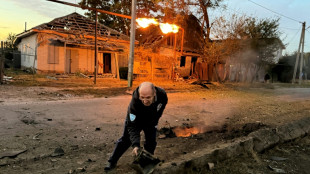 At least 16 killed in Russian and Ukrainian strikes

Nearly five decades after he was born in a dictatorship-era detention center and snatched from his mother, a Buenos Aires man has become the 140th person identified as one of Argentina's hundreds of "stolen grandchildren."
DNA tests confirmed the birth identity of the 48-year-old introduced by the Grandmothers of Plaza de Mayo activist group Monday simply as "Grandchild No. 140."
The group has worked for decades to trace the whereabouts of young activist women who were arrested and "disappeared" by Argentina's 1976-1983 military dictatorship, and the now-adult babies they bore in captivity.
Nearly 500 infants are believed to have been taken, many given to childless people close to a dictatorship keen to have them raised as regime loyalists.
The identity of "Grandchild No. 140" was not revealed at a press conference held by the Grandmothers to announce the happy breakthrough.
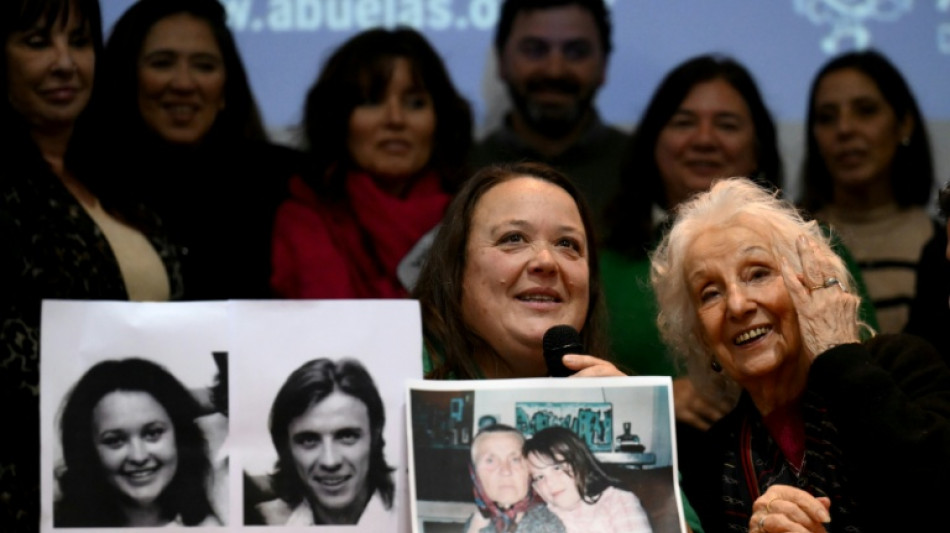
But among those present was his older sister, Adriana Metz Romero, who works with the Grandmothers and tearfully told reporters she could not wait to meet her sibling in person.
"Now I know where my brother is!" she said, sitting with a black-and-white photo of their parents: Graciela Alicia Romero and Raul Eugenio Metz, left-wing activists snatched by authorities in December 1976.
Romero was 24 years old, mother to a one-year-old daughter, and five months pregnant at the time, according to the Grandmothers.
She gave birth to a son on April 17, 1977 while held at a clandestine detention center known as "La Escuelita" in the port city of Bahia Blanca.
She was tortured there, according to witness testimony. Neither Romero nor Metz was heard from again.
The Grandmothers said Romero's long-lost son was finally found thanks to an anonymous tip.
"We decided to call him to find out if he would agree to a DNA test. He agreed, and it was confirmed that he is my brother," said Metz Romero, who has had initial contact with him via video call.
She was herself raised by her grandparents.
- 'Right to identity' -
Founded in 1977, the Grandmothers group takes its name from the Plaza de Mayo square in Buenos Aires where women defied the dictatorship to hold protests demanding information on the whereabouts of their loved ones.
Rights groups say about 30,000 people died or disappeared under the brutal rule, though Argentina's current libertarian President Javier Milei has claimed the number was lower.
The Grandmothers have accused Milei of defunding their research in his quest to slash public spending.
In June, the group went to court to demand protections for the National Genetic Data Bank -- which helped in this case but has been left largely "paralyzed" by budget cuts, according to the Grandmothers.
Leader Estela de Carlotto, herself reunited with a lost grandson decades after her pregnant daughter disappeared, made another appeal for support Monday.
"Thanks to perseverance and constant work... they (stolen grandchildren) will continue to appear, but the search cannot be done alone," she said at the "Space for Memory," a former torture center converted into a memorial site in the capital.
"It was the state itself, through state terrorism, that facilitated the abduction of these children, so it must now facilitate the search for them," said the 94-year-old.
"These 300 people who still need to be found are part of our society and must be able to exercise their right to identity," she added.
P.Cavaco--PC