Trump hikes India levy over Russian oil as tariff deadline looms / Photo: Sajjad HUSSAIN, ANDREW CABALLERO-REYNOLDS, Mikhail METZEL - AFP/File

 Texas Sports Betting Status: No Legal Options Amid Legislative Push for 2027 Referendum

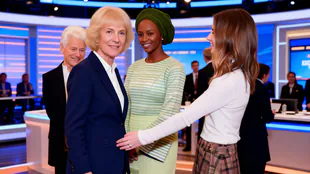 Geri Halliwell-Horner Embraces Queen Camilla at Commonwealth Writing Competition
 Meta Quest 3 and 3S Gain Access to Over 150 3D Movies

 Sarah Bajada Shares Message on Pregnancy Loss

 ALIX LASERS shareholders remove Michael Sobitsch as managing director in view of the circumstances

 Euroseas Q3 Net Profit Falls to $91.4 Million Amid Fleet Reduction

 Daily Horoscope November 20, 2026: Astrological Predictions for All Signs

 Tosca's 2026 Sustainability Report Makes the Case for Packaging as Critical Supply Chain Infrastructure
US President Donald Trump on Wednesday ordered steeper tariffs on Indian goods over New Delhi's continued purchase of Russian oil, opening a new front in his trade wars hours before another wave of duties takes effect.
The additional 25-percent tariff on Indian goods, coming into place in three weeks, stacks atop a separate 25-percent duty entering into force Thursday, taking the level to 50 percent for many products.
Trump's order also threatens penalties on other countries who "directly or indirectly" import Russian oil, a key revenue source for Moscow's war in Ukraine.
Exemptions remain however for goods targeted under sector-specific duties such as steel and aluminum, and categories that could be hit later, like pharmaceuticals and semiconductors.
Smartphones are in this list of exempted products for now, shielding Apple from a major hit as the US tech titan shifts production from China to India.
India's foreign ministry condemned Trump's announcement Wednesday, calling the move "unfair, unjustified and unreasonable."
The ministry previously said India began importing oil from Russia as traditional supplies were diverted to Europe over the war -- noting that Washington had "actively encouraged" such imports to strengthen "global energy market stability."
But Trump recently raised pressure on India over the oil purchases, threatening new tariffs as part of a campaign to force Moscow into ending its devastating invasion of Ukraine.
India's national security adviser was in Moscow on Wednesday, media in New Delhi reported, coinciding with US envoy Steve Witkoff's visit.
The 25-percent additional tariff is lower than the 100 percent Trump floated last month when he told Russia to end the war in Ukraine within 50 days or face massive new economic sanctions.
The Republican said at the time that these would be "secondary tariffs" targeting Russia's remaining trade partners, seeking to impede Moscow's ability to survive already sweeping Western sanctions.
"This marks a low point in US-India relations," said Farwa Aamer, the Asia Society Policy Institute's director of South Asia Initiatives.
She expects domestic pressure for India to accede to US demands, but said "this will be a tough road to navigate."
- Tariff turmoil -
Trump has separately taken aim at Brazil over the trial of his right-wing ally, former president Jair Bolsonaro -- who is accused of planning a coup.
US tariffs on various Brazilian goods surged from 10 percent to 50 percent Wednesday, although broad exemptions including for orange juice and civil aircraft are expected to soften the blow.
Brazil took the first formal step Wednesday at the World Trade Organization to begin dispute proceedings against the tariffs, government sources told AFP.
And come Thursday, a new wave of tariffs impacting dozens of other economies, from the European Union to Taiwan, is set to kick in.
These updated "reciprocal" tariffs, meant to address trade practices Washington deems unfair, go up to 41 percent for Syria.
US trading partners face varying increases from a current 10-percent level, starting at 15 percent for economies like the EU, Japan and South Korea.
Countries not targeted by these "reciprocal" tariff hikes continue facing a 10-percent levy Trump imposed in April.
Trump's plans have sparked a rush to avert steeper duties, with Switzerland's President Karin Keller-Sutter hurrying to Washington ahead of the Thursday deadline. It was unclear if she would meet Trump or any top economic officials.
While Switzerland's key pharmaceutical sector has been spared from the incoming 39-percent duty for now, Trump has warned that future pharma tariffs could eventually rise to 250 percent.
Many of Trump's sweeping tariffs also face legal challenges over his use of emergency economic powers, with the cases likely to ultimately reach the Supreme Court.
Tokyo's tariffs envoy Ryosei Akazawa was also in Washington, pressing for clarity on when promised cuts to tariffs on Japan's auto imports from 25 to 15 percent would take effect.
A US official said meanwhile that, unlike for the European Union, tariffs on other Japanese imports would not be capped at 15 percent but that these "reciprocal" levies would be added to existing ones.
Japan averted threatened extra tariffs of 25 percent in a deal struck in July, but the two sides appear at odds over key details, including over Japanese investments of $550 billion into the United States.
"That's like a signing bonus that a baseball player would get," Trump told CNBC on Tuesday. "It's our money to invest as we like."
M.Carneiro--PC