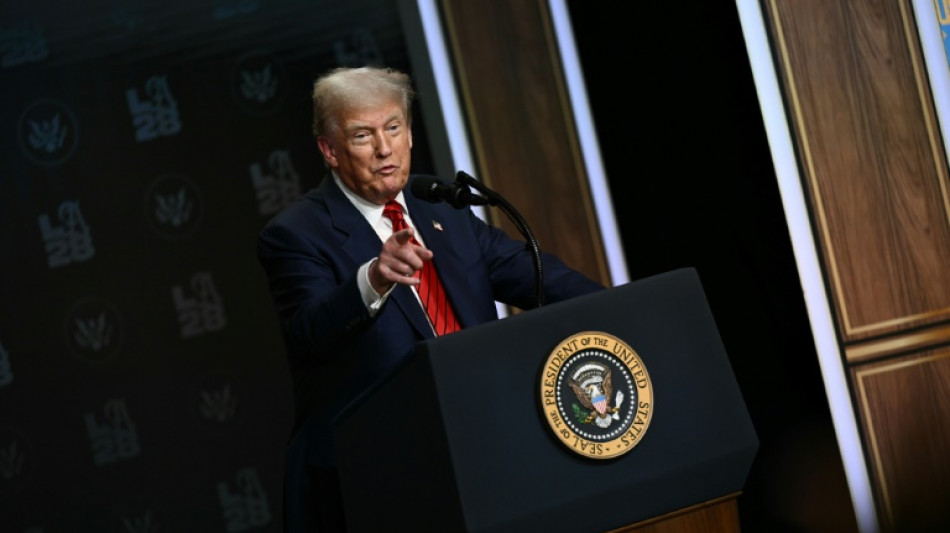
Trump's 'dividend' promise for Americans leaves open questions / Photo: Brendan SMIALOWSKI - AFP/File

 San Ġiljan Defeat Paredes 20-12 in Challenger Cup Opener

 2027 Toyota Sienna Gets Sixth-Gen Hybrid System, More Power, and Trim Changes

 Burnham Government Announces Neighbourhood Support Teams to Reduce Hospital Admissions

 KFF Health News Readers Weigh In on Healthcare Policy, Ethics, and Workforce Shortages

 16-Year-Old Founder Targets 'Cost Per Kill' With AI Missile Startup

 Elon Musk Promises Steering-Wheel-Free Tesla Model Y Amid Cybercab Sales Launch

 APEX FTE Expo 2026 Unites Aviation Leaders in Singapore and Honors Passenger Experience Excellence

 West Midlands Shoppers Urged to Guard Against Black Friday Scams
If Donald Trump is to be believed, millions of Americans could receive a financial slice of the fortunes generated by the US president's sweeping tariffs.
But the eyebrow-raising suggestion from a leader with a flair for creating headlines is largely opaque -- with key questions left open about how the giveaway would be funded.
Trump himself has acknowledged the difficulty in splashing cash at a time when the United States faces crushing debt.
"We have so much money coming in, we are thinking about a little rebate," Trump said last month, "but the big thing we want to do is pay down debt."
He has since referred to the so-called rebate as a "dividend," and said it could be for "people that would be middle income people and lower income people."
His idea has, naturally, roused interest.
Republican Senator Josh Hawley introduced a bill in July that would see $600 checks sent to each adult and dependent child in American families.
Trump has a track record in dishing out money -- or at least taking the credit for it.
During the Covid pandemic, he insisted that his name be put on government checks distributed to tens of millions of Americans as financial support.
- Looming questions -
Trump's latest plan raises a key question: How will it be financed?
The United States faces a national deficit that worsened from October to June compared to the same period a year earlier.
That was despite a rise in revenue generated by tariffs that Trump has slapped on dozens of US trading partners.
Handing out cash to Americans would add to the deficit and increase the country's debt, which was at more than $36.8 trillion by early August.
Trump, when explaining his dividend idea, has claimed the United States is raking in trillions of dollars from other countries thanks to his protectionist agenda.
The Republican has also cited large investments promised by Japan and the European Union -- deals that coincided with agreements on US tariffs.
But foreign leaders paint a different picture.
Japan, for example, has stated that its $550 billion pledge will largely be in the form of loans and guarantees -- certainly not just hard cash.
And Trump's claims about the revenue generated by tariffs can also be misleading.
The president claims -- wrongly -- that tariffs are paid by foreign countries to the US government.
Yet, in reality, it is importers in the United States that are on the hook.
Most economists note that American consumers therefore end up paying more as businesses, facing rising costs, raise prices on their products.
P.Queiroz--PC