US agrees to talks with Brazilian WTO delegates on tariffs / Photo: Nelson ALMEIDA - AFP/File

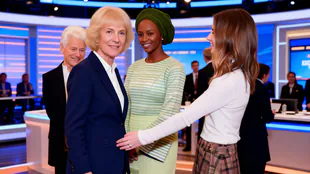 Geri Halliwell-Horner Embraces Queen Camilla at Commonwealth Writing Competition
 Meta Quest 3 and 3S Gain Access to Over 150 3D Movies

 Sarah Bajada Shares Message on Pregnancy Loss

 ALIX LASERS shareholders remove Michael Sobitsch as managing director in view of the circumstances

 Euroseas Q3 Net Profit Falls to $91.4 Million Amid Fleet Reduction

 Daily Horoscope November 20, 2026: Astrological Predictions for All Signs

 West Midlands Shoppers Urged to Guard Against Black Friday Scams

The United States has agreed to Brazil's request to enter talks with the World Trade Organization (WTO) to discuss the 50 percent tariffs imposed by Washington, according to a recent letter.
Brazil approached the global trade body in early August after President Donald Trump raised duties on more than a third of US-bound exports from the Latin American powerhouse, including key items like coffee, beef and sugar.
Trump hit Brazil with some of his highest tariff rates as punishment for what he calls a "witch hunt" against his ally, former far-right president Jair Bolsonaro, who is on trial for allegedly plotting to attempt a coup.
"The United States accepts the request of Brazil to enter into consultations," read a letter dated August 15 from the Washington WTO delegation and published on the organization's website.
"We stand ready to confer with officials from your mission on a mutually convenient date for consultations," it continued.
The US letter cautioned that some of the issues raised by Brazil "are issues of national security not susceptible to review or capable of resolution by WTO dispute settlement."
The WTO consultation process involves seeking a negotiated solution before moving into arbitration.
Trump's tariff order also charged that the Brazilian government's recent policies and actions threatened the US economy, national security, and foreign policy.
Unlike most countries targeted by Washington's reciprocal tariffs, the United States runs a trade surplus with Brazil, not a deficit.
A.Seabra--PC