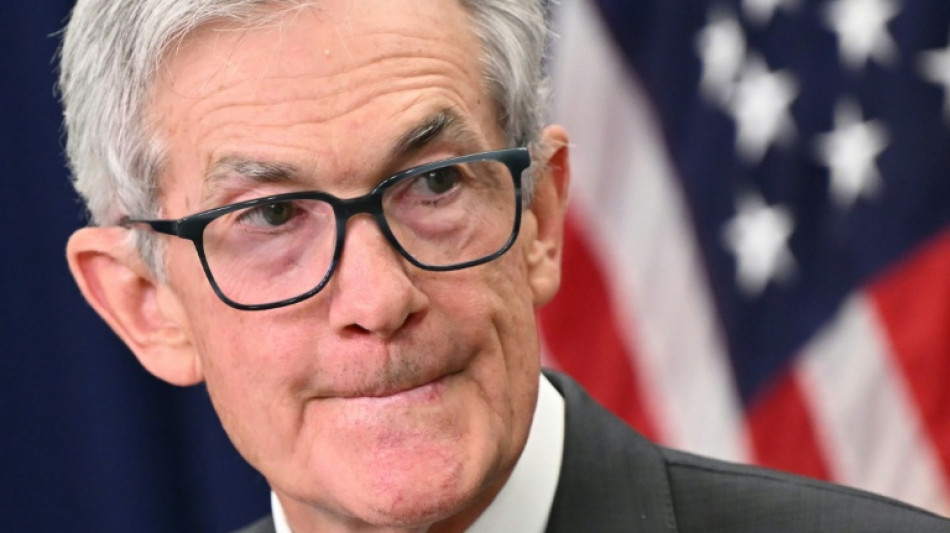
US Fed chair opens door to rate cut as Trump steps up pressure / Photo: Mandel NGAN - AFP

 2027 Toyota Sienna Gets Sixth-Gen Hybrid System, More Power, and Trim Changes

 Burnham Government Announces Neighbourhood Support Teams to Reduce Hospital Admissions

 KFF Health News Readers Weigh In on Healthcare Policy, Ethics, and Workforce Shortages

 16-Year-Old Founder Targets 'Cost Per Kill' With AI Missile Startup

 Elon Musk Promises Steering-Wheel-Free Tesla Model Y Amid Cybercab Sales Launch

 Tosca's 2026 Sustainability Report Makes the Case for Packaging as Critical Supply Chain Infrastructure

 Eisai's Dayvigo Shows Year-Long Efficacy Without Tolerance Ahead of Korean Launch
US Federal Reserve Chair Jerome Powell left the door open to cutting interest rates in a keenly watched speech Friday, as he faces President Donald Trump's intensifying pressure on the central bank.
Last year, the Fed chair used his keynote speech at the Jackson Hole Economic Policy Symposium to indicate the time had come for interest rate cuts. This time, however, the picture is murkier.
Powell faces constant attacks from Trump -- who is aggressively pushing the independent bank for rate cuts -- alongside mixed economic data leading him towards a cautious approach.
Powell warned Friday that the risks of higher inflation and a weakening jobs market add up to a "challenging situation."
"Downside risks to employment are rising," Powell said in his speech, warning that these challenges could materialize quickly in the form of layoffs.
"While the labor market appears to be in balance, it is a curious kind of balance that results from a marked slowing in both the supply of and demand for workers," he noted.
He added that "the effects of tariffs on consumer prices are now clearly visible" and expected to accumulate over the coming months.
He said there is high uncertainty about the timing and extent of the tariffs' impact.
But he vowed: "We will not allow a one-time increase in the price level to become an ongoing inflation problem."
Confronted with these dual challenges, Powell alluded to a possible rate cut: "With policy in restrictive territory, the baseline outlook and the shifting balance of risks may warrant adjusting our policy stance."
This marked his final Jackson Hole speech at the helm of the Fed, with his term as chair ending in May 2026.
- Gradual cuts -
"While he is committed to ensuring that the tariff shocks are a one-time impact on inflation, he is telegraphing that the jobs situation is deteriorating quickly and that is the biggest risk now," she added in a note.
Wall Street rallied Friday after Powell's remarks, with both the Dow and Nasdaq climbing around 2.0 percent at about midday. Treasury yields, which are sensitive to monetary policy developments, pulled back.
CME Group's FedWatch Tool showed the market sees around a 90-percent chance of a September rate cut, with the probability surging following Powell's address.
But Ryan Sweet, chief US economist at Oxford Economics, said the next rate reduction might not be "the beginning of a series."
"Powell stressed that policy isn't on a preset course and will continue to be based on the incoming data and the balance of risks," Sweet said.
Powell appears to be setting the stage for a "gradual approach" to adjusting rates, he added.
- Trump pressure -
For now, the Fed sees intensifying pressure from the Trump administration on various fronts.
Trump said Friday that he would fire Fed governor Lisa Cook if she did not resign, after lashing out at her over claims of mortgage fraud.
But the president is limited in his ability to remove officials from the central bank.
Cook previously stated that she had "no intention of being bullied to step down," although she indicated she would take questions about her financial history seriously.
Trump has also made no secret of his disdain for Powell, repeatedly saying that the Fed chair has been "too late" in lowering interest rates and calling him a "numbskull" and "moron."
He has also taken aim at Powell over the Fed's headquarters renovation in Washington, at one point suggesting that cost overruns could be cause for ousting the central banker.
The Fed, which holds its next policy meeting in mid-September, has kept interest rates steady at a range of between 4.25 percent and 4.50 percent since its last reduction in December.
Policymakers cited resilience in the labor market as they monitored the effects of Trump's tariffs on the world's biggest economy.
But cracks have emerged in the jobs market, which could lead to lower rates to boost the economy.
X.Brito--PC