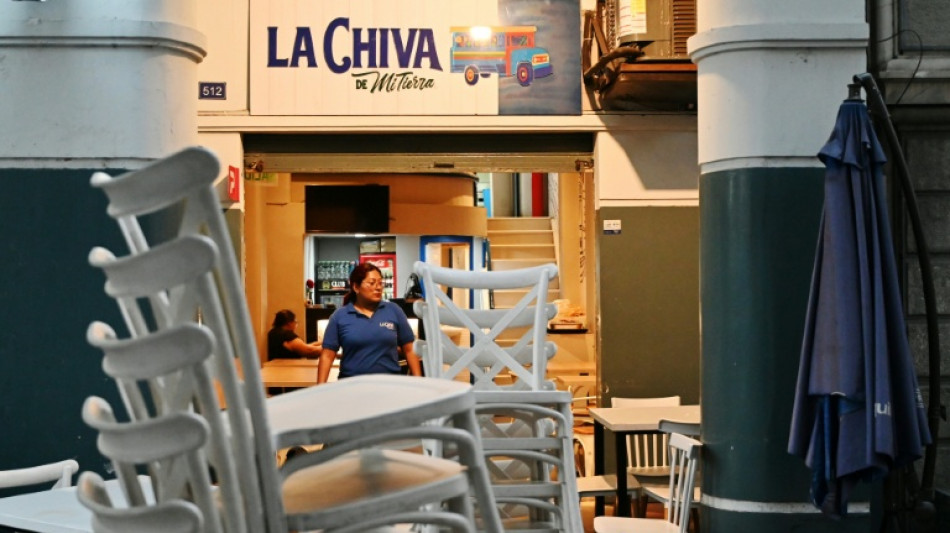
Nightlife falls silent as Ecuador's narco gangs take charge / Photo: MARCOS PIN - AFP Photo

 Japan organisers 'not satisfied' as empty seats blight Asian Games

 Canals full, roads submerged as Bangkok declares flood disaster
 China, US to open AI 'communication channel' after summit

 Nepal tunnel survivor wants to help post-flood rebuild
 New China sprint star, 17, vows 'no limits' after Asian Games gold
 Japanese 11-year-old wins Asian Games eSports gold

 TikTok agrees to teen limits in US settlement following Meta

 Venezuela's oil cradle pins hopes on US energy deals

 US, China buy time with trade truce as pressure builds

 'Leo, Leo': Young Catholics give pope rockstar welcome in France

 Lula bans sports betting days ahead of Brazil's election

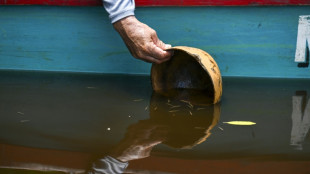 Guatemala ensures survival of vulnerable 'fossil' fish
 Mancini finds positives in Italy loss, accepts fans' jeers

 Alcaraz helps Europe into Laver Cup lead

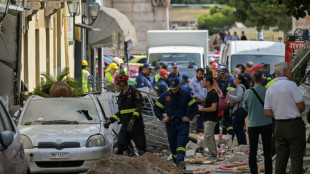 Six missing after building collapses in historic Athens district

 Mbappe scores but suffers knee injury as Zidane gets debut France win

 Mancini's Italy return spoiled by Belgium defeat

 Rodri confident in Man City innocence despite reported charges

 Jay-Z rape accuser says she made 'false accusations'
 Senegal draw first match under Vieira and Nigeria survive scare
 Trump, Xi end summit long on pomp, but short on progress

 Russia not preparing for conflict with Europe, Putin says

 Trump's photo of Xi greeting carries signs of AI

 Six missing after building blast in historic Athens district

 Millions in US northeast brace for powerful storm

The sweat-and-salsa-infused nightlife that was once the beating heart of Ecuador's largest city, Guayaquil, has fallen silent, with bars, restaurants, and nightclubs pulling down the shutters to avoid cartel-linked violence.
As Ecuador has become an epicenter of the global cocaine trade -- and the port city of Guayaquil a major thoroughfare -- cartels and mafias have chewed through the city's lively 'Zonas Rosas' -- nightlife hotspots.
Valeria Buendia, a 36-year-old teacher, used to hit Panama Street about once a week with friends.
A once buzzing and steamy area not far from the river, it is now empty after dark.
She rattles off the names of old haunts -- Central, Exflogia, Nicanor -- but now, she said, "it's become dangerous."
"I'm afraid of stray bullets," she said.
With over 5,200 homicides recorded so far this year, according to the government's tally, Ecuador has become the most dangerous country in South America.
More than 1,550 of those deaths -- roughly a third -- happened in Guayaquil, home to about 2.8 million people and the nation's commercial hub.
The bloodshed has been keenly felt on Panama Street.
The neon lights, music, and uninhibited dancers have moved to luxurious neighborhoods on the outskirts, accessible only to the fortunate few.
A 20-minute drive away in the upscale peninsula enclave of Samborondon, rich Ecuadorans can still enjoy a night out.
There, rifle-wielding guards protect high-heeled women and well-tailored men as they pass by metal detectors.
One nightclub owner who moved to Samborondon from the center laments: "It would be suicide to invest in Guayaquil" today.
- 'I couldn't keep up' -
The bar owners who are left behind have to live with threats and extortion.
One former bar owner, who asked for anonymity for fear of reprisals, told AFP how extortion had destroyed his livelihood.
"At first, they asked for $50 a week, then $100, and it kept increasing until I couldn't keep up," he said.
Tired of paying protection money to keep his business running, the owner of a salsa nightclub in the center closed his venue in December 2024.
He estimates it cost him "about $10,000." He now drives a taxi.
Locals say most bars have to pay $300 a month, or up to $5,000 for large venues. Many payments go through the banking system, and are paid by bank transfer.
- When night falls -
In the first half of 2025, Ecuador registered 9,422 formal complaints of extortion. About a third of those were in Guayaquil.
That likely significantly underplays the real number, since it's unknown how many people are too fearful to go to the authorities.
A businessman with a quarter-century of experience in the hospitality sector remembered receiving an extortion message in 2021.
"I was stunned; I called my wife because they had mentioned my family," he said.
He never reported the case to authorities and chose to close his establishment.
Those who do not pay face consequences.
The businessman remembers a restaurant in the Urdesa area of Guayaquil that had a suitcase containing explosives thrown at it as a warning in July.
The police managed to defuse it before it exploded.
In May, ten people were gunned down in a nightclub, and three months later, an armed attack in a bar killed one and injured three.
Ernesto Vasquez, of the city's nightclub association, estimates that 50 percent of the hundreds of bars in the city's center and south have closed.
Drug gangs continue to grow more emboldened, despite President Daniel Noboa's strategy of confronting them militarily.
T.Resende--PC