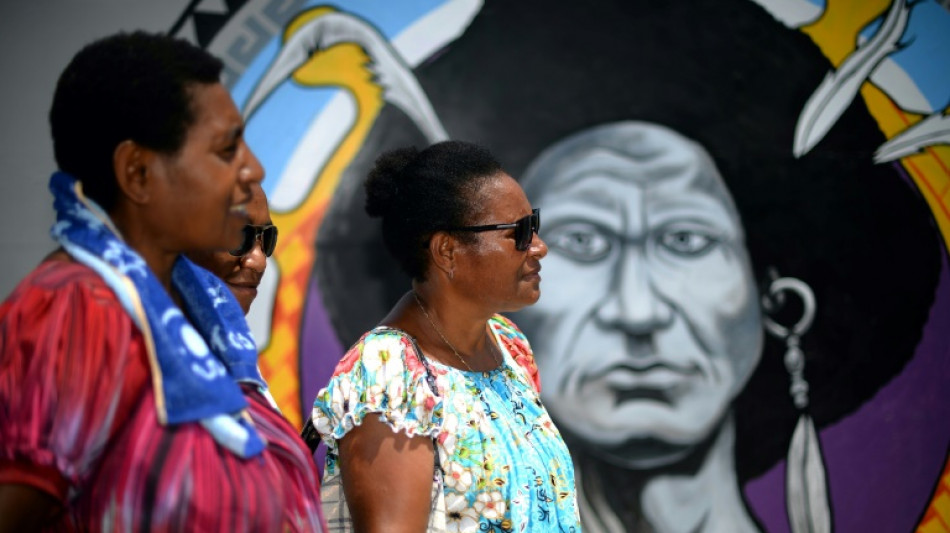
Women battle for seats in PNG parliament / Photo: Saeed KHAN - AFP/File

 British Museum bans photos of Bayeux Tapestry as crowds linger
 COP31 host says AI climate footprint to be a summit priority

 Berlin's far-left vote winners reject anti-semitism charges

 Mancini eager for 'new adventure' on Italy return

 Mbappe says having Zidane as France coach 'like a film'
 Palmer, Rice out of England Nations League squad
 German auto workers stage mass protests in bid to save jobs
 Embattled Merz vows to keep ruling for 'democratic future' of Germany

 Merz vows to keep ruling coalition together for 'democratic future' of Germany
 Spain coach De la Fuente gets new deal after World Cup success
 Pressure grows on Germany's Merz after election defeats
 China's Zhang beats Japan rivals to Asian Games gymnastics gold
 Samlingen Haupt: Vad pengar avslöjar om oss människor

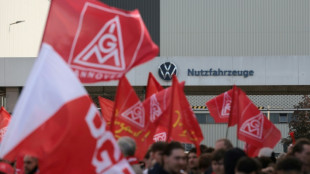
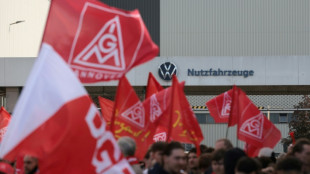 Tens of thousands of German auto workers protest to save jobs

 हॉप्त् कलेक्शन: पैसा हमारे बारे में एक इंसान के रूप में क्या प्रकट करता है

 Συλλογή Haupt: Τι αποκαλύπτει το χρήμα για εμάς τους ανθρώπους

 TradersYard Shifts Focus to Futures Trading

 ハウプト・コレクション:お金が人間について明かすこと
 하우프트 컬렉션: 돈이 우리 인간에 대해 드러내는 것

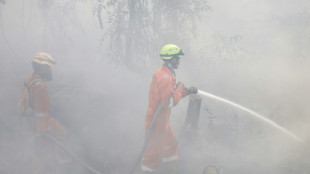 Indonesia doing 'everything' but struggling to curb fires
 Sbírka Haupt: Co o nás lidech prozrazují peníze
 North and South Korea fight out draw in niggly Asian Games clash
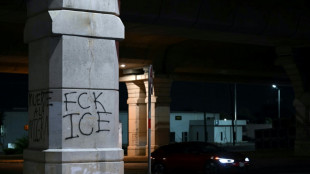 Officials say man shot, wounded by ICE agent in Texas

 豪普特收藏:金錢如何揭露人類的本質

 Kolekcja Haupta: Co pieniądze mówią o nas, ludziach
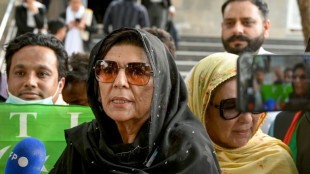
Women are fighting to get at least one seat in Papua New Guinea's male-dominated parliament when voting opens Monday in a mountainous, forest-clad land scarred by gender-based violence.
Prime Minister James Marape is fending off a challenge from his predecessor Peter O'Neill to lead this resource-rich but poverty-struck Pacific Island for the next five years.
Whoever wins, the new leader will need to cobble together a coalition government, say analysts.
Women, though, are hoping just to have a voice in the 118-seat parliament.
In the nearly 50 years since Papua New Guinea gained independence from Australia, only seven women have ever secured a seat, and not one in the last election in 2017.
"A lot of us really feel like we stand a great chance," said Sylvia Pascoe, one of 142 women among the almost 3,500 candidates in this election.
"Not just because the timing is right, but because we've spent our lives building up to this moment."
Statistics on women's experiences in the country are alarming: 63 percent have been subject to physical, sexual or emotional violence at the hands of their spouses, according to a national survey completed four years ago.
At least 70 percent of both men and women agreed that a man would be justified in beating his wife in at least one of these circumstances: if she burnt food, argued, went out without telling her husband, refused sex, or neglected her children.
- 'Brazen' -
But Pascoe said women were increasingly taking leadership roles in churches, sports and youth groups, and the "drought" in female representation in politics was sparking a change in sentiment ahead of the election.
"At the last elections, nobody was really out there rooting for women," she told AFP, but women were now expressing a desire to vote for fellow women, and youth groups were singing songs in support of their runs for office.
"People only saw men being leaders. Then suddenly, there was a drought, and they said: 'Something's not right, there is no balance.'"
Women in Papua New Guinea have found it hard to overcome perceptions that only men make leaders, said Jessica Collins, Pacific researcher at the independent Sydney-based Lowy Institute think tank.
But there is now more public debate about women's place in politics, Collins added, with some young, determined female candidates running smart campaigns this year.
"The chance for getting women elected to parliament this time around is probably increasing," she said.
Elections in Papua New Guinea can be dangerous, however.
At the last general election in 2017, more than 200 voting-related killings were documented by monitors from the Australian National University.
Election malfeasance was "more brazen than ever before", the monitors said in a report, citing "serious irregularities" such as voter intimidation and multiple voting.
- 'People are desperate' -
For women candidates hard-pressed to get financing, the risks can be even greater, said Pascoe, who sometimes ventures into volatile areas without the large security teams her male rivals enjoy.
So far, she had not encountered significant security issues but Pascoe said she had heard stories of crowds throwing stones and bottles at candidates.
"I was in a place the other night where the guy said they haven't had water for a month," she said.
"People are desperate" and when they do not hear what they want from candidates, they can get upset, Pascoe said.
Australia has sent more than 130 troops with transport aircraft to provide security for the vote.
They will assist the thousands of Papua New Guinea police and troops around the country, with the heaviest deployments in the remote and frequently violent highlands provinces.
Further complicating the process, the electoral roll is not up to date, said Pacific analyst Harry Ivarature at the Australian National University. "So the whole integrity of this election is already under question."
Voting is scheduled to take place over 18 days, with the outcome not expected to be clear until August.
Analysts say the battle to be prime minister could be tight as O'Neill calls for a revival of the resources sector, three years after resigning under pressure over corruption and a failure to spread mining wealth.
In an ethnically diverse country with more than 800 languages, there are few national issues to galvanise voters, and the overriding focus remains on what material benefits candidates can bring to local communities.
Women are hopeful however that their voices can break through.
"We might just see a whole new empowered generation rising out of this," Pascoe said.
O.Salvador--PC