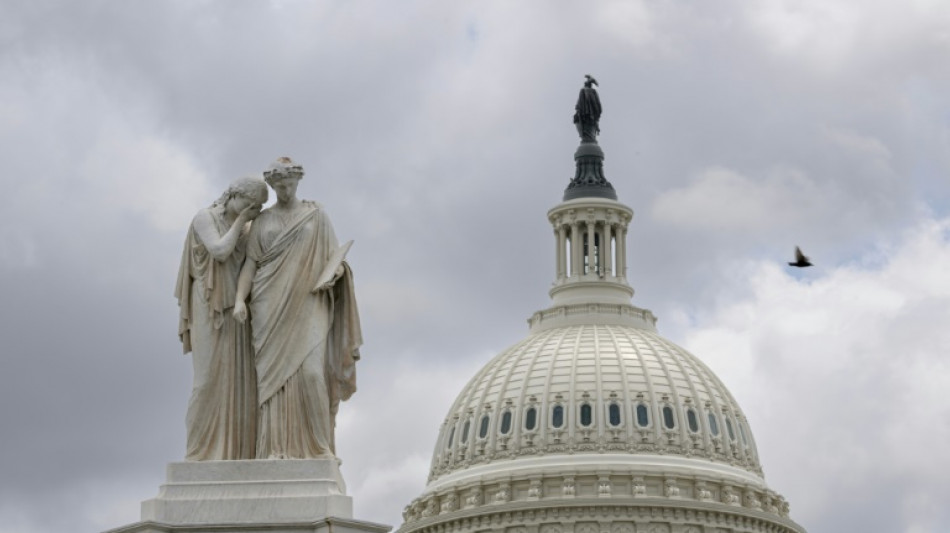
What do some researchers call disinformation? Anything but disinformation / Photo: Mandel NGAN - AFP/File

 Antonelli 'mad' about crash in Azerbaijan qualifying
 'Perfect lap' gives Russell pole for Azerbaijan GP as Antonelli crashes out

 UN Security Council condemns Houthi attacks on Saudi Arabia
 China swimmer makes Asian Games history as Thai wins 100m sprint

 Top French literary prize drops best-selling novel over AI claims

 US 'must choose' whether to end war: Iran president

 Pope warns against losing humanity in AI-driven 'paradise of machines'
 Pope warns against losing humanity in 'paradise of machines'

 From FBI warning to literary acclaim: the Russian journalist who took on Putin

 China swimmer in Asian Games first as North Korea lifters reign
 French literary prize removes novel from longlist after AI claims
 China's Zhang wins record seventh Asian Games swimming gold

 Verstappen edges Russell in final practice in Azerbaijan
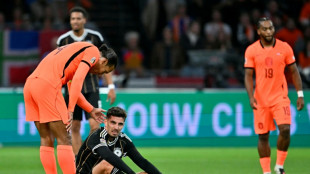
 English, Spanish, Italian, German football leagues call for FIFA reform

 Pope arrives in France on first official visit in 18 years

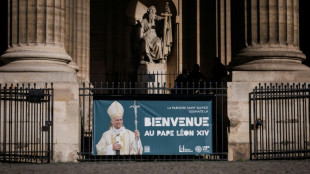 Pope arrives in France on first state visit in 18 years
 Heavy fighting, internet disruption as Ethiopia conflict rages

 From transit to consumption: drug use surges in Mozambique
 Chicago teams, Guardians and Padres all book MLB playoff berths

 Bijan Robinson destroys Packers in 35-14 win for Falcons
 Harimoto hails new era as Japan dethrone table tennis kings China

 India rape cases turn focus back onto women's safety
 Rebellious Afghan taxi drivers defy ban on music
 Brazil candidates mount digital armies for fierce online campaign
 Nepal PM says floods 'a warning to the world' about climate change
"Disinformation" is fast becoming a dirty word in the United States -- a label so contentious in a hyperpolarized political climate that some researchers who study the harmful effects of falsehoods are abandoning it altogether.
In an era of online deception and information manipulation, the study of disinformation seems more critical than ever, but researchers are battling federal funding cuts, a surge of abuse, and even death threats -- fueled in part by accusations from conservative advocates of a liberal bias.
Some researchers are now opting for more neutral language -- words, and at times, technical jargon that are less likely to inflame or derail vital public discourse about falsehoods flooding the internet.
Earlier this year, the watchdog NewsGuard announced it was retiring the labels "misinformation" and "disinformation" -– terms it said were "politicized beyond recognition and turned into partisan weapons by actors on the right and the left, and among anti-democratic foreign actors."
It renamed its so-called "Misinformation Fingerprints" database to "False Claim Fingerprints," opting for language that it said was "more precise" and "harder to hijack."
"A simple phrase like 'false claim' is more powerful and precise than 'misinformation' and 'disinformation,'" said NewsGuard's McKenzie Sadeghi.
"It names the problem plainly and directs attention to the content itself -- without triggering partisan reflexes or rhetorical spin."
- 'Fractured information ecosystem' -
Terms such as "fake news", "misinformation" and "disinformation" pre-date the internet age, but they have never been more heavily weaponized by governments and vested interests to silence critics and thwart legitimate debate.
Peter Cunliffe-Jones, author of the book "Fake News -- What's the harm," has advocated for using more specific alternatives ranging from false or unproven to mislabelled or fabricated.
Such labels "do not simply declare information false but explain the way in which information is untrue or misleading," he said.
"That way, we hopefully create less room for cynical disputes and more for better understanding."
Authoritarian states including Russia routinely dismiss credible Western media reports as disinformation.
Some governments have even co-opted fact-checking itself -- launching state-sponsored "fact checks" to legitimize their own propaganda and spin.
"In today's fractured information ecosystem, one person's 'misinformation' or 'disinformation' is another's truth," said Sadeghi.
"And in that ambiguity, bad actors win."
- 'Provocative, dangerous' -
The debate comes as major tech platforms pull back key anti-misinformation guardrails -- including scaling down content moderation and reducing their reliance on human fact-checkers, who reject accusations of liberal bias.
However, Emerson Brooking, from the Atlantic Council's Digital Forensic Research Lab (DFRLab), said the problem with abandoning the term disinformation was the lack of a clear replacement to describe the intention to deceive.
"This idea of intentionality is very important," he told AFP.
"If we see thousands of fake accounts posting a false claim in unison, we can reasonably describe it as a disinformation campaign."
The label, however, has become so heavily politicized that officials in US President Donald Trump's administration have equated disinformation research with censorship.
Following Trump's executive order on "ending federal censorship," the National Science Foundation recently cancelled hundreds of grants, including projects that supported disinformation research.
In April, Secretary of State Marco Rubio shut down the State Department's Counter Foreign Information Manipulation and Interference (R/FIMI) hub -- formerly known as the Global Engagement Center (GEC) -- which was responsible for tracking and countering disinformation from foreign actors.
Rubio justified its closure, saying that it was the government's responsibility to "preserve and protect the freedom for Americans to exercise their free speech."
"It's true that the term (disinformation) has been politicized, and that using it can feel provocative -- even dangerous," Brooking said.
"But so long as it has descriptive value, it should still be used. My organization fights authoritarian information manipulation around the world -- if we start censoring our own language, we aren't doing a good job."
F.Moura--PC