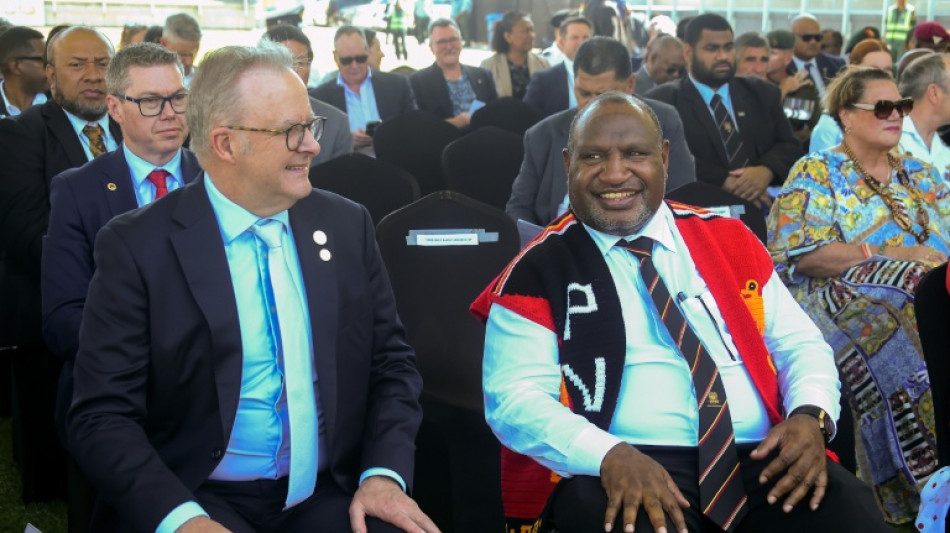
Papua New Guinea approves contentious defence treaty with Australia: officials / Photo: Andrew KUTAN - AFP/File

 Saudi PIF Retains Top Sovereign Wealth Fund Brand Title for Third Year

 Apple TV Black Friday Deal Offers Six Months for $6.99 via Prime Video

 After 20 Years of Modernizing Other Companies' Software, Polcode Turns the Lens on Itself

Papua New Guinea's cabinet has approved a contentious mutual defence treaty with Australia, officials told AFP on Thursday, as Canberra seeks to deepen ties with Pacific nations and counter Beijing's rising influence.
The deal will see the two nations commit to defending each other from armed attacks as they face "emerging threats" to their security.
But it ran into controversy in Papua New Guinea over fears it would erode the country's hard-fought sovereignty and non-aligned foreign policy.
Officials from the Pacific nation's government's legal office and foreign ministry confirmed the cabinet had approved the deal on Wednesday.
The agreement will now go to the country's parliament for ratification.
The deal -- known as the Pukpuk treaty -- was set to be signed during a visit to Port Moresby by Australia's Prime Minister Anthony Albanese last month.
But that was delayed, with Albanese saying the country's cabinet had been unable to meet due to ongoing independence celebrations.
The treaty ensures that "any activities, agreements or arrangements with third parties would not compromise the ability of either of the Parties to implement the Treaty" -- a nod to China's growing influence in the Pacific.
Beijing's embassy in Papua New Guinea last month cautioned the country against "undermining" its interests and sovereignty in signing the deal.
The agreement also enables the nations' citizens to serve in each other's militaries.
Canberra has stepped up its engagement with the Pacific region in a bid to counter Beijing's influence.
To the north of Australia, Papua New Guinea is the largest and most populous state in Melanesia.
China has committed billions of dollars to Pacific nations over the past decade, funding hospitals, sports stadiums, roads and other public works in an attempt to win their favour.
It is an approach that appears to be paying dividends.
Solomon Islands, Kiribati and Nauru have all severed diplomatic ties with Taiwan in favour of China in recent years.
T.Batista--PC