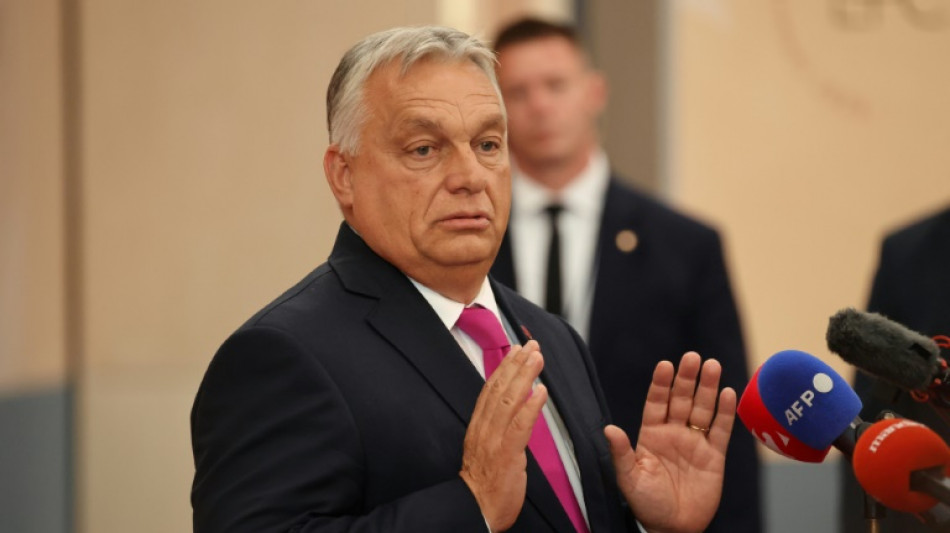
AI content proliferates in Hungary ahead of next year's elections / Photo: Ludovic MARIN - AFP

 India's 'Tree Father' plants for a greener future
 Hopping mad: New health warning stirs up Belgian brewers

 Canadian capital to rename 'Trump Ave'
 Pope heads to France on first state visit in 18 years
 Bacteria suspected in deaths of hundreds of baby whales off Argentina

 US 'must choose' whether to end war: Iran president to Fox News

 UN approves resolution on dealing with rising sea levels

 Yalcouye makes dream debut as Ivory Coast beat Ghana in AFCON qualifier

 Chicago's White Sox and Cubs book MLB playoff berths

 Last-gasp Gakpo strike snatches Dutch draw to sour Klopp debut

 Global stocks mostly fall as oil prices and bond yields rise

 Israel's Netanyahu denounces enemies, allies in fiery UN speech

 Hollywood stars among arrests in NY anti-Netanyahu protest

 Losing start in AFCON qualifying for 78-year-old coach Le Roy
 Italy bans burqas in schools, caps numbers of foreign students per class

 Israel policies threaten 'life and existence' of Palestinians, Abbas says

 Paolini steers Italy past China in BJK

 Zidane admits emotion on eve of first game as France coach
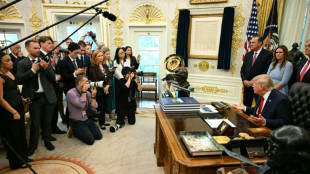
 Breetzke and Maharaj sink Australia in first one-day international

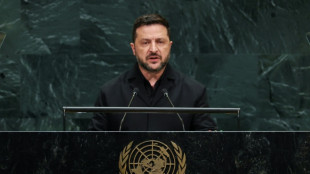 Zelensky broke confidentiality with North Korea POWs disclosure: South's president

 Former Liverpool star Carroll reveals he was sexually assaulted

 Dominican Republic calls for Haiti force to be strengthened

 Dolly Parton's nephew ordered to stay away from estate staff, properties

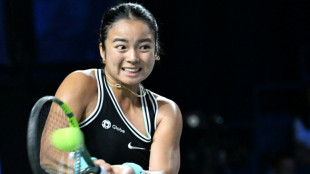 Early exit for Philippine darling Eala at Singapore Open

 Hurricane Polo triggers huge waves in coastal Mexican city
A video of Hungarian soldiers going off to fight in Ukraine and returning home in caskets is just one of many AI-generated posts that have appeared on Prime Minister Viktor Orban's social media accounts ahead of elections next year.
Orban, a nationalist who has been in power since 2010 in the central European country, is expected to face an unprecedented challenge from opposition leader Peter Magyar.
Ahead of the contest, politicians and their supporters across the political spectrum have used the technology, with Orban targeting the opposition, following in the footsteps of US President Donald Trump.
Trump has repeatedly posted fabricated videos, stirring online outrage.
Experts warn that because some AI content can generate very emotional reactions, the use of the technology could sway public opinion ahead of the poll.
- Clips targeting opposition -
Orban's backers have invested significant resources into AI ahead of the poll, expected in April.
One group, the National Resistance Movement (NEM) which backs Orban's Fidesz party, has in recent months targeted Magyar in mostly unlabelled AI-generated videos on social media.
Since June 15, the group spent over 1.5 million euros ($1.7 million) on Facebook and YouTube to promote its content, more than any political organisation in the EU, based on public data from platform owners Meta and Google.
The two US tech giants recently ended political advertising in the EU because of new rules that came into force last week that require such ads to be clearly labelled -- including who sponsored them -- and restricting the deployment of personally targeted ads.
Some of NEM's videos contain non-existent people manipulated to express outrage at Magyar's alleged policy plans, while a few others are deepfake videos of him.
Other pro-Orban AI clips support the nationalist leader's policy drives, such as his opposition to Ukraine's EU membership bid, which he has warned could drag Hungary into the war in the neighbouring country.
The clip of AI-generated Hungarian soldiers in caskets was advertised on Facebook and broadcast on state TV in June, in the final days of a mail-in ballot on Kyiv's EU accession bid.
The government insists that using such content is acceptable as long as it is properly labelled as artificially generated.
But AFP found multiple instances of Orban and his allies posting realistically appearing videos and pictures that seem to have been created with AI without clearly labelling them as such.
Orban's opponent, Magyar, has also used AI on his social media channels in the past without labelling it, such as a fake photo of himself in combat uniform in a tongue-in-cheek post arguing why he does not ally with the rest of the opposition.
If the use of AI "is clearly visible and obvious to everyone, then it is not a problem," Magyar told AFP, adding that anything else could be considered "election fraud".
He has condemned Orban's AI videos as "pathetic".
The government's AI commissioner Laszlo Palkovics said "it would be advisable to avoid trying to influence voters with AI content".
"But it is up to everyone to decide" how they want to use AI, Palkovics told AFP. He insisted the government "fully supports" the landmark EU AI Act, which was passed last year.
Hungary has said that it wants to develop its own AI ethics code, with Orban striving to make the eastern European country a "key regional player" in the AI race.
His economy minister, Marton Nagy, at a two-day AI conference last month admitted that so far local companies are lagging behind most of their EU peers in AI adoption.
- 'Highly toxic' -
Experts are concerned about the proliferation of AI-generated content.
"A (deep) fake video can have a heightened impact," communication researcher Petra Aczel told AFP, adding that she expected "extremely strong sensory influences in the upcoming political campaigns around the world".
"Even if it is branded as AI-generated and contains visible glitches, some people will believe it, because they have an emotional reaction to it," she added.
The EU AI Act will not restrain political actors, Hungarian-American AI consultant George Tilesch told AFP.
"The algorithms governing social media are feeding us the same type of content, because that creates the highest level of engagement" said the Silicon Valley-based expert, who has advised the US, EU and major corporations on artificial intelligence.
Coupled with the rapid breakthroughs in generative AI, this "creates a potentially highly toxic concoction," he said.
A.Seabra--PC