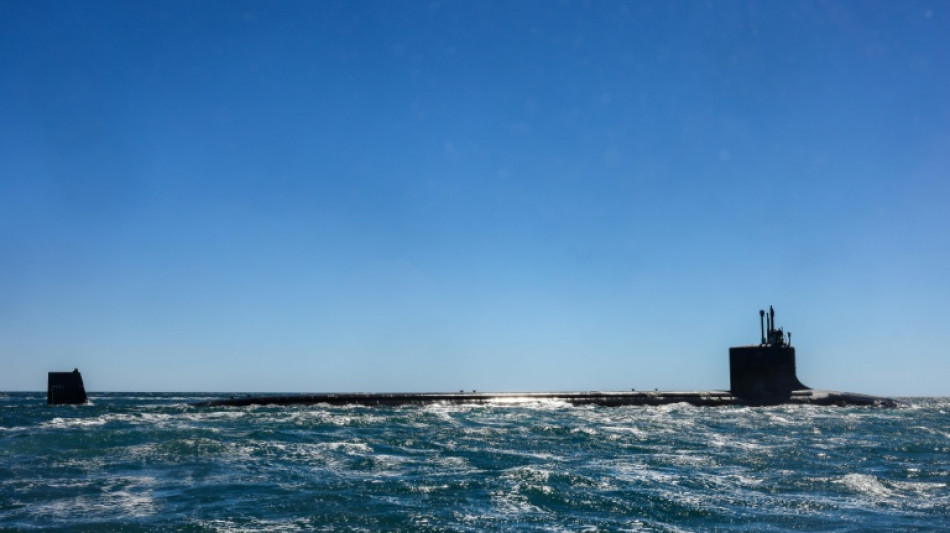
Australia must deploy 'unconventional' means to deter China, Russia: think tank / Photo: COLIN MURTY - POOL/AFP/File

 India's 'Tree Father' plants for a greener future
 Hopping mad: New health warning stirs up Belgian brewers

 Canadian capital to rename 'Trump Ave'
 Pope heads to France on first state visit in 18 years
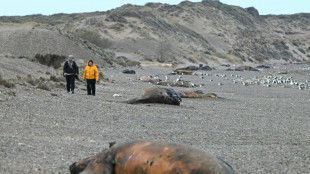 Bacteria suspected in deaths of hundreds of baby whales off Argentina

 US 'must choose' whether to end war: Iran president to Fox News

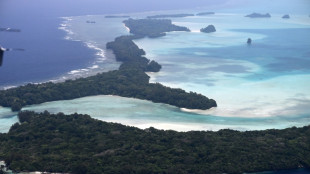 UN approves resolution on dealing with rising sea levels

 Yalcouye makes dream debut as Ivory Coast beat Ghana in AFCON qualifier

 Chicago's White Sox and Cubs book MLB playoff berths
 Last-gasp Gakpo strike snatches Dutch draw to sour Klopp debut

 Global stocks mostly fall as oil prices and bond yields rise
 Israel's Netanyahu denounces enemies, allies in fiery UN speech
 Hollywood stars among arrests in NY anti-Netanyahu protest

 Losing start in AFCON qualifying for 78-year-old coach Le Roy
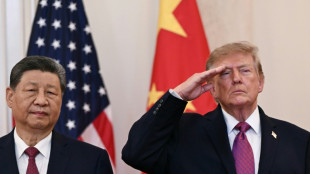
 Italy bans burqas in schools, caps numbers of foreign students per class

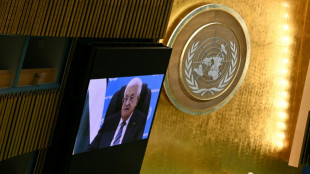 Israel policies threaten 'life and existence' of Palestinians, Abbas says

 Paolini steers Italy past China in BJK

 Zidane admits emotion on eve of first game as France coach
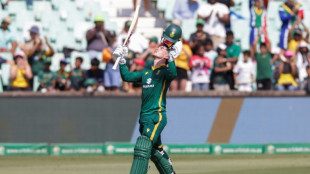 Breetzke and Maharaj sink Australia in first one-day international

 Zelensky broke confidentiality with North Korea POWs disclosure: South's president
 Former Liverpool star Carroll reveals he was sexually assaulted
 Dominican Republic calls for Haiti force to be strengthened

 Dolly Parton's nephew ordered to stay away from estate staff, properties

 Early exit for Philippine darling Eala at Singapore Open

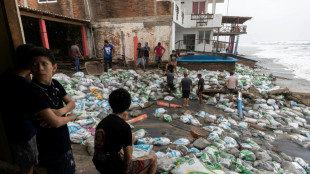 Hurricane Polo triggers huge waves in coastal Mexican city
Australia must learn from past guerrilla insurgencies and adopt an "unconventional deterrence" policy in facing down threats from China, Russia and elsewhere, one of the country's leading think tanks said Wednesday.
Australia, under the tripartite AUKUS pact with the United States and the United Kingdom, will acquire at least three Virginia class submarines from the United States within 15 years, with an eye to eventually build its own.
Until then Canberra faces a major gap in its defences, warned the report by the non-partisan Australian Strategic Policy Institute (ASPI), which receives funding from Canberra's defence ministry as well as the US State Department.
"Australia's traditional reliance upon 'great and powerful friends' and extended nuclear deterrence now seems no longer assured," the authors wrote.
"Australia has options to fill today's deterrence gap: we just need to look beyond conventional paradigms," they said.
ASPI, acknowledging Australia's "inferiority" against adversaries like China, argued that past guerrilla wars like the Chechen insurgency against Russia in the 1990s showed that smaller actors could inflict heavy damage on much larger foes.
"History demonstrates that innovative concepts and asymmetric capabilities can achieve deterrent effects ahead of and during conflict," the authors wrote.
"Australian concepts of deterrence don't address the nature of competition as currently practised by China and other autocratic regimes such as Russia, North Korea and Iran," they warned.
ASPI pointed to Beijing's growing use of so-called "grey-zone" tactics -- cyberwarfare, coercion and subversion that fall short of acts of war -- as evidence that Australia needed a more dynamic and reactive policy.
It also argued Canberra could learn from former Singaporean leader Lee Kuan Yew's description of the city state as a "poisonous shrimp" -- as well as the "porcupine" strategies of Switzerland and the Baltic states.
ASPI called for the recreation of a National Security Adviser with sweeping powers and oversight over Canberra's intelligence agencies, as well as reforms of spying and defence laws to facilitate the new policy.
Australia is engaging in a rapid military build-up in a push to strengthen its defences against China, also its largest trading partner.
Canberra plans to gradually increase its defence spending to 2.4 percent of gross domestic product -- well short of US demands for 3.5 percent.
The AUKUS submarine programme alone could cost the country up to $235 billion over the next 30 years, according to Australian government forecasts, a price tag that has stoked criticism.
E.Raimundo--PC