
-
 Bacteria suspected in deaths of hundreds of baby whales off Argentina
-
Scheffler and Burns give US 3-2 Presidents Cup lead

-
 US 'must choose' whether to end war: Iran president to Fox News
-
Hollywood stars among 100 arrested in NY anti-Netanyahu protest

-
 UN approves resolution on dealing with rising sea levels
-
Klopp denied on Germany debut as Portugal win in Nations League

-
 Yalcouye makes dream debut as Ivory Coast beat Ghana in AFCON qualifier
-
Rich nations should foot climate bill, says Nepal minister
-
 Chicago's White Sox and Cubs book MLB playoff berths
-
Wellalage and Mendis star as Sri Lanka level England series in thriller

-
 Last-gasp Gakpo strike snatches Dutch draw to sour Klopp debut
-
Felix gives Portugal win over Wales as Ronaldo misfires

-
 Global stocks mostly fall as oil prices and bond yields rise
-
Wellalage and Mendis star as Sri Lanka level England ODI series

-
 Israel's Netanyahu denounces enemies, allies in fiery UN speech
-
Guyana urges Venezuela at UN to respect ICJ's ruling on Essequibo region
-
 Hollywood stars among arrests in NY anti-Netanyahu protest
-
Argentina coach says Messi deserves to go out on own terms

-
 Losing start in AFCON qualifying for 78-year-old coach Le Roy
-
Xi sets red lines for Trump despite lavish White House welcome
-
 Italy bans burqas in schools, caps numbers of foreign students per class
-
Cowboys, Ravens happy with footing for first Rio NFL clash

-
 Israel policies threaten 'life and existence' of Palestinians, Abbas says
-
Starbucks to close 250 more cafes in North America

-
 Paolini steers Italy past China in BJK
-
French actress Marina Vlady dies at 88
-
 Zidane admits emotion on eve of first game as France coach
-
CNN, MS NOW, Politico allowed back in White House after judge's order
-
 Breetzke and Maharaj sink Australia in first one-day international
-
Morocco's ruling coalition dominates low-turnout parliament election

-
 Zelensky broke confidentiality with North Korea POWs disclosure: South's president
-
Napoli hoping to build new stadium, says owner
-
 Former Liverpool star Carroll reveals he was sexually assaulted
-
What's behind the Pakistani strikes on Afghanistan?
-
 Dominican Republic calls for Haiti force to be strengthened
-
Hundreds protest for return of Nobel peace laureate Machado to Venezuela
-
 Dolly Parton's nephew ordered to stay away from estate staff, properties
-
Aubameyang to miss two months for Deportivo after knee surgery

-
 Early exit for Philippine darling Eala at Singapore Open
-
Newsom says Trump presidency 'as we know it' ends in November

-
 Hurricane Polo triggers huge waves in coastal Mexican city
-
Stocks fall as oil prices rise and bonds back under pressure
-
 What happens if the US bans diesel exports
-
Russell leads Mercedes 1-2 in Azerbaijan GP practice
-
 Macklemore hits back with 'Free Palestine Tour' after Sheeran split
-
Ukrainian kills priest, wounds four at Polish abbey
-
 Met Opera to give New Yorkers free tickets in affordability push
-
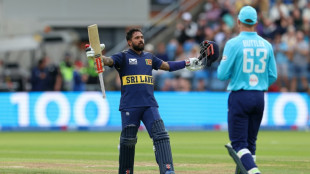
Sri Lanka captain Mendis hits century in 321-6 against England
-
 Top ECB official to resign to take up IMF role
-
Oscar-winner Cotillard fears being moved by AI actor

Bolivians look right for a new president, ending two decades of socialism
Bolivians voted for a new president Sunday between two pro-business candidates, ending two decades of socialist rule that have left the beleaguered South American nation deep in economic crisis.
With dollars and fuel in short supply and annual inflation at more than 20 percent, weary voters snubbed the Movement Toward Socialism party founded by former president Evo Morales in a first electoral round in August.
Bolivia is enduring its worst economic crisis in decades, with long queues now a common sight at gas stations.
"We hope the country improves," homemaker Maria Eugenia Penaranda, 56, said, bundled up against the cold as she cast her vote in La Paz, some 3,600 meters (11,800 feet) above sea level.
"We cannot make ends meet. There is a lot of suffering. Too much," she told AFP.
Polling stations opened at 8:00 am (1200 GMT) and closed eight hours later. Nearly eight million people were eligible to cast ballots and voting is mandatory.
Early results are expected around midnight GMT.
The election pitted economist-turned-senator Rodrigo Paz, 58, against former interim president Jorge "Tuto" Quiroga, 65, an engineer by training.
Whoever wins, the election will close out an economic experiment marked by initial prosperity funded by Morales's nationalization of gas reserves.
The boom was followed by bust, notably critical shortages of fuel and foreign currency under outgoing leader Luis Arce.
Successive governments under-invested in the country's hydrocarbons sector, once the backbone of the economy.
Production plummeted and Bolivia almost depleted its dollar reserves to sustain a universal subsidy for fuel that it also cannot afford to import.
- Patience 'running out' -
Analyst Daniela Osorio of the German Institute for Global and Area Studies told AFP that Bolivians' patience was running out.
Once the election is over, she warned, "if the winner does not take measures to help the most vulnerable, this could lead to a social uprising."
The victor faces an uphill task, inheriting an economy in recession, according to the World Bank.
To fix the economy, Quiroga has proposed opening to international investment and foreign loans, while Paz supports a "capitalism for all" approach with decentralization, lower taxes and fiscal discipline.
Both say they want to maintain social programs while stabilizing the economy, but economists have said the two things are not possible at the same time.
Quiroga and Paz have both proposed cutting the universal fuel subsidy, keeping it only for public transportation.
- 'Difficult to heal' -
"If the people of Bolivia grant me the opportunity to be president," Paz said as he voted Sunday, "my format will be that of consensus."
Quiroga has promised to return US dollars and fuel to the country before Christmas, financed by international loans.
"A change with hope is coming," he vowed after casting his vote in southern La Paz.
Neither man would have a party majority in Congress, meaning they would need to make concessions to have laws passed, said Bolivian sociologist Maria Teresa Zegada.
But a bitter campaign marked by personal attacks has left "wounds that will be difficult to heal," she added.
Outside of Congress, the new president will also face stiff opposition from Morales, who remains popular especially among Indigenous Bolivians, but was constitutionally barred from seeking another term.
On Sunday, he told reporters the two candidates each represent only "a handful of people in Bolivia, they do not represent the popular movement, much less the Indigenous movement."
Morales is the target of an arrest warrant for human trafficking over an alleged sexual relationship with a minor -- an accusation he denies.
Arce is due to leave office on November 8 after serving a single presidential term that began in 2020.
Bolivia's constitution allows for two terms, but he did not seek reelection.
C.Amaral--PC