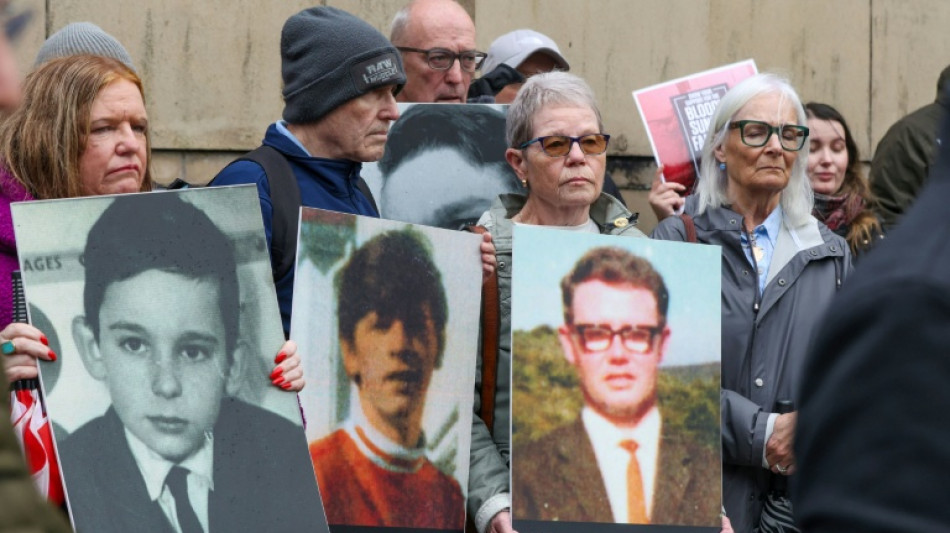
Judge clears British ex-soldier of Bloody Sunday murders / Photo: Paul Faith - AFP

 UN approves resolution on dealing with rising sea levels
 Yalcouye makes dream debut as Ivory Coast beat Ghana in AFCON qualifier
 Chicago's White Sox and Cubs book MLB playoff berths
 Last-gasp Gakpo strike snatches Dutch draw to sour Klopp debut
 Global stocks mostly fall as oil prices and bond yields rise
 Israel's Netanyahu denounces enemies, allies in fiery UN speech
 Hollywood stars among arrests in NY anti-Netanyahu protest
 Losing start in AFCON qualifying for 78-year-old coach Le Roy
 Italy bans burqas in schools, caps numbers of foreign students per class
 Israel policies threaten 'life and existence' of Palestinians, Abbas says
 Paolini steers Italy past China in BJK
 Zidane admits emotion on eve of first game as France coach
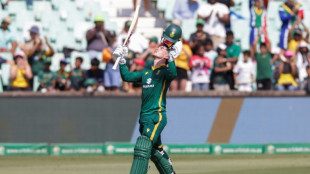 Breetzke and Maharaj sink Australia in first one-day international
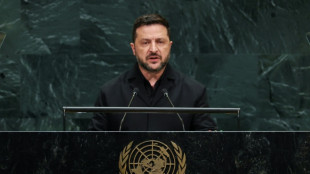 Zelensky broke confidentiality with North Korea POWs disclosure: South's president
 Former Liverpool star Carroll reveals he was sexually assaulted
 Dominican Republic calls for Haiti force to be strengthened
 Dolly Parton's nephew ordered to stay away from estate staff, properties
 Early exit for Philippine darling Eala at Singapore Open
 Hurricane Polo triggers huge waves in coastal Mexican city
 What happens if the US bans diesel exports
 Macklemore hits back with 'Free Palestine Tour' after Sheeran split
 Met Opera to give New Yorkers free tickets in affordability push
 Top ECB official to resign to take up IMF role
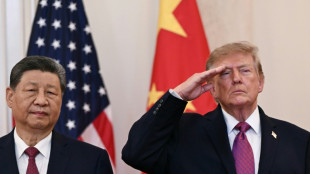
 Xi and Trump call for peace in lavish White House state visit
 Five up-and-coming players looking to make mark in Nations League
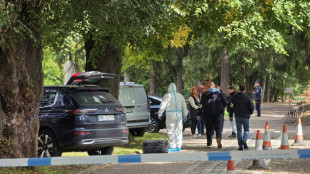
A judge in Belfast on Thursday acquitted a British ex-paratrooper of killing unarmed civilians during the 1972 Bloody Sunday massacre.
Judge Patrick Lynch told the court he was "satisfied that the soldier or soldiers who opened fire... did so with the intention to kill" but that the prosecution "cannot establish by whose hand the fatal shots were fired, nor those that wounded" others.
"I find the accused not guilty on all seven counts," he said, acquitting him of two charges of murder and five of attempted murder during one of the most difficult events of the three-decade "Troubles" that plagued Northern Ireland.
The former soldier, identified only as Soldier F, listened to the verdict from behind a thick blue curtain, hidden from view of the packed courtroom.
He had been charged with murdering civilians James Wray and William McKinney, and attempting to murder five others during the crackdown on a civil rights protest in the city of Londonderry -- also known as Derry to pro-Irish nationalists.
British troops opened fire on protesters in the majority-Catholic Bogside area of the city on January 30, 1972, killing 13 people.
A 14th victim later died of his wounds.
The case is deeply divisive in Northern Ireland, where the decades of sectarian violence that began in the 1960s still cast a long shadow, even after a peace deal was brokered in 1998.
- 'Shooting unjustified' -
During the month-long trial that ended last week, Soldier F, whose request to remain anonymous throughout the proceedings had been granted, remained unseen.
In previous interviews, he told police he no longer had a reliable recollection of the events and was not called to give evidence in his own defence during the trial.
The prosecution brought the case on the basis that the shootings were "unjustified".
"The civilians... did not pose a threat to the soldiers and nor could the soldiers have believed that they did," prosecutor Louis Mably told Belfast Crown Court at the opening of the trial.
Last week, the judge refused an application by defence lawyer Mark Mulholland to dismiss the case because the evidence could not be relied on.
Mulholland argued that statements made by two key witnesses, Soldiers G and H, who were present in Londonderry that day along with Soldier F, were unreliable and inconsistent.
The trial heard medical and forensic evidence that the two victims were killed by shots fired most likely from the same gun.
Mably submitted that it was "implausible" that Soldier F could not recall whether or not he opened fire during the incident, and insisted that the witness statements were consistent.
- Apology -
Bloody Sunday helped galvanise support for the Provisional IRA, the main paramilitary organisation fighting for a united Ireland and against British rule in Northern Ireland.
It was one of the bloodiest incidents in the conflict known as the Troubles, during which around 3,500 people were killed.
It largely ended with the 1998 peace accords.
Northern Irish prosecutors first recommended Soldier F stand trial in 2019.
A 1972 inquiry into the killings cleared the soldiers of culpability but was widely seen by Catholics as a whitewash.
That probe, the Widgery Tribunal, closed off prosecutions, and only after the 1998 peace accords was a new investigation, known as the Saville Inquiry, opened.
That 12-year public inquiry -- the largest investigation in UK legal history -- concluded in 2010 that British paratroopers had lost control and that none of the victims had posed a threat.
The probe prompted then prime minister David Cameron to issue a formal apology for the killings, calling them "unjustified and unjustifiable".
Northern Irish police then began a murder investigation and submitted their files to prosecutors in 2016.
The case against Soldier F faced multiple delays, and bringing other ex-soldiers to trial is widely seen as unlikely.
A.Motta--PC