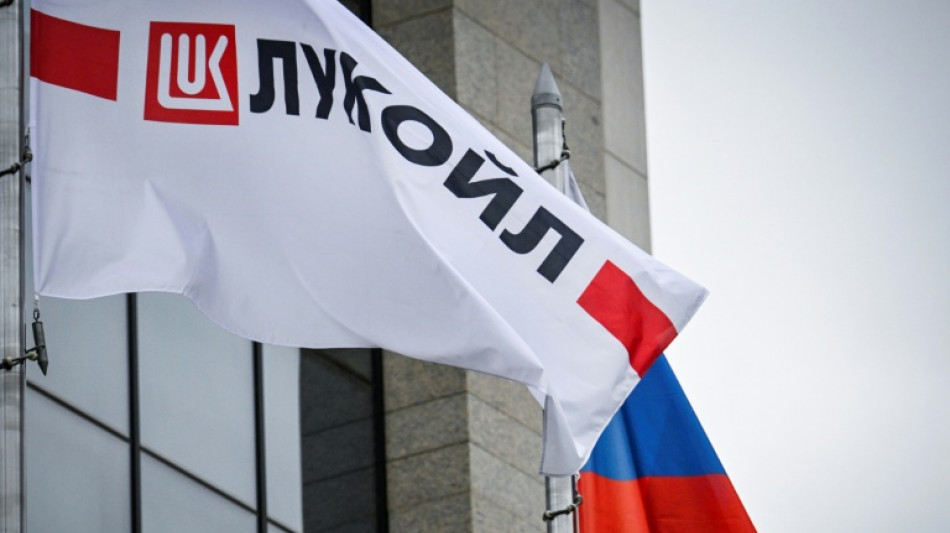
US and EU sanctions on Russian oil and gas: what do we know? / Photo: Alexander NEMENOV - AFP

 UN approves resolution on dealing with rising sea levels

 Yalcouye makes dream debut as Ivory Coast beat Ghana in AFCON qualifier

 Chicago's White Sox and Cubs book MLB playoff berths

 Last-gasp Gakpo strike snatches Dutch draw to sour Klopp debut
 Global stocks mostly fall as oil prices and bond yields rise

 Israel's Netanyahu denounces enemies, allies in fiery UN speech
 Hollywood stars among arrests in NY anti-Netanyahu protest

 Losing start in AFCON qualifying for 78-year-old coach Le Roy
 Italy bans burqas in schools, caps numbers of foreign students per class

 Israel policies threaten 'life and existence' of Palestinians, Abbas says

 Paolini steers Italy past China in BJK

 Zidane admits emotion on eve of first game as France coach
 Breetzke and Maharaj sink Australia in first one-day international

 Zelensky broke confidentiality with North Korea POWs disclosure: South's president
 Former Liverpool star Carroll reveals he was sexually assaulted
 Dominican Republic calls for Haiti force to be strengthened
 Dolly Parton's nephew ordered to stay away from estate staff, properties

 Early exit for Philippine darling Eala at Singapore Open
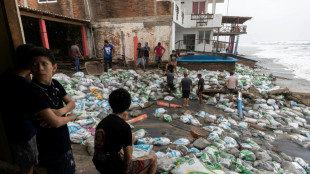 Hurricane Polo triggers huge waves in coastal Mexican city
 What happens if the US bans diesel exports
 Macklemore hits back with 'Free Palestine Tour' after Sheeran split
 Met Opera to give New Yorkers free tickets in affordability push
 Top ECB official to resign to take up IMF role

 Xi and Trump call for peace in lavish White House state visit
 Five up-and-coming players looking to make mark in Nations League

The United States on Wednesday hit Russia's two biggest oil producers -- Rosneft and Lukoil -- with sanctions, the first against Russia since US President Donald returned to office.
The European Union has also announced a complete ban on Russian liquefied natural gas (LNG) imports by the end of 2026.
Here is what we know about the measures, their scope and possible impact:
- Two major oil companies hit -
The US sanctions freeze all Rosneft and Lukoil assets in the United States and prohibit US companies from doing business with them.
The firms are among Russia's biggest companies while the government owns a majority stake in Rosneft.
Together they account for the lion's share of Russia's oil output -- 55 percent, according to industry analysts. Both of them also produce gas.
The companies are important contributors to state finances, which the Kremlin uses to pay for its war against Ukraine.
To hamper Moscow's revenues, Kyiv has launched drone strikes on Rosneft and Lukoil refineries throughout the war, triggering a decline in output and a spike in petrol prices.
- EU shuns Russian LNG -
The EU on Thursday introduced new curbs on the Russian oil and gas sector in the bloc's 19th sanctions package since the Kremlin's 2022 invasion.
It includes a complete halt to Russian LNG imports by the end of 2026 and measures against Moscow's shadow oil tanker fleet that the Kremlin uses to circumvent sanctions, which the EU's estimates now amounts to up to 1,400 ships.
The 27-nation bloc has already blacklisted hundreds of tankers, but Russia kept bringing more depleted vessels.
The EU has drastically reduced its dependence on Russian natural gas since the 2022 invasion of Ukraine.
The share of Russian gas in EU imports has dropped from 38 percent before the war to only seven percent today, according to an AFP calculation based on data from the Brussels-based Bruegel institute.
- Secondary sanctions -
The United States has put Lukoil and Rosneft on its SDN list of sanctioned entities, a registry followed by many countries and feared in the business world.
Companies who work with the Russian entities risk secondary sanctions, which would deny them access to US banks, traders, shippers and insurers -- the backbone of the commodities market.
Russian energy expert Alexei Gromov said the sanctions aimed to prevent Russia and India from trading in dollars, as New Delhi is a key importer of Russian oil.
"This is a significant blow that will lead to difficulties in Russian oil supplies to India," Gromov, director of the Moscow-based Institute of Energy and Finance, told AFP.
But the sanctions are unlikely to weigh on Russia's trade with China -- the biggest buyer of Russia's oil -- as Moscow and Beijing trade in their national currencies, Gromov said.
- Political and economic impact -
Trump attempted to foster ties with Russia at the start of his term but has become increasingly frustrated with the country's refusal to agree a ceasefire.
The latest sanctions mean Trump has gone further than his Democratic predecessor Joe Biden, who did not sanction Russia's two oil majors and instead targeted smaller producers, Bovt said.
"Adding Russia's largest oil companies to the SDN list -- even Biden didn't go that far," according to Bovt.
Jorge Leon from Norway-based research centre Rystad Energy forecast the curbs will trigger "less official buying of Russian crude, and probably a little bit more of Russian shadow fleet trade," in a comment to AFP.
Capital Economics analysts David Oxley and Nicholas Farr called the sanctions a "major escalation" which "could be a big enough shock to flip the global oil market into a deficit next year."
But Elisabeth Braw from the Atlantic Council, was more cautious, telling AFP there are many strong economies that "can essentially step in and buy whatever products it is we are sanctioning".
"We just shouldn't assume that sanctions will have a major effect," added Braw from the US-based think tank.
Still, Russian President Vladimir Putin said the sanctions were "serious" but not significant enough to strongly hit the economy of his country, which has already adapted to numerous international punitive measures imposed on it for over a decade.
Ukraine's President Volodymyr Zelensky said the sanctions a "clear signal" for Moscow to end the war.
burs-rco-asy/sbk
S.Pimentel--PC