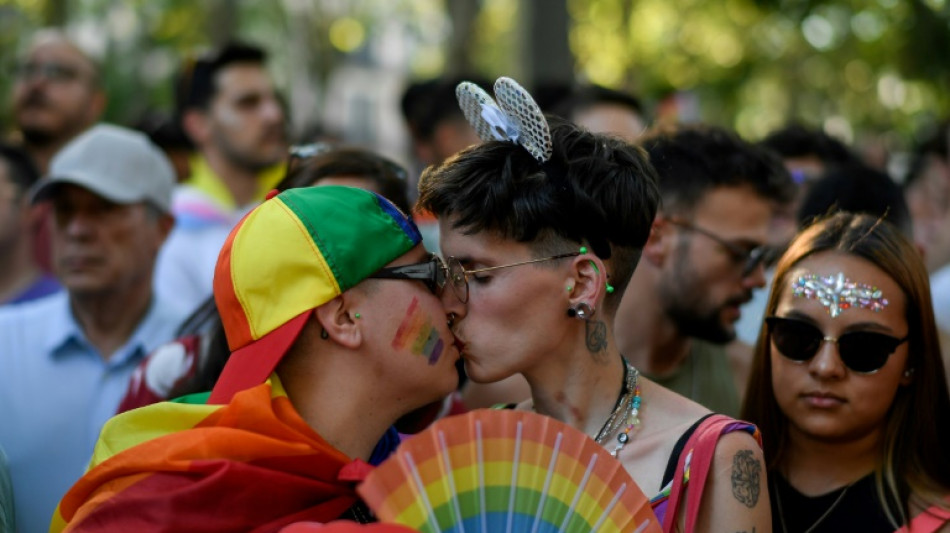
Colourful LGBTQ Pride march takes over Madrid / Photo: OSCAR DEL POZO - AFP

 Premiere Screenings of 'The 100th: Seeds of Aloha' Documentary Announced in California

 San Onofre Demolition Highlights California’s Nuclear Energy Void

 2026 Nickelodeon Kids' Choice Awards: Air Time, Channels, and Streaming Guide

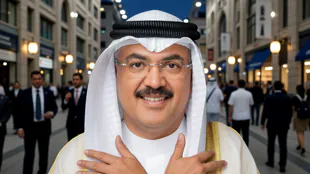 Kuwaitis Elected to Senior Leadership Roles at ALECSO

 BingX: Major Announcement of Far-Reaching Significance

 Tamil Nadu Commission Reviews Rs 1.14 Lakh Crore Investment MoUs, Seeks Subsidy Boost

 Sakeliga Challenges Icasa Over Telecoms BEE Ownership Rule

Hundreds of thousands of people waved rainbow flags and danced to techno music at Madrid's Pride march on Saturday as the event returned following two years of Covid-enforced cancellations.
Demonstrators in the Spanish capital gathered in the late afternoon behind a large banner with the slogan "visibility, pride and resilience".
Some participants carried water pistols and sprayed each other to keep cool in the searing heat. Others went bare-chested and danced to the rhythm of Brazilian and techno music.
Several ministers from Spain's left-wing coalition government, including Interior Minister Fernando Grande-Marlaska, joined them.
"I missed this a lot, the atmosphere is great. You can see that people really wanted to party after so long without a 'normal' Pride," said Victor Romero Fernandez, a 38-year-old teacher.
Civil servant Miguel Angel Alfonso, 44, appreciated seeing packed streets but thought the event should put more emphasis on demanding rights.
"It has become a big party, with floats converted into discos and multinationals... it's a big business," he said.
Public broadcaster TVE covered the event live for the first time.
Homosexuality was decriminalised in Spain in 1978, three years after the death of dictator Francisco Franco. The country has since legalised marriage and adoption for same-sex couples.
But the national LGBTQ federation said it was important to give "visibility" to the community, denouncing a growing "hate speech" in a statement before the march.
FELGTBI+ added that such discourse was "undermining the foundations of social harmony, putting at risk the gains achieved up to now".
The federation also supported a draft law, to be debated in parliament this summer, that would allow someone to change their name and gender on identity documents at their request from the age of 16.
If adopted, the legislation would make Spain one of few countries to allow self-determination of gender.
C.Cassis--PC