Central Nigerian town rebuilds religious trust in shadow of Trump's threat
/ Photo: Kola SULAIMON - AFP/File

 What's behind the Pakistani strikes on Afghanistan?
 Hundreds protest for return of Nobel peace laureate Machado to Venezuela
 Aubameyang to miss two months for Deportivo after knee surgery

 Newsom says Trump presidency 'as we know it' ends in November
 Stocks fall as oil prices rise and bonds back under pressure
 Russell leads Mercedes 1-2 in Azerbaijan GP practice
 Ukrainian kills priest, wounds four at Polish abbey
 Sri Lanka captain Mendis hits century in 321-6 against England
 Oscar-winner Cotillard fears being moved by AI actor
 Agassi demands proper break for exhausted tennis stars

 Seixas 'crushes' teammates in training to draw Pogacar comparisons
 Trump welcomes Xi to White House, touting agreement on AI
 Stocks fall, oil prices rise as global bonds back under pressure
 UK man died putting women, children first in Mozambique jihadist siege: coroner

 Russell leads Mercedes 1-2 at Azerbaijan GP practice
 Alcaraz shrugs off pressure of packed calendar at 'joyful' Laver Cup

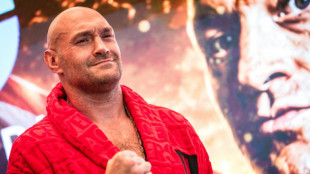 Fury to face British rival Joshua in Cardiff on December 11
 Streamex Converts Interest Into Capital as GLDY Investment Strategy Secures $1M+ Institutional Allocation

 STARTRADER Named Best Fintech Forex Broker at Forex Expo Dubai 2026
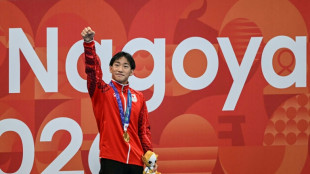 Japan swimmer Ohashi, 17, shrugs off Covid to smash world record
 Shin Ohashi: Junk food-loving teen and new world record-holder

 Greek PM urges 'courage' in talks with UK over Parthenon Marbles
 'I was drowning': Iran Nobel winner exposes pain of separation from children
 Israel's US envoy says son fighting for life

 Olympic champion Yulo completes gymnastics gold collection at Asian Games
On a cool November morning, members of a local council in central Nigeria met religious leaders at the traditional ruler's palace to discuss religious harmony as US President Donald Trump revs up accusations of Christian persecution in Africa's most populous country.
Nigeria, a west African country of 230 million people, is roughly evenly split between a mostly Christian south and a Muslim-majority north. It is home to myriad conflicts, including jihadist insurgency, that experts say kill both Christians and Muslims, often without distinction.
But Trump has ordered a military intervention in Nigeria to halt what he says are killings of Christians "in very large numbers" by radical Islamists.
Mangu, a small rustic town in Nigeria's central Plateau state located 250 kilometres from the capital Abuja, was the scene of deadly clashes that targeted both Christians and Muslims last year.
Since then community leaders hold regular dialogues to forestall a recurrence.
For decades, Mangu mostly escaped the intercommunal violence that often erupts elsewhere in Nigeria's central "Middle Belt" farming region.
Many of the conflicts in the region have their roots in tensions over land between Muslim herders and mostly Christian farmers, as the impact of climate change threatens agricultural livelihoods.
Mangu's Muslims and Christians mostly belong to the Mwaghavul tribe, and have lived side by side for decades before the 2024 violence.
The town's central mosque was located in the Christian-dominated district, and the town's biggest church once stood in a Muslim-majority quarter.
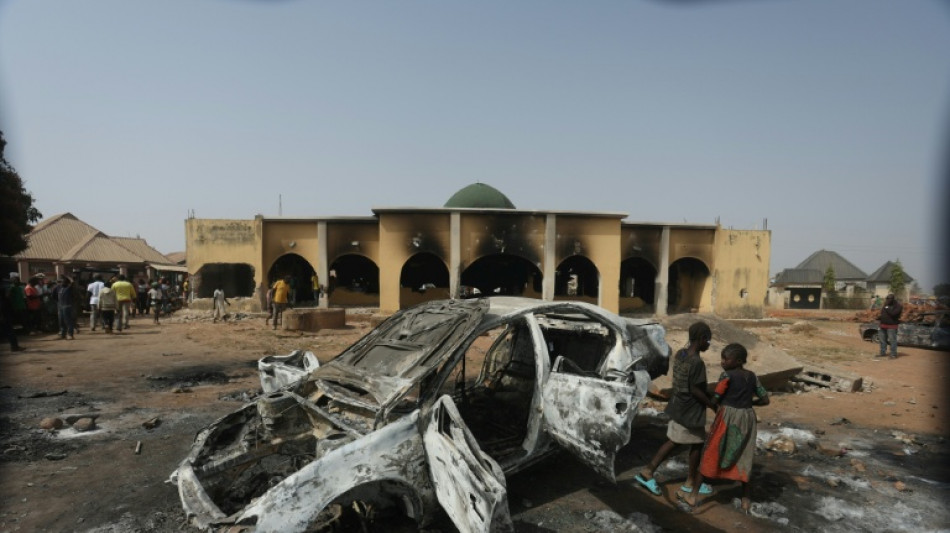
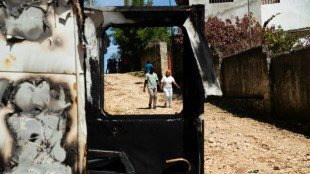
Both yellow buildings were torched and destroyed when the farming town of around 300,000 people was ravaged as assailants raided rival districts with guns and machetes after a dispute over land, water and cattle grazing, in January last year.
Twenty-two months later, the charred walls of Umar bin Khatab Juma'at mosque and a roofless and windowless Cocin Kwhagas Lahir church -- still stand as a reminder of the day the town temporarily lost its peace.
"We thank God for the relative peace that has reigned in Mangu," said resident Muhammad Kamilu Aliu, 37, at a hardware market. "There is no more crisis here again".
District head Moses Dawop, underlines the "peace we have been crying for is gaining ground".
Across Mangu, Muslims and Christians are back to doing business together, with religious and community leaders intent on rebuilding trust in the community.
Mangu's main market is abuzz with sellers and buyers mingling while elsewhere on the town's dusty streets, children play, rolling disused motorcycle tyres.
But the local chairman of the Christian Association of Nigeria, Timothy Samson Dalang, and the town's main imam, Ibrahim Hudu Manomi, say that there is still much to be done.
"We've been working day and night to see how we can get ourselves back to the former self that we used to be, as peaceful as we used to be," Manomi said.
For Dalang, cooperation among the religious leaders has been instrumental in thwarting attempts by "hoodlums who are bent to sabotage the peace process" for "selfish reasons."
Rebuilding homes, places of worship and schools torched during the unrest is also taking time.
Leaders want to restore trust first among the followers of the two religions to pre-conflict levels before reconstruction can take place.
Nigerians are wary of Trump's threat to strike radical Islamists.
For many in this central state -- a hotbed of inter-communal violence -- religious persecution is an alien concept and they fear that the White House narrative could roll back years of peacebuilding.
Trump's allegations of Christian persecution will "take us back to square one," said Ghazali Isma'ila Adam, the chief imam of the Plateau state capital Jos.
Jihadists "attack everybody, be it Muslims, Christians, pagans," said Idris Suleiman Gimba, 54, a Muslim restaurateur in northeastern Borno State's capital city, Maiduguri, the epicentre of the 16-year-long jihadist insurgency.
Gimba lost 10 family members in a mosque bombing in neighbouring Yobe State in 2014, during the height of the conflict.
Saidu Sufi, a political science teacher in northwestern Kano state, said terrorists and bandits often hide under religion to carry out their criminal activities.
"We have seen in parts of the northwest where bandits use religious cover by starting their campaign of violence by quoting scripture," Sufi said. "But it is not religious."
For Adams Mamza, 28, a Christian Maiduguri resident working for a car rental firm, Trump's intervention is only welcome if "they can target it on these bandits, Boko Haram, the insurgents."
President Bola Tinubu told his ministers on Thursday as cabinet met for the first time since Trump's threats, that "we want our friends to help us as we step up our fight against terrorism, and we will eliminate it".
A.Silveira--PC